
Why do patients keep taking expensive pills when a cheaper, just-as-effective option is right there? Why do some people refuse to switch medications even after their doctor says it’s safe? It’s not about ignorance. It’s not about laziness. It’s about how our brains actually work - and that’s where behavioral economics comes in.
People don’t choose drugs like calculators
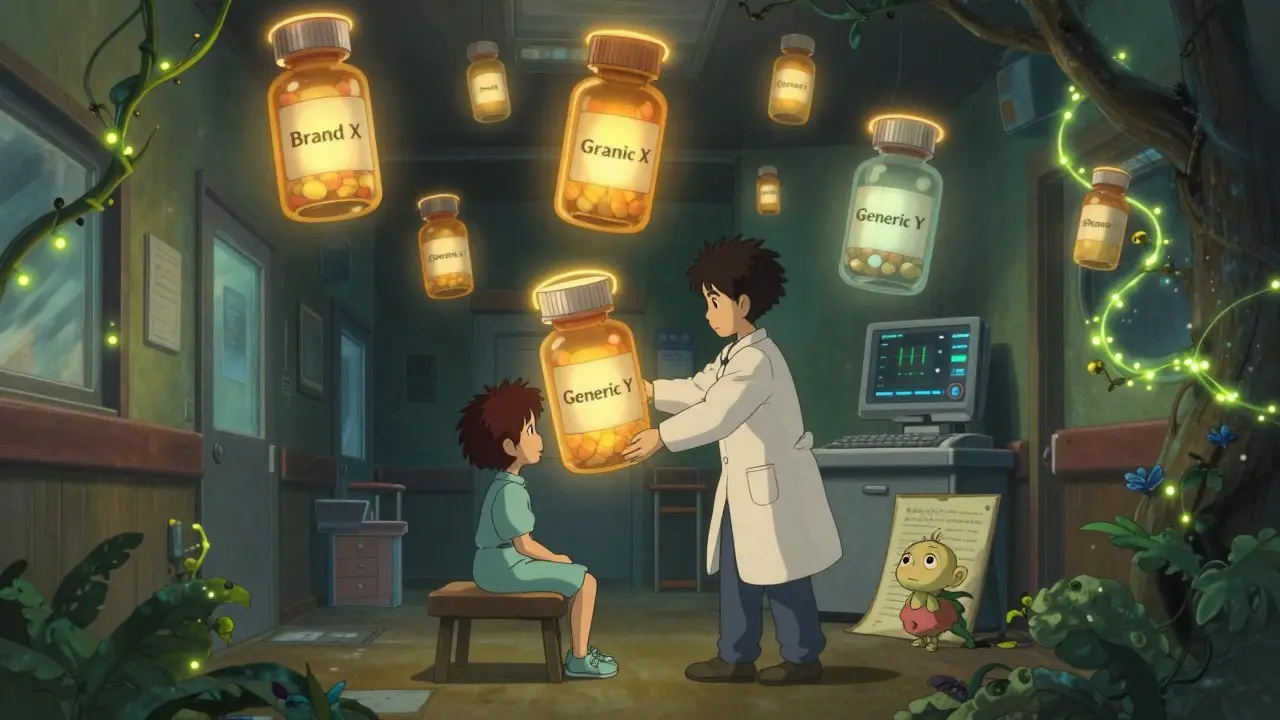
Traditional medicine assumes patients are rational actors. If Drug A costs $10 and Drug B costs $30 but does the same thing, everyone picks Drug A. Simple, right? But real life doesn’t work that way. A 2022 study found that 68% of patients stick with their current medication - even when a cheaper, equally effective alternative is available. Why? Because switching feels risky. Losing something you’re used to, even if it’s overpriced, triggers a deep psychological reaction called loss aversion.Loss aversion means the pain of losing something feels twice as strong as the pleasure of gaining something equal. So if you’ve been taking Brand X for six months, the thought of switching to Generic Y feels like a loss - even if Generic Y has the exact same active ingredient. Your brain doesn’t see two pills. It sees your pill versus someone else’s pill. And that’s not logic. That’s human behavior.
Confirmation bias and the myth of expensive = better
Another powerful force at play? Confirmation bias. People believe expensive drugs must be stronger, safer, or more advanced. A 2022 study by Cubanski & Newman showed prescription drug prices in industrialized countries rose 47% faster than general inflation since 2010 - and patients didn’t push back. They paid. Why? Because they assumed higher price = higher quality. Even when studies proved otherwise.This isn’t just about pills. It’s about how we interpret the world. If a drug comes in a fancy bottle with a glossy brochure, we trust it more. If it’s plain and cheap, we assume it’s weak - even if it’s made in the same factory, with the same ingredients. Pharmaceutical companies know this. That’s why they spend millions on branding, packaging, and advertising that tells patients: this is the one you want.
Present bias: Tomorrow’s health doesn’t matter today
How many times have you said, “I’ll start my medication tomorrow”? Then tomorrow comes, and you say it again. That’s present bias - the brain’s preference for instant rewards over future benefits. It’s why 33% of prescriptions are never filled, even when the patient has insurance and knows the drug is critical.Take statins for cholesterol. The benefit? Preventing a heart attack in five years. The cost? Taking a pill every day, maybe with side effects like muscle aches. Your brain says: “I feel fine now. Why bother?” It doesn’t matter that the risk is real. The reward is too far away. Behavioral economists call this “time inconsistency.” We’re not bad people. We’re just wired this way.
Nudges that work: How small changes fix big problems
Here’s the good news: we can design systems that work with human nature, not against it. These are called “nudges” - subtle changes to the environment that guide better decisions without forcing them.One powerful nudge? Defaults. In hospitals, when doctors’ electronic order systems automatically suggest the cheaper, equally effective drug first, prescriptions for it jump by 37.8%. Patients don’t have to ask. They don’t have to think. The right choice is already there. And most people just go with it.
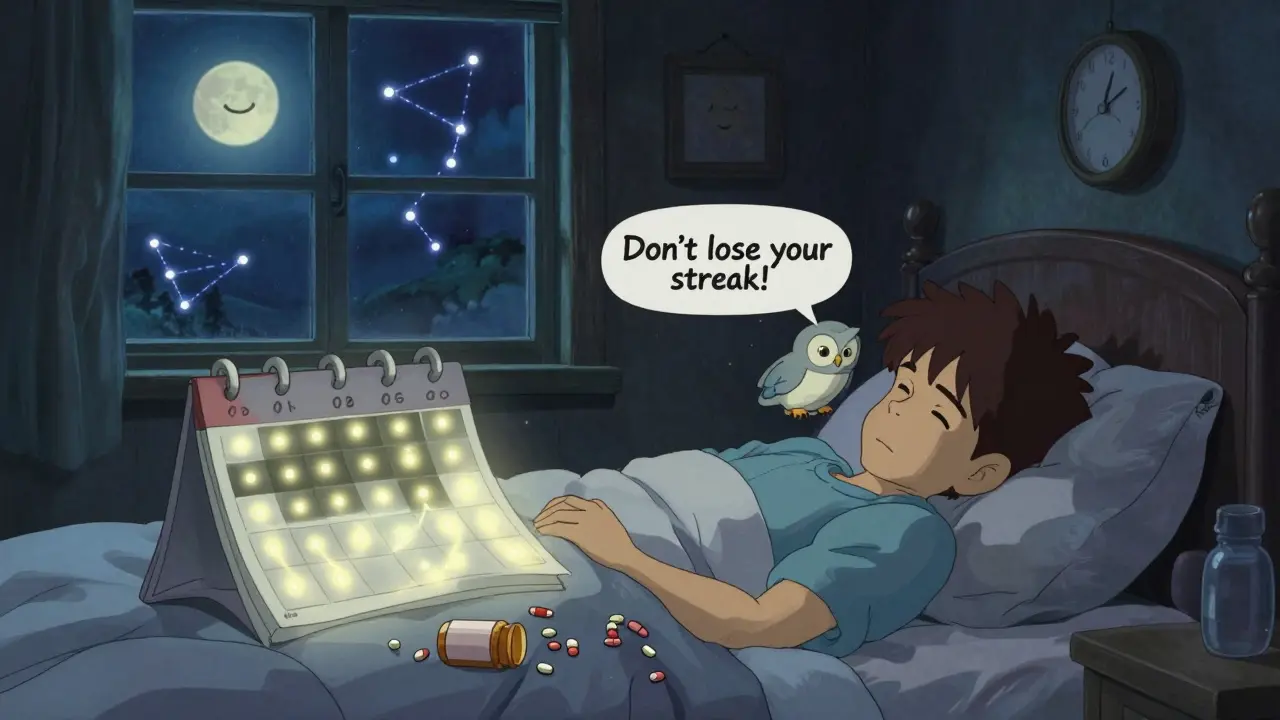
Another? Loss framing. A 2021 study tested two SMS reminders for diabetes patients:
- “Take your medication today.”
- “Don’t lose your streak!”
The second one improved adherence by 19.7%. Why? Because people hate breaking a streak. It taps into identity - “I’m someone who takes their meds.” Lose that, and you feel like you’ve failed. That’s more motivating than a neutral instruction.
Social pressure works - even in healthcare
We care what others think. That’s why social norms are such a strong tool. In an HIV clinic in Chicago, staff posted a simple chart on the wall: “92% of patients here take their meds on time.” Within months, adherence jumped 22.3%. People didn’t want to be the outlier.Same thing happened in a VA hospital where patients received monthly letters saying, “You’re in the top 20% of patients who never miss a dose.” That small recognition made them more likely to keep up. It’s not about shaming. It’s about belonging.
Why education alone fails
For decades, the go-to solution for poor adherence was education: brochures, videos, one-on-one counseling. But here’s the truth - most of those programs only improve adherence by 5-8%. Behavioral interventions? They boost it by 14-28%.Why the gap? Because knowledge doesn’t change behavior. You can know smoking causes cancer, but still smoke. You can know your blood pressure will kill you if you don’t take your pill, but still skip it. Behavior change needs more than facts. It needs triggers, cues, rewards, and friction reduction.
The hidden barriers: Polypharmacy, mental health, and invisible illness
It’s not just psychology. Real-life complexity makes adherence harder.Take polypharmacy - taking five or more medications. Each extra pill cuts adherence by 8.3%. Why? Because managing multiple schedules is exhausting. A patient with diabetes, high blood pressure, and arthritis might have six different pills, each with different times, food rules, and side effects. Their brain just shuts down.
Then there’s mental health. Depression cuts medication adherence by 28.4%. Anxiety makes people avoid anything that feels like a chore - including taking pills. And if you don’t feel symptoms? Like high cholesterol or osteoporosis? You’re 32.7% less likely to stick with treatment. Out of sight, out of mind.
And let’s not forget negative beliefs. One in two patients who stop their meds say they believe the drug is unnecessary, harmful, or “just for profit.” That’s not ignorance. That’s distrust. And no brochure can fix it.
Technology helps - but costs money
Smart pill bottles that beep when you miss a dose? They boost adherence by 24.3%. Apps that track your habits? They help too. But they cost $47.50 per patient per month. Basic SMS reminders? $8.25. And they still work - if they’re framed right.Most clinics can’t afford fancy tech. But they can train staff to use simple nudges: asking patients, “What’s the hardest part about taking your pills?” - then adjusting the plan together. That’s low-cost, high-impact.
The big picture: Why this matters
Medication non-adherence costs the U.S. healthcare system $289 billion a year. It leads to 125,000 avoidable deaths. That’s more than car accidents or gun violence.And it’s not just a problem for patients. It’s a problem for doctors, insurers, and drug makers. When people don’t take their meds, they end up in the ER. Hospitals get penalized. Insurance premiums rise. Drug companies lose revenue because their drugs aren’t working as intended.
Behavioral economics isn’t about manipulating people. It’s about designing systems that respect how humans actually behave. It’s about making the right choice the easy choice.
What’s next? Personalized nudges and AI
The next wave? Personalization. Researchers are now using machine learning to predict who will respond to which nudge. One pilot study showed that by analyzing a patient’s age, income, mental health history, and past adherence patterns, AI could predict their response to loss aversion, social norms, or defaults with 42.3% more accuracy than traditional methods.Imagine this: A 68-year-old woman with diabetes and mild depression gets a text that says, “Your neighbor Maria took her insulin today. You’re next.” Another patient, a 32-year-old man with no social support, gets a simple reminder: “Your next dose is in 2 hours. Don’t miss it.” Same goal. Different nudge. Better results.
The FDA now requires drug makers to evaluate how dosing schedules and pill burden affect patient decisions. Medicare Part D plans must include at least two behavioral interventions for high-risk patients. This isn’t a trend. It’s the new standard.
Behavioral economics doesn’t fix everything. It won’t help if there’s no affordable alternative. It won’t fix broken healthcare systems. But it gives us tools - simple, cheap, proven tools - to make a real difference. And in a world where people are drowning in complexity, that’s more than enough.
Why do patients stick with expensive drugs even when cheaper ones are available?
Patients often stick with expensive drugs due to loss aversion - the fear of losing something familiar - and confirmation bias, the belief that higher price means better quality. Studies show 68% of patients won’t switch to equally effective, cheaper alternatives, even when cost is a concern. Branding, packaging, and past experience create emotional attachments that override rational cost-benefit analysis.
What is a ‘nudge’ in behavioral economics?
A nudge is a small, low-cost change in how choices are presented that guides people toward better decisions without restricting freedom. Examples include making the cheaper, equally effective drug the default option in electronic prescribing systems, or framing reminders as “Don’t lose your streak!” instead of “Take your pill.” Nudges work because they align with how people actually think - not how they should think.
Do behavioral interventions really improve medication adherence?
Yes - and significantly better than traditional education. A 2022 review of 44 studies found behavioral interventions improved prescribing and adherence in 92% of cases. Defaults improved adherence by an average of 28.6%, while social norms and loss-framed messages added 21-22%. In contrast, patient education programs typically improve adherence by only 5-8%.
Why don’t more clinics use behavioral economics?
Many clinics lack resources, training, or integration with electronic health records. Staff need 12.7 hours of training to implement nudges properly. Only 38.4% of community hospitals have dedicated behavioral economics support, compared to 87.2% of academic centers. Also, effects often fade after six months unless the intervention is sustained.
Can behavioral economics help with drug shortages?
Yes. During drug shortages, hospitals that changed their electronic prescribing defaults to suggest alternative medications saw a 37.8% increase in appropriate substitutions. Behavioral nudges help clinicians make faster, safer choices under pressure - without needing to re-educate them. This approach has been used successfully in oncology and ICU settings during critical shortages.
Is it ethical to nudge patients’ drug choices?
Yes - if the nudge preserves autonomy. Behavioral interventions don’t force anyone to do anything. They simply make the better option easier to choose. As Dr. Aaron Kesselheim at Harvard notes, patients can still override the default. The goal isn’t control - it’s reducing friction so people can make decisions that align with their own health goals.
What’s the biggest barrier to taking medications?
There’s no single biggest barrier - it depends on the person. For many, it’s polypharmacy (taking too many pills). For others, it’s negative beliefs about medications, mental health conditions like depression, or the fact that the condition has no symptoms. Each requires a different nudge. One-size-fits-all solutions fail. Personalized, context-aware interventions work.
What to do next
If you’re a patient: Ask your doctor, “What’s the easiest way for me to take this?” Don’t just accept the first prescription. Talk about pill burden, timing, and what’s worked (or didn’t) for you before.If you’re a provider: Start small. Change one default in your EHR. Try one loss-framed reminder. Track the results. You don’t need a big budget - just awareness.
If you’re in health policy: Push for behavioral economics to be included in formulary design, Medicare guidelines, and drug approval processes. The data is clear. The tools are ready. The only thing missing is the will to use them.

Casper MacIntyre
Hello, my name is Casper MacIntyre and I am an expert in the field of pharmaceuticals. I have dedicated my life to understanding the intricacies of medications and their impact on various diseases. Through extensive research and experience, I have gained a wealth of knowledge that I enjoy sharing with others. I am passionate about writing and educating the public on medication, diseases, and their treatments. My goal is to make a positive impact on the lives of others through my work in this ever-evolving industry.
9 Comments
-
Joni O
January 18, 2026 AT 23:29i just started taking my meds again after 3 years bc my dr switched me to a generic and i kept thinking it was weaker… like i was cheating myself? weird right? then i read this and was like… ohhh. my brain is dumb. i feel seen. also pls send me the ‘don’t lose your streak’ text lol
-
Emma #########
January 19, 2026 AT 14:37I work in a clinic and see this every day. One woman told me she wouldn’t switch from her $120 brand-name pill because ‘it’s the one my mom took.’ Her mom died of the same condition 15 years ago. We didn’t argue. We just added a pill organizer to her care plan. Sometimes the medicine isn’t the pill - it’s the ritual.
-
Naomi Keyes
January 20, 2026 AT 07:48It is imperative to note, however, that the data presented here, while compelling, lacks longitudinal validation beyond the 2022 studies cited. Moreover, the term ‘nudge’ is frequently misapplied in policy circles to justify paternalistic interventions under the guise of ‘patient autonomy.’ One must interrogate the institutional power structures behind default prescribing - who benefits? Who profits? And why are we so quick to optimize behavior rather than fix pricing?
Furthermore, the assertion that ‘knowledge doesn’t change behavior’ is an oversimplification. Education, when delivered contextually and repeatedly, does alter neural pathways - but only when paired with structural access. The real barrier isn’t psychology - it’s capitalism.
-
Wendy Claughton
January 21, 2026 AT 07:07So… we’re basically just designing systems to trick our brains into doing what’s good for us? 😅 I’m not mad. I’m impressed. Like… if my phone could remind me to floss by saying ‘You’re on a 30-day streak, don’t let your future self down’ - I’d floss every night. Why can’t health care be this fun? 🤔
-
Selina Warren
January 21, 2026 AT 18:35Stop pretending this is about ‘behavior.’ This is about Big Pharma lying to you for 30 years and now they’re using psychology to make you feel guilty for being stupid. You think a text saying ‘Don’t lose your streak’ fixes the fact that your insulin costs $300? Nah. It’s a distraction. They don’t want you to be healthy - they want you to be dependent. This whole ‘nudge’ thing is just the new marketing.
-
Robert Davis
January 22, 2026 AT 18:09Interesting… but I’ve been thinking - what if the real problem isn’t the patients? What if it’s the doctors? How many times have you seen a doctor hand you a script without even asking what your life looks like? ‘Take this twice a day.’ Okay, but I work two jobs and sleep 4 hours. What am I supposed to do? They don’t care. They just want to check the box. So yeah, maybe we need nudges… but we also need doctors who actually listen.
-
Jodi Harding
January 24, 2026 AT 11:40My grandma took 11 pills a day. She forgot half. She stopped the rest. She didn’t care. She was 82. She’d already lived. No nudge, no text, no default - nothing was going to make her care more than she did. Sometimes, the real answer isn’t behavioral economics. It’s acceptance.
-
Tyler Myers
January 24, 2026 AT 17:21Of course they want you to switch to generics. That’s how they control the market. The FDA? The drug companies? They’re all in bed together. That ‘same active ingredient’? Maybe. But the fillers? The coatings? The manufacturing standards? Totally different. You think they’d let you take a $5 pill if it was truly equal? Wake up. This isn’t behavioral economics - it’s a controlled demolition of your health for profit.


Write a comment
More Articles

Constipation from Medications: How to Manage It Without Stopping Your Prescriptions
Constipation from medications is common but often ignored. Learn how to manage it safely without stopping your prescriptions, using proven laxatives, avoiding harmful fixes, and knowing when to ask for stronger help.
The Hidden Wonders of White Hellebore: Unleash the Power of This Superstar Dietary Supplement
In my latest blog post, I've explored the hidden wonders of White Hellebore, a powerful dietary supplement that not many people know about. Known for its numerous health benefits, White Hellebore has been used for centuries as a natural remedy for various ailments. I've discussed how this superstar supplement can help with digestion, boost our immune system, and promote overall wellbeing. I've also shared some tips on how to safely incorporate White Hellebore into your daily routine. Don't miss out on discovering the untapped potential of this amazing plant!

Jake Moore
January 18, 2026 AT 01:01Man, this hits different. I used to be the guy who’d skip his statins because ‘I feel fine.’ Then my dad had a heart attack at 58. Now I take mine like clockwork - not because I’m scared of dying, but because I don’t want to be the reason my kid grows up without a dad. Nudges? Yeah, I’d take a text that says ‘Don’t break your streak’ over another brochure any day.