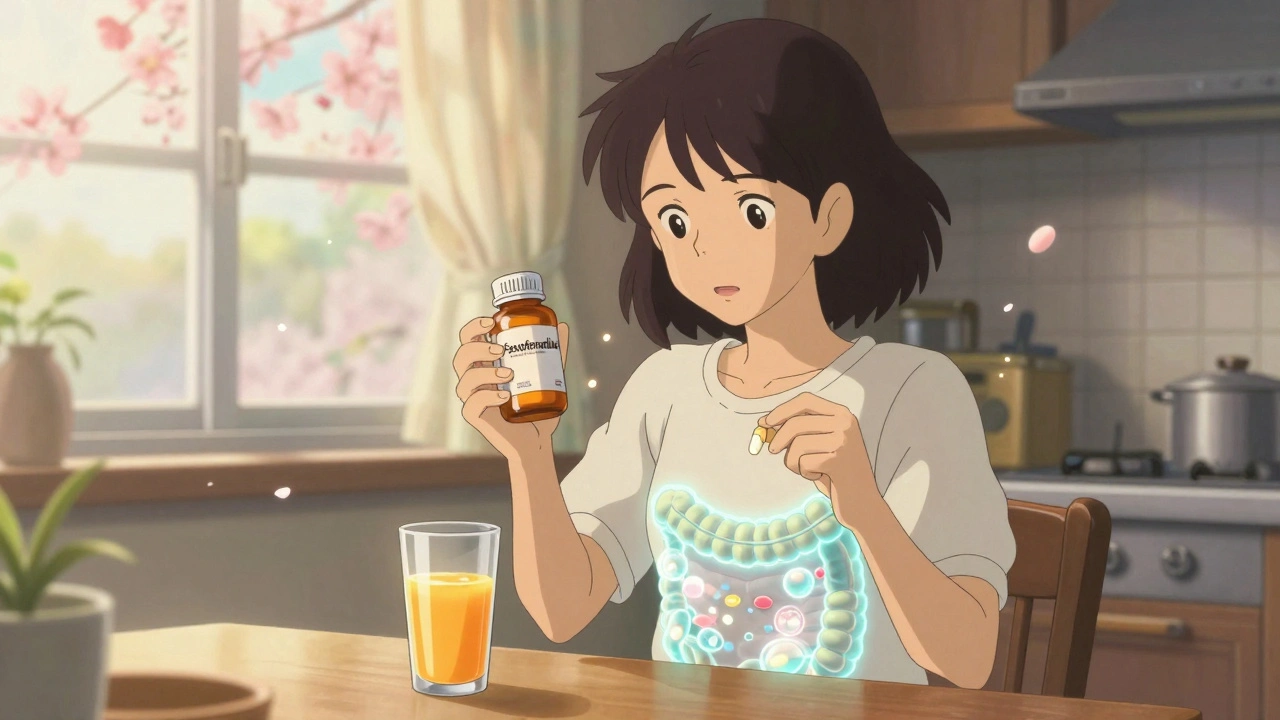
Fexofenadine Timing Calculator
How Long to Wait After Taking Fexofenadine
Fexofenadine (Allegra) must be taken with water. Fruit juice can reduce absorption by up to 77%. You need to wait at least 4 hours before drinking juice.
You take fexofenadine-maybe under the brand name Allegra-to keep your allergies under control. You’re careful about when you take it, you follow the label, and you expect it to work. But lately, your sneezing, itchy eyes, and runny nose haven’t improved like they used to. Could it be something as simple as your morning glass of orange juice?
Why Fruit Juice Is Sabotaging Your Allergy Medicine
Fexofenadine is designed to block histamine in your body without making you drowsy. It’s one of the most popular second-generation antihistamines, used by an estimated 20 million Americans each year. But unlike other antihistamines like loratadine (Claritin) or cetirizine (Zyrtec), fexofenadine has a hidden weakness: fruit juice. It’s not just grapefruit juice. Orange juice, apple juice-even the kind you buy at the grocery store-can cut how well fexofenadine works by more than two-thirds. This isn’t a myth or an old wives’ tale. It’s backed by multiple clinical studies dating back to 2002, and the FDA has required warning labels on the packaging since 2008. The reason? Fexofenadine doesn’t get absorbed the same way most drugs do. It relies on special transporters in your gut called OATPs (organic anion-transporting polypeptides) to move from your digestive tract into your bloodstream. Grapefruit, orange, and apple juices contain natural compounds-like naringin and hesperidin-that block these transporters. So instead of entering your blood, the fexofenadine just passes through your system unused.The Numbers Don’t Lie
In one key study, researchers gave participants 60 mg of fexofenadine with either water or 1.2 liters of fruit juice. Here’s what happened:- With water: normal absorption
- With grapefruit juice: 67% drop in blood levels
- With orange juice: 72% drop
- With apple juice: 77% drop
Why Other Antihistamines Don’t Have This Problem
You might be wondering: if juice interferes with fexofenadine, why doesn’t it mess with Claritin or Zyrtec? Because they use different absorption pathways. Loratadine and cetirizine don’t rely on OATP transporters. They slip into your bloodstream through other mechanisms that juice doesn’t block. That’s why Zyrtec’s ads since 2015 have openly said: “Unlike some allergy medicines, Zyrtec doesn’t interact with fruit juice.” It’s not just marketing-it’s science. This difference matters. For people who drink juice daily, switching to cetirizine or loratadine could mean the difference between constant symptoms and real relief.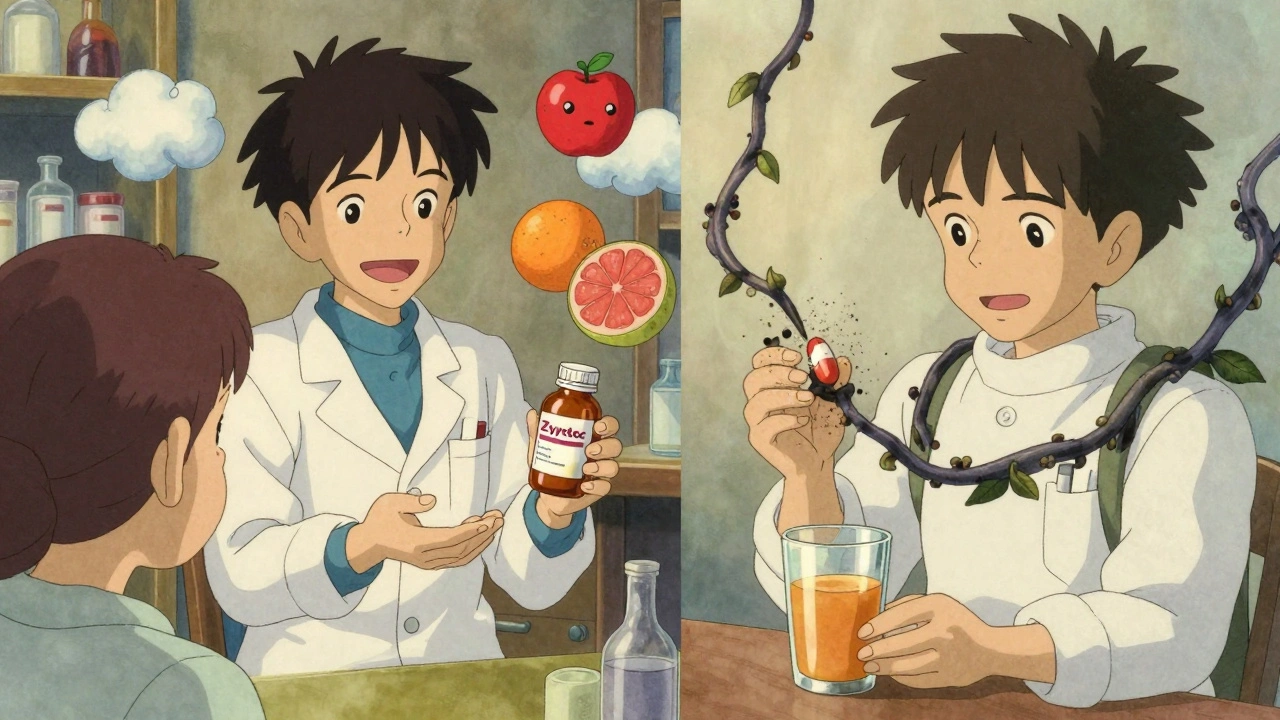
What About Whole Fruit?
You might think, “Okay, I’ll just skip the juice and eat the fruit instead.” But that won’t help. A single grapefruit contains the same concentration of inhibiting compounds as a small glass of juice. The same goes for oranges and apples. So if you’re eating a whole fruit within two hours of taking your fexofenadine, you’re still at risk. Even tomato juice-a common point of confusion-doesn’t cause this issue. Tomatoes are technically fruits, but they don’t contain the same OATP-blocking compounds. So if you’re drinking tomato juice with your pill, you’re fine.What Should You Do Instead?
The fix is simple: take fexofenadine with water only. The FDA recommends waiting at least 4 hours before or after drinking any fruit juice. That gives your gut enough time to clear the inhibiting compounds. If you take your pill in the morning, avoid juice until after lunch. If you take it at night, don’t drink juice with dinner or right before bed. Also avoid green tea. Studies show it contains compounds that also inhibit OATPs. And while antacids with magnesium or aluminum aren’t directly linked to fexofenadine, they can interfere with other medications you might be taking-so it’s safer to keep them separate too.Real People, Real Experiences
You don’t need to guess whether this matters. People are reporting it in real time. On Reddit’s r/Allergy forum, a user wrote: “I took Allegra for years and my allergies were fine. Then I started having OJ with breakfast. Within days, I was sneezing nonstop. I stopped the juice, switched to water, and within 48 hours, I was back to normal.” A survey of 500 fexofenadine users found that 41% regularly drank juice within an hour of taking their pill. That’s nearly half of users unknowingly reducing their medication’s effectiveness. And it’s not just online. Pharmacists in Sydney, London, and New York report patients coming in confused because their “prescription isn’t working”-only to find out they’ve been taking it with apple juice for years.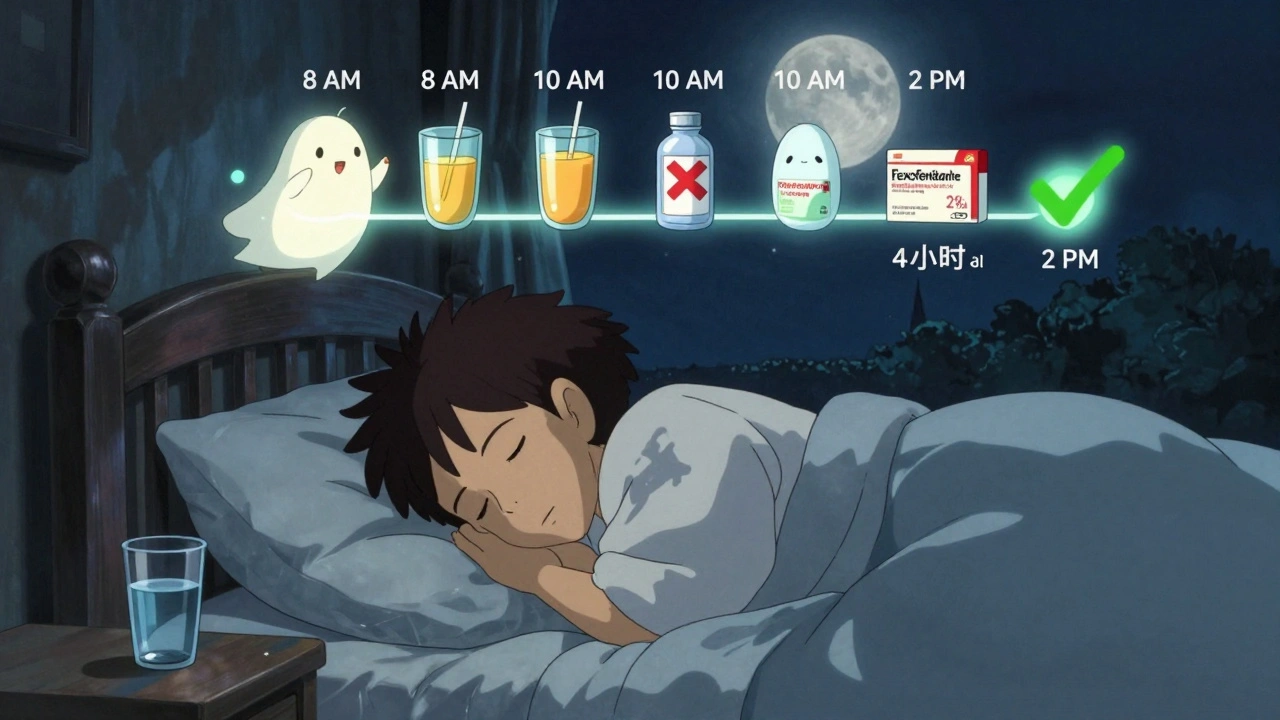
Is This Really a Big Deal?
Some experts argue that the 70% drop in blood levels seen in studies might not translate to real-world symptoms, especially if someone only drinks a small amount of juice. But here’s the catch: allergy control isn’t about averages. It’s about consistency. If you’re sensitive to pollen, dust, or pet dander, even a 30% drop in drug levels could mean you’re still sneezing, rubbing your eyes, or losing sleep. Fexofenadine has a narrow therapeutic window-too little, and it doesn’t work. Too much, and you risk side effects like headache or nausea. You don’t want to be guessing. Plus, the interaction is predictable. Unlike some drug-food interactions that vary wildly between people, this one is consistent. If you drink the juice, the drug won’t work as well. Period.What’s Next?
The manufacturer, Sanofi, has already started working on solutions. In 2022, they patented a modified-release version of fexofenadine that delays the drug’s release until after the juice has passed through the gut. It’s not on the market yet, but it shows they’re taking this seriously. In the meantime, patient education is improving. The American Academy of Allergy, Asthma & Immunology now includes visual guides in their patient handouts. Sanofi’s website has a medication timing calculator. And the FDA’s 2023 draft guidance on drug interactions still cites fexofenadine as a textbook example of transporter-based food-drug interactions.Bottom Line
If you take fexofenadine, don’t drink grapefruit, orange, or apple juice with it. Ever. Not even a sip. Use water. Wait four hours before or after juice. And if you’ve been taking it with juice and your symptoms aren’t improving, try switching to water for a week. You might be surprised how much better you feel. If you’re still struggling with allergies, talk to your doctor about switching to loratadine or cetirizine. They work just as well-and they don’t care what you drink with them.Can I drink orange juice if I wait a few hours after taking fexofenadine?
Yes, but you need to wait at least 4 hours after taking fexofenadine before drinking orange juice. The inhibitory effect of juice on fexofenadine absorption lasts 2 to 4 hours. Drinking juice sooner than that can still reduce how much medicine enters your bloodstream. Waiting 4 hours ensures the interaction is avoided.
Does grapefruit juice affect all antihistamines?
No, only fexofenadine. Other common antihistamines like loratadine (Claritin) and cetirizine (Zyrtec) are not affected by grapefruit juice because they use different absorption pathways in the gut. Fexofenadine is unique in its reliance on OATP transporters, which are blocked by compounds in citrus and apple juices.
Is apple juice worse than grapefruit juice for fexofenadine?
Yes, according to clinical studies, apple juice causes the greatest reduction in fexofenadine absorption-up to 77% compared to water. Grapefruit juice reduces absorption by 67%, and orange juice by 72%. The exact reason isn’t fully understood, but apple juice contains a mix of flavonoids that are especially effective at blocking the OATP transporters fexofenadine needs.
Can I take fexofenadine with milk or other non-fruit drinks?
Yes, milk, coffee, tea (except green tea), and water are all safe to use with fexofenadine. Green tea should be avoided because it contains compounds that also inhibit OATP transporters. Stick to plain water for the most reliable absorption.
What if I accidentally took fexofenadine with juice? Should I take another dose?
No, do not take another dose. Taking a second pill could lead to too much drug in your system later, especially if you drink juice again. The interaction reduces absorption, not metabolism. Your body hasn’t processed the first dose-it just didn’t absorb it well. Wait until your next scheduled dose and switch to water.
Why isn’t this better known if it’s so common?
Many people assume all medications are affected the same way by food. Since grapefruit juice is known to increase levels of some drugs (like statins), it’s easy to assume it would help fexofenadine too. But this is the opposite effect. The FDA only required warning labels in 2008, and many patients still don’t read them. Surveys show over 60% of users are unaware of the interaction.

Casper MacIntyre
Hello, my name is Casper MacIntyre and I am an expert in the field of pharmaceuticals. I have dedicated my life to understanding the intricacies of medications and their impact on various diseases. Through extensive research and experience, I have gained a wealth of knowledge that I enjoy sharing with others. I am passionate about writing and educating the public on medication, diseases, and their treatments. My goal is to make a positive impact on the lives of others through my work in this ever-evolving industry.
9 Comments
-
Jennifer Taylor
December 14, 2025 AT 13:59WAIT. So this whole time my allergies were bad because of OJ?? And the FDA knew since 2008?? But no one told me?? This is a cover-up. Big Pharma doesn’t want you to know how easy it is to fix your allergies-just stop drinking juice. They make billions off you being miserable. I’m switching to Zyrtec and never touching fruit again. 🍊💀
-
nithin Kuntumadugu
December 16, 2025 AT 06:56bro fexofenadine is literally useless if you drink juice 😭 i took it with apple juice for 3 years and thought i was just allergic to life. then i read this and switched to Zyrtec. now i can breathe. also green tea = bad. coffee = ok. milk = chill. and yes apple juice is worse than grapefruit. science says so. 🤓
-
John Fred
December 17, 2025 AT 11:31Big win for patient education! 🎉 This is exactly the kind of practical, science-backed info that saves people from years of unnecessary suffering. If you're on fexofenadine and still sneezing? Check your breakfast. Water > juice. Period. And if you're still struggling, talk to your doc about switching to cetirizine. It's literally the same effect, no juice drama. 🚫🍊
-
Harriet Wollaston
December 19, 2025 AT 01:44My mom used to drink apple juice with her meds because she thought 'natural' meant 'safe'. She had awful allergies for years. When I showed her this article, she cried. Not because she was mad-because she finally understood why she felt awful every spring. This isn't just about medicine. It's about listening to our bodies and learning the small things that make a huge difference.
-
Lauren Scrima
December 19, 2025 AT 10:43So… you’re telling me I’ve been sabotaging myself for 7 years… with APPLE JUICE?? 🤦♀️ I thought I was being healthy. Turns out I was just being dumb. Switched to Zyrtec. No more sneezing. No more guilt. No more juice. Worth it. 💅
-
sharon soila
December 19, 2025 AT 22:40It is a profound truth that our health is shaped not only by what we take, but by how we take it. The body is a delicate system, and even the most benign habits-like sipping fruit juice with medication-can disrupt its natural harmony. This is not merely a pharmacological footnote; it is a reminder that care, attention, and awareness are the quiet pillars of wellness. Choose water. Choose clarity. Choose health.
-
Hamza Laassili
December 21, 2025 AT 16:57OMG I CAN’T BELIEVE THIS!! I’VE BEEN DRINKING OJ WITH MY ALLERGIE PILLS SINCE 2019 AND I THOUGHT I WAS JUST A SNEEZING MACHINE 😭 I’M AMERICAN AND I’M MAD. WHY DIDN’T THE DOCTOR TELL ME?? I’M TELLING EVERYONE. #STOPJUICEWITHALLEGRA
-
Tyrone Marshall
December 23, 2025 AT 05:29Let me tell you something-this isn’t just about fexofenadine. It’s about how we treat our bodies like machines that don’t need context. We take pills like they’re candy, and we drink juice like it’s harmless. But biology doesn’t care about convenience. It cares about pathways, transporters, chemistry. The fact that we’ve ignored this for decades says more about our culture than our science. The solution? Slow down. Read the label. Drink water. It’s not complicated. It’s just not sexy. But it works.


Write a comment
More Articles
Effective Patent Life: Why Market Exclusivity in Pharmaceuticals Is Shorter Than You Think
Effective patent life is often just 10-13 years for new drugs, not the full 20 years. Learn why patents expire faster than you think, how companies stretch exclusivity, and what it means for drug prices and patient access.
Behavioral Economics: Why Patients Choose Certain Drugs - Even When It Doesn’t Make Sense
Why do patients choose expensive drugs over cheaper, equally effective ones? Behavioral economics reveals how psychology - not logic - drives medication decisions. Learn how nudges, loss aversion, and defaults improve adherence and save lives.

Generic Immunosuppressive Combinations for Transplant Patients: Cost-Saving Options That Work
Generic immunosuppressive combinations now make lifelong transplant care affordable without sacrificing safety. Learn how tacrolimus, MMF, and sirolimus generics work, their real cost savings, and why careful monitoring is essential.
Deborah Andrich
December 13, 2025 AT 08:45I used to take Allegra with my orange juice every morning like it was nothing. Then one day I couldn't stop sneezing and it hit me-maybe it’s the juice. I switched to water and within two days my nose stopped acting like a faucet. Why do we assume meds work the same no matter what we swallow them with? Simple fix, huge difference.