Most people toss out pills the moment they hit the expiration date. You’ve probably done it yourself - a bottle of ibuprofen from last year’s flu season, an old antibiotic, maybe even that EpiPen you forgot about after your kid outgrew it. But what if those meds weren’t actually useless? What if they still worked just fine?
Expiration Dates Aren’t What You Think
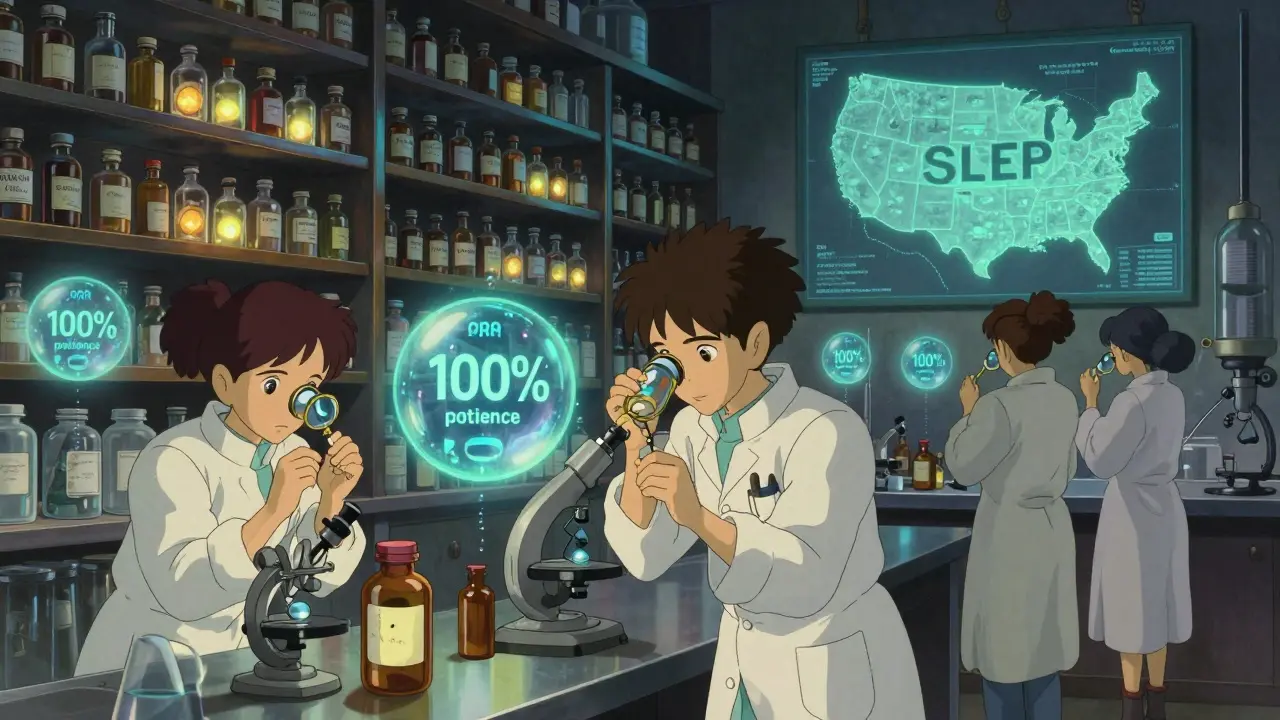
The date on your medicine bottle isn’t a "use-by" label like milk. It’s a guarantee from the manufacturer that the drug will be at least 90% potent up to that point. After that? No one’s required to test it. The FDA only demands stability testing for 12 to 60 months after production. That’s it. After that, it’s guesswork - and profit motives.Here’s the twist: a 2012 study by the University of California-San Francisco tested 14 drugs that had expired 28 to 40 years ago. Twelve of them still had full potency. Eight stayed at 100% strength for over 40 years. That’s not a fluke. It’s science. The Department of Defense’s Shelf-Life Extension Program (SLEP), which has been testing military drug stockpiles since 1986, found that 88% of drugs could safely have their expiration dates extended - on average, by more than five years. One drug lasted 23 years past its labeled date and still worked.
So why do we throw them out? Because manufacturers aren’t required to prove how long a drug lasts. They only need to prove it works for a couple of years. After that, the expiration date is more about liability than chemistry.
Which Medications Still Work - and Which Don’t
Not all drugs age the same way. Form matters. Solid pills and capsules? They’re tough. Tablets of aspirin, codeine, hydrocodone, and even antibiotics like amoxicillin often stay stable for years beyond their date - if stored right.But liquids? That’s a different story. Insulin, liquid antibiotics, eye drops, and epinephrine auto-injectors (EpiPens) degrade faster. Why? Moisture, air, and temperature. A 2012 study found that EpiPens lost potency after just 12 months past expiration. Insulin? It can break down in weeks if not refrigerated. Nitroglycerin - used for heart attacks - loses effectiveness quickly. Using an expired nitroglycerin tablet during a cardiac event could be deadly.
Here’s the simple rule: if it’s a liquid, injectable, or needs refrigeration, don’t risk it. If it’s a solid pill in its original sealed bottle? There’s a good chance it’s still good.
Storage Is Everything
You can have a perfectly good pill, but if you store it wrong, it’s useless. Heat, humidity, and light are the enemies.Keep meds in a cool, dry place - not the bathroom cabinet. That’s a steamy, humid mess. The kitchen near the stove? Bad idea. A bedroom drawer or a shelf in a closet away from sunlight? That’s ideal.
And don’t transfer pills to pill organizers unless you’re using them right away. Those little plastic containers don’t protect against moisture. The original bottle? It’s designed to block light and seal out air. Once you move a pill out of that, you’re accelerating its decay.
One study showed that drugs moved from factory bottles to pharmacy blister packs degraded faster - even if the expiration date was still months away. The packaging matters as much as the date.
The Science Behind the Numbers
The FDA allows medications to contain 90% to 110% of the labeled active ingredient and still be considered safe. That’s a 20% window. So even if a pill drops to 92% potency after 10 years, it’s still within legal and medical limits.Most drugs lose potency slowly - about 5% to 10% per year under normal conditions. That means a 5-year-old aspirin might still be 80% effective. For pain relief or fever reduction, that’s often enough. But for life-saving drugs like seizure meds or heart medications, even a small drop can matter.
Researchers tested over 100 drugs in the 2012 study. About 90% were still effective up to 15 years past expiration - if they stayed sealed and dry. That’s not speculation. That’s lab data from the FDA’s own archives.
Why Companies Don’t Want You to Know This
Think about it: if your blood pressure pill lasts 20 years instead of 2, you buy fewer refills. That’s bad for business. Pharmaceutical companies have no financial incentive to prove their drugs last longer. Why spend millions on 10-year stability tests when the FDA only asks for two?The SLEP program saved the U.S. government billions by extending drug life. One dollar spent on testing saved $13 to $94 in replacement costs. Yet, no major pharmacy chain or insurer has adopted similar practices. Why? Because the system is built on turnover. If you stop replacing meds every year, the industry loses.
It’s not conspiracy. It’s economics. But that doesn’t make the science any less real.
When It’s Safe to Use Expired Meds - And When It’s Not
Here’s a quick guide based on real data:- Safe to consider (if sealed and stored well): Pain relievers (ibuprofen, acetaminophen), antihistamines (loratadine, cetirizine), antidepressants (sertraline, fluoxetine), blood pressure meds (lisinopril, amlodipine), and most antibiotics in pill form.
- Don’t risk it: Insulin, nitroglycerin, EpiPens, liquid antibiotics, tetracycline, eye drops, and any medication that looks discolored, smells odd, or has cracked or powdery tablets.
And here’s the reality check: if you’re treating something serious - high blood pressure, diabetes, epilepsy, or an infection - don’t gamble. Get a new prescription. But if you’re out of ibuprofen and have a 3-year-old bottle in the drawer? It’s probably fine.
What to Do With Expired Meds
If you’re unsure, don’t take it. But don’t flush it either. Flushing meds pollutes water supplies. The best option? Take them to a drug take-back program. Pharmacies, hospitals, and police stations often have drop boxes. If that’s not available, mix pills with coffee grounds or cat litter in a sealed bag before tossing them. It keeps them out of kids’ hands and reduces environmental harm.And if you’re holding onto old meds for emergencies - like an EpiPen for a child with allergies - make sure to replace them on schedule. No shortcuts there.
What’s Next?
The evidence is piling up. Expired meds aren’t poison. They’re often just old. But the system hasn’t caught up. Until regulations change, you’re stuck playing guesswork.Here’s what you can do now:
- Check your medicine cabinet. Pull out anything expired.
- Sort by type: pills vs. liquids, sealed vs. opened.
- For solid pills in original bottles: if they look normal and you’re not treating a life-threatening condition, they’re likely still usable.
- For anything liquid, injectable, or critical: replace it.
- Store the rest properly - cool, dry, dark.
Next time you see an expiration date, don’t panic. Ask: what kind of drug is this? How was it stored? Is it life-saving or just for a headache?
Medicine doesn’t die on a calendar. It fades slowly - if you let it.
Are expired medications dangerous to take?
Most expired medications aren’t dangerous - they just lose potency over time. Very few become toxic. The real risk comes from taking drugs that have degraded too much to work - like an expired EpiPen during an allergic reaction or an old insulin dose that doesn’t control blood sugar. For non-critical meds like painkillers or antihistamines, the danger is low, but the effectiveness might be too.
How long can pills last after their expiration date?
Under ideal storage conditions - cool, dry, and in original sealed containers - many solid pills retain 90% potency for 5 to 15 years past expiration. Some, like certain antibiotics and pain relievers, have been shown to work even after 40 years. But this varies by drug. Liquids and injectables degrade much faster.
Can I use expired antibiotics?
It’s risky. While some solid-form antibiotics like amoxicillin or doxycycline may retain potency for years, using a weakened dose can lead to antibiotic resistance. If you’re treating a serious infection, always get a fresh prescription. Don’t rely on old pills. For minor issues, like a lingering sinus infection, it’s better to consult a doctor than self-medicate with expired drugs.
Why do expiration dates exist if drugs last longer?
Expiration dates are set by manufacturers based on minimal FDA testing requirements - usually just 1 to 5 years. They’re not scientific endpoints for when drugs stop working. They’re liability limits. The system doesn’t require testing beyond that, so companies don’t do it. It’s a business decision, not a medical one.
Should I keep expired meds for emergencies?
For non-critical uses - like keeping ibuprofen for occasional headaches - yes, if stored properly. But for emergencies like anaphylaxis, heart attacks, or seizures, never rely on expired meds. EpiPens, nitroglycerin, and seizure meds must be replaced on schedule. Your life depends on them working 100%.

Casper MacIntyre
Hello, my name is Casper MacIntyre and I am an expert in the field of pharmaceuticals. I have dedicated my life to understanding the intricacies of medications and their impact on various diseases. Through extensive research and experience, I have gained a wealth of knowledge that I enjoy sharing with others. I am passionate about writing and educating the public on medication, diseases, and their treatments. My goal is to make a positive impact on the lives of others through my work in this ever-evolving industry.
8 Comments
-
Robert Way
January 15, 2026 AT 04:12ok but what about the fact that like… i had a bottle of aleve from 2018 and it looked kinda crumbly and smelled weird? i threw it out but like… maybe i was wrong? i dont know how to tell if its still good. also i think i spelled aleve wrong lol
-
Sarah Triphahn
January 15, 2026 AT 04:39let me break this down for you like you're five: if you're not dying, and it's a solid pill in the original bottle, and it doesn't look or smell like something a raccoon died in, then yeah, it's probably fine. but if you're diabetic or have a heart condition and you're thinking 'eh, i'll just use the expired stuff' - you're not brave, you're just stupid. the science is cool, but your life isn't a lab experiment. stop being a guinea pig for capitalism's side hustle.
-
Dylan Livingston
January 16, 2026 AT 21:26oh wow, so now we're supposed to trust the same corporations that gave us OxyContin and the vaping epidemic with our life-saving meds? the fact that you're even considering this is terrifying. they don't care if you live or die - they care if you buy another bottle. the 88% figure from SLEP? that's the government's emergency stockpile, not your bathroom cabinet. you think your 10-year-old ibuprofen is the same as a military-grade, climate-controlled, nitrogen-sealed vial? please. you're not a survivalist, you're just delusional with a pharmacy drawer.
-
Andrew Freeman
January 17, 2026 AT 01:55my uncle took expired penicillin for a tooth infection in 1999 and it worked. he lived. i still have his old bottle. it's in the garage. the expiration date is 2003. i think i'll use it next time i get a cold. why not? they made it to last. the date is just a suggestion. also pharma is evil.
-
says haze
January 17, 2026 AT 11:44the real tragedy isn't that we're throwing out perfectly good medicine - it's that we've been conditioned to believe that expiration dates are scientific absolutes. we've outsourced our critical thinking to a label printed by a company whose only moral imperative is shareholder value. the FDA's 5-year testing window isn't a ceiling - it's a floor. And yet, we treat it like gospel. We've turned pharmacology into a ritual of consumption, not care. The pill isn't expired - our trust in institutions is.
-
Henry Sy
January 18, 2026 AT 17:25yo i just took a 12-year-old zyrtec and i'm not itchy anymore. also i found my grandpa's 1987 aspirin in his old toolbox. it's still white and hard. i'm gonna crush it into my coffee tomorrow. if it kills me, at least i died with a clear conscience and a cheap headache.
-
Anna Hunger
January 19, 2026 AT 05:32While the data presented in this post is compelling and supported by credible research, it is imperative to emphasize the distinction between theoretical potency and clinical safety. Medications are complex chemical formulations, and their stability is influenced by a multitude of environmental variables that cannot be reliably controlled in domestic settings. For non-critical, non-life-threatening conditions, the risk may be acceptable; however, for patients with chronic or acute conditions requiring precise dosing, the potential for subtherapeutic efficacy poses a significant public health concern. We must advocate for policy reform, but not at the expense of individual safety. Always consult a licensed pharmacist or physician before using any expired pharmaceutical product.


Write a comment
More Articles

Exploring Effective Alternatives to Clomid for Fertility Treatment
Clomid, a popular ovulation inducing medication, might not be suitable for everyone. Fortunately, a variety of alternatives are available for those who are looking for different approaches to enhance fertility. This article explores ten viable options including medications like Femara and Metformin, as well as natural methods such as acupuncture and dietary changes. Each alternative comes with its own set of pros and cons, helping individuals and couples find the best fit for their specific needs.
Fexofenadine and Fruit Juice: Why Your Allergy Medicine Might Not Work
Fexofenadine (Allegra) can lose up to 77% of its effectiveness when taken with orange, apple, or grapefruit juice. Learn why this happens, how to avoid it, and which allergy meds don’t have this problem.
How to Purchase Symbicort Online: A Guide for Effective Asthma Treatment
Hey there, I'm here to chat about getting our hands on Symbicort the safe way. If you're like me, dealing with asthma, you know how crucial the right meds can be. I've been exploring the web to find a safe spot to order Symbicort, and I think I've got some good tips to share. We’re talking about avoiding sketchy sites, ensuring authenticity, and making sure we're getting the legit deal for our health. So, let’s dive in and figure out how to order this lifesaver without any hiccups. Are you with me? Let's look out for each other and stay healthy, friends!
shiv singh
January 13, 2026 AT 14:36bro i kept my mom's expired lisinopril for 7 years because she's cheap and i didn't wanna pay $40 for a refill. she's still alive, no side effects, just kinda sleepy sometimes. if it works, it works. the pharma giants want you scared so you buy new bottles like a good little consumer.