
Every year, thousands of patients are harmed by preventable medication errors. Many of these errors happen because providers aren’t aware of the latest safety guidance-until it’s too late. The good news? Professional societies and health agencies publish clear, evidence-based updates designed to stop these errors before they occur. The challenge? Knowing where to look, how to filter what matters, and how to turn those updates into real changes in your practice.
Where Do Medication Safety Updates Actually Come From?
You won’t find one single source that tells you everything. Instead, you need to follow a few trusted organizations that specialize in different parts of the puzzle.The Institute for Safe Medication Practices (ISMP) is the most widely used resource among hospitals and pharmacies. They publish a weekly newsletter called Medication Safety Alert!, which breaks down real error reports into simple, actionable steps. In 2022 alone, they processed over 2,800 medication error reports from frontline staff. Their updates aren’t theoretical-they’re based on what’s actually going wrong in clinics, pharmacies, and hospitals.
The Food and Drug Administration (FDA) issues official alerts when a drug’s safety profile changes. These include label updates, new black box warnings, or recalls. In 2023, they issued 47 drug safety communications. These are critical, but they often come after harm has already happened. Don’t wait for an FDA alert to act-use it to confirm what you’re already seeing in your practice.
ASHP (American Society of Health-System Pharmacists) offers practical tools like their Medication Safety Resource Center. Their guidelines focus on how to implement safety practices in real settings-like how to set up barcode scanning systems or train staff on high-risk medications. While some content is free, their premium tools (like self-assessments and implementation checklists) require a $99 annual subscription.
AORN (Association of periOperative Registered Nurses) is the go-to for surgical teams. Their Medication Safety guideline was updated in October 2023 and now includes new sections on technology use and organizational accountability. If you work in an OR, this is non-negotiable reading.
And then there’s the World Health Organization (WHO) and their Medication Without Harm initiative. This isn’t a daily alert system-it’s a global framework. It helps countries build national safety programs, but the guidance can feel vague if you’re trying to fix a specific issue in your clinic. Use it to understand the big picture, not the daily details.
How to Subscribe Without Getting Overwhelmed
You can’t read everything. And if you try, you’ll burn out. The key is to subscribe smartly.Start with these three:
- ISMP Medication Safety Alert! - Subscribe to the weekly email. It’s $299 a year, but most hospitals cover it. If you’re an independent provider, ask your pharmacy or clinic if they share access.
- FDA Drug Safety Communications - Free. Sign up at fda.gov/drugs/drug-safety-and-availability. You’ll get alerts on new risks, recalls, and label changes. Set up a folder to archive them.
- ASHP Medication Safety Resource Center - Free basic access is enough to start. Use their self-assessment tool to find gaps in your current practice.
Don’t subscribe to AORN unless you work in surgery. Don’t pay for WHO materials unless you’re involved in policy. Focus on what directly affects your daily work.
Set aside 15 minutes once a week to review new updates. Don’t wait for a crisis. Make it part of your routine-like checking your schedule or refilling your coffee.
What to Look for in Every Update
Not all updates are created equal. When you open a new alert, ask yourself:- Is this about a specific drug or class? If yes, check your formulary. Are you still prescribing it? Are you using the right dose?
- Is this about a process? Like labeling, scanning, or handoffs? Look at your workflow. Where does the breakdown happen?
- Is this something you can act on? ISMP updates often say: “Stop using this abbreviation.” “Require dual verification for this drug.” “Change the storage location.” These are clear instructions. FDA alerts often say: “Risk of liver injury.” That’s useful, but you need to pair it with action.
For example, ISMP’s 2024-2025 Best Practices introduced two new rules: one on AI-assisted medication checks and another on compounding pharmacy oversight. If your pharmacy uses AI tools to flag doses, you need to know how to validate those alerts. If you’re compounding medications, you need to know the new sterilization standards.
Don’t just read. Ask: “What do I need to change tomorrow?”

How Hospitals and Clinics Use These Updates
Large hospitals don’t leave this to chance. They assign a medication safety officer to monitor all sources, summarize key changes, and roll them out to staff.Here’s how it works in practice:
- The safety officer reads ISMP, FDA, and ASHP updates every Monday.
- They identify 2-3 high-priority items-like a new warning on insulin or a change in barcode scanning rules.
- They create a one-page summary with clear actions: “Stop using ‘U’ for units. Use ‘unit’ instead.”
- They post it on the unit bulletin board and email it to all staff.
- They include it in the next staff huddle or training session.
Smaller clinics can do the same thing with less structure. Pick one person to be the “safety point person.” Even if it’s just the lead pharmacist or nurse, having one person responsible makes all the difference.
Some clinics use ASHP’s Medication Safety Self-Assessment tool to find their biggest risks. It takes 30 minutes. Then they match ISMP’s best practices to those gaps. Simple. Effective.
Common Mistakes People Make
Most people don’t fail because they don’t care. They fail because they’re doing it wrong.- Waiting for an adverse event - Don’t wait for a patient to be harmed before you act. ISMP updates often come before FDA alerts. Use them as early warnings.
- Ignoring non-hospital sources - If you’re a primary care provider, you still need ISMP. 38% of community providers don’t check updates at all. That’s dangerous.
- Subscribing to too many - You don’t need AORN if you’re not in surgery. You don’t need WHO if you’re not building a national program. Focus.
- Not documenting changes - If you update your insulin protocol because of an ISMP alert, write it down. Show it to your team. Make it part of your policy manual.
And don’t fall for the myth that “we’re too small for this.” Medication errors don’t care how big your clinic is. A wrong dose in a small office can kill just as easily as in a hospital.
What’s Changing in 2025?
The landscape is shifting fast.ISMP is moving toward real-time alerts through EHR integration. Epic and Cerner are rolling out built-in ISMP safety checks in 2024. That means alerts will pop up right when you’re prescribing-no extra logins needed.
AORN is ditching biennial updates. Starting in 2025, they’ll release micro-updates every quarter. This means you’ll need to check their site more often-but you’ll get changes faster.
The WHO and FDA are partnering to create a global standard for medication safety alerts. By mid-2025, there may be a unified format for warnings across countries. That’s a big deal.
And the International Coalition of Medication Safety Organizations (ICMSO) is working on a single taxonomy for all safety terms. Right now, “high-alert medication” means different things in different places. In 2025, it might mean the same thing everywhere.
Final Checklist: Your Action Plan
Here’s what to do this week:- Go to fda.gov/drugs/drug-safety-and-availability and sign up for email alerts.
- Ask your employer if you have access to ISMP’s Medication Safety Alert! If not, see if you can get free access through your professional association.
- Visit ASHP’s Medication Safety Resource Center and download their free self-assessment tool.
- Set a calendar reminder: every Monday, spend 15 minutes reading the latest ISMP alert.
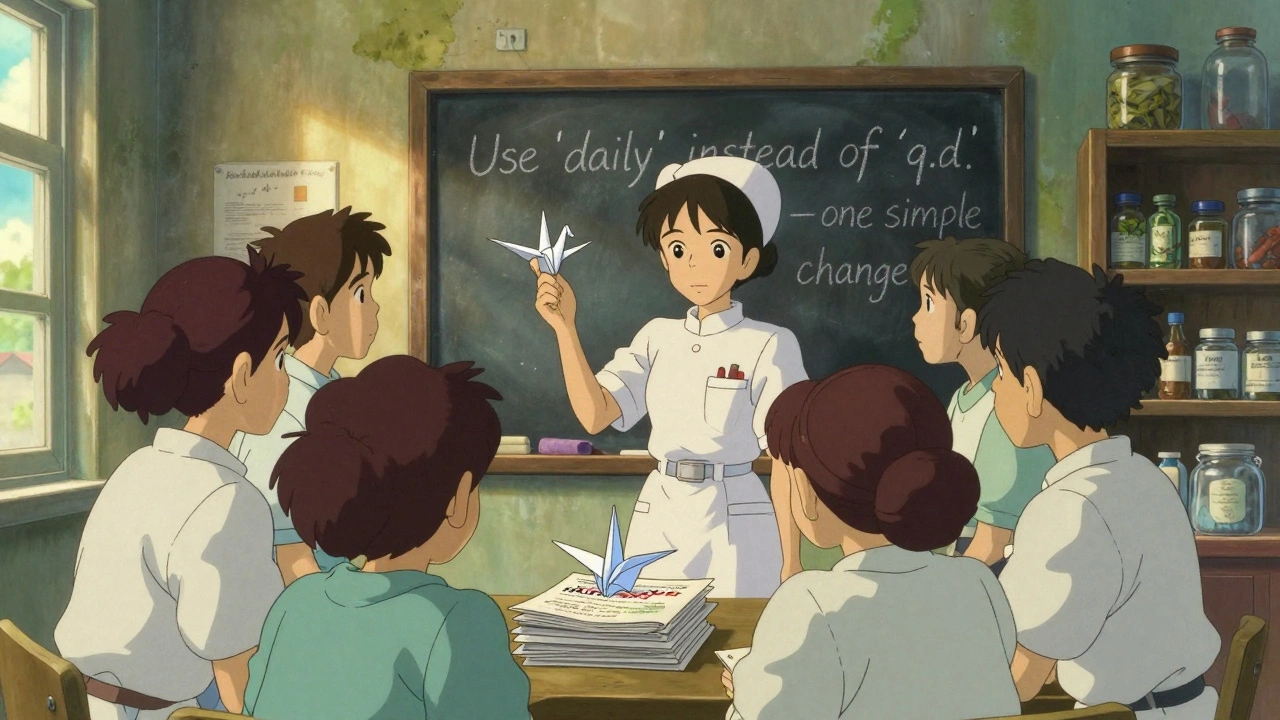
- Share one change with your team. Even if it’s small-like stopping the use of “q.d.” and writing “daily” instead.
You don’t need to be perfect. You just need to be consistent. One small change, repeated, saves lives.
Do I need to pay for ISMP updates?
ISMP’s weekly newsletter costs $299 per year for individuals, but most hospitals and clinics pay for it as part of their safety program. If you’re employed by a hospital, ask your pharmacy or risk management department-they likely already subscribe. Independent providers can sometimes get free access through professional associations or regional safety coalitions.
How often do these updates come out?
ISMP publishes a new alert every week. FDA issues drug safety communications as needed-about 47 in 2023, but sometimes multiple in one week. ASHP updates its guidelines every two years, but posts new tools and resources monthly. AORN releases comprehensive updates every two years, with quarterly micro-updates starting in 2025. WHO releases strategic documents annually and targeted toolkits as needed.
Are these updates only for pharmacists?
No. While pharmacists are the most frequent users, every provider who prescribes, dispenses, or administers medication needs these updates. Nurses, physicians, nurse practitioners, and even medical assistants should be aware of changes in drug safety. A wrong dose given by a nurse or prescribed by a doctor can be just as harmful as a pharmacy error.
Can I rely only on the FDA for safety updates?
No. FDA alerts are authoritative but reactive-they often come after harm has occurred. ISMP and ASHP alerts are proactive, based on near-misses and system flaws before patients are hurt. Using only the FDA is like waiting for a fire alarm before you check your smoke detector. Combine FDA alerts with ISMP’s real-time insights for full protection.
What if my clinic doesn’t have a safety officer?
Designate someone-anyone-with an interest in safety. It could be the lead nurse, the pharmacist, or even a detail-oriented admin. Their job isn’t to be an expert-it’s to be the person who checks the updates weekly, shares one key change with the team, and follows up to make sure it’s done. Consistency matters more than titles.

Casper MacIntyre
Hello, my name is Casper MacIntyre and I am an expert in the field of pharmaceuticals. I have dedicated my life to understanding the intricacies of medications and their impact on various diseases. Through extensive research and experience, I have gained a wealth of knowledge that I enjoy sharing with others. I am passionate about writing and educating the public on medication, diseases, and their treatments. My goal is to make a positive impact on the lives of others through my work in this ever-evolving industry.
12 Comments
-
Katie Allan
December 6, 2025 AT 11:11I appreciate how practical this is. Too many safety guides drown you in jargon and bureaucracy. The idea of designating one person to track updates - even if they're not a 'safety officer' - is genius. It's not about titles, it's about responsibility. And that 15-minute weekly check? That's the kind of small, sustainable habit that actually changes culture. Keep it simple. Keep it human.
-
Lucy Kavanagh
December 6, 2025 AT 19:03You know what they don't tell you? ISMP is funded by pharmaceutical companies. They're not trying to save lives - they're trying to control the narrative. That 'Medication Safety Alert!'? It's a Trojan horse. One week they warn about insulin, next week they push a specific brand of barcode scanner. And the FDA? They're in bed with Big Pharma too. If you're not checking the original trial data, you're being manipulated. I've seen it. They bury the bad stuff and hype the 'safe' drugs that pay the bills.
-
Chris Brown
December 7, 2025 AT 01:37The assertion that independent providers can access ISMP through professional associations is misleading at best. Most regional coalitions are underfunded, poorly organized, and often require a membership fee equivalent to the subscription itself. Furthermore, the notion that a 'lead nurse' can adequately interpret and implement ISMP guidelines without formal pharmacological training is not only naive - it is professionally irresponsible. Safety protocols require standardized, accredited oversight, not ad hoc delegation.
-
Michael Dioso
December 8, 2025 AT 14:16Look, I get it - you want to feel like you're doing something. But let’s be real: 90% of these updates are just rewording the same damn thing every year. 'Don't use U for units'? We've known that since 2007. 'Double-check insulin'? Yeah, because someone once gave a patient 100 units instead of 10. And now we’ve got a whole industry built around screaming about the same 5 mistakes. Meanwhile, no one talks about how EHRs make errors worse by forcing 17 clicks to prescribe a simple antibiotic. Fix the damn system, not the newsletter subscriptions.
-
Krishan Patel
December 9, 2025 AT 09:06The Western obsession with procedural compliance as a substitute for clinical wisdom is the root of modern medical decay. You cite ISMP, FDA, ASHP - institutions that have become bureaucratic idols. True safety arises from mindfulness, not checklists. A nurse who pauses, breathes, and asks, 'Does this make sense?' is safer than a hundred alerts. The problem is not the lack of updates - it is the erosion of judgment. We have replaced intuition with automation, and now we wonder why errors persist. The answer lies not in more emails, but in restoring the soul of medicine.
-
Carole Nkosi
December 9, 2025 AT 09:46This whole thing is a luxury. In my clinic, we don't have time for weekly newsletters. We don't have a pharmacy department. We don't have a 'safety officer.' We have one nurse, one doctor, and a broken printer. If I had to pay $299 for an email, I'd be buying more insulin for my patients. You talk about 'small changes' like it's a game. For most of the world, safety isn't about subscriptions - it's about whether the meds arrive at all.
-
Annie Grajewski
December 10, 2025 AT 11:57ok so i just signed up for the FDA alerts and honestly? i forgot about it. then i got an email about some drug recall and i was like wait did i even know that med was in my clinic? then i checked and we didn't even stock it. so like... what's the point? also why does everyone act like ISMP is the bible? i read one alert and it was like 12 pages of jargon. i just want to know if i should stop giving metformin to kidney patients. not write a thesis.
-
Norene Fulwiler
December 12, 2025 AT 08:24I work in a rural clinic in Texas with a mix of English, Spanish, and Vietnamese-speaking staff. We don’t have a safety officer. But we do have a whiteboard by the med cart. Every Monday, our lead nurse writes one update in all three languages - like 'Use 'unit' not 'U'.' It takes 5 minutes. No one gets paid extra. No one has a title. But we’ve had zero medication errors in 18 months. Sometimes the simplest thing - shared, visible, and translated - is the most powerful.
-
William Chin
December 14, 2025 AT 01:38The suggestion that any individual - regardless of training or credentialing - can be designated as a 'safety point person' is not only procedurally unsound, but potentially in violation of state licensure statutes governing scope of practice. Pharmacists are trained in pharmacokinetics, drug interactions, and risk stratification. Nurses are trained in administration and observation. Neither is qualified to interpret ISMP's nuanced safety analyses without formal continuing education. To imply otherwise is to endanger patient safety under the guise of accessibility.
-
Ada Maklagina
December 15, 2025 AT 20:44i just read the ismp alert and it said dont use q.d. use daily. ok cool. i did that in 2018. why is this still a thing? also why is this the most important thing you wrote? like... are we really this far behind?
-
Stephanie Fiero
December 16, 2025 AT 09:19You're right - it's not about the newsletter. It's about the habit. I used to ignore all this stuff until my coworker got flagged for a near-miss with heparin. We started doing 10-minute safety huddles before shift change. Just one thing. One change. We didn't fix everything. But we stopped the little things that add up. And now? People actually look forward to it. Not because it's perfect - because it's ours. You don't need a title. You just need to care enough to say: 'Hey, this matters.'


Write a comment
More Articles
Clofranil (Clomipramine) vs Alternatives: Detailed Comparison Guide
A comprehensive side‑by‑side look at Clofranil (Clomipramine) versus popular antidepressant alternatives, covering efficacy, dosing, side effects, and best‑fit scenarios.

Exploring Bimatoprost's Impact on Mental Health: Understanding the Link
Bimatoprost is a medication commonly used for treating glaucoma and promoting eyelash growth, but its effects on mental health are drawing interest. With an increasing number of reports concerning mood changes or psychological side effects, it's essential to examine the potential connection. This article delves into how bimatoprost works, its known effects, and investigates anecdotal evidence and scientific studies on mental well-being. Considering the medication's benefits and side effects, we offer helpful tips for those prescribed bimatoprost.

Harry Nguyen
December 4, 2025 AT 23:52Let me guess - you're one of those people who thinks paying $299 for a newsletter is 'worth it.' Meanwhile, real doctors are using free tools and still not killing anyone. ISMP is just corporate fear-mongering dressed up as 'safety.' I've been practicing for 22 years. Never needed a weekly email to tell me not to write 'U' for units. We used to use pencils and common sense. Now we have alerts for everything except how to be a competent clinician.