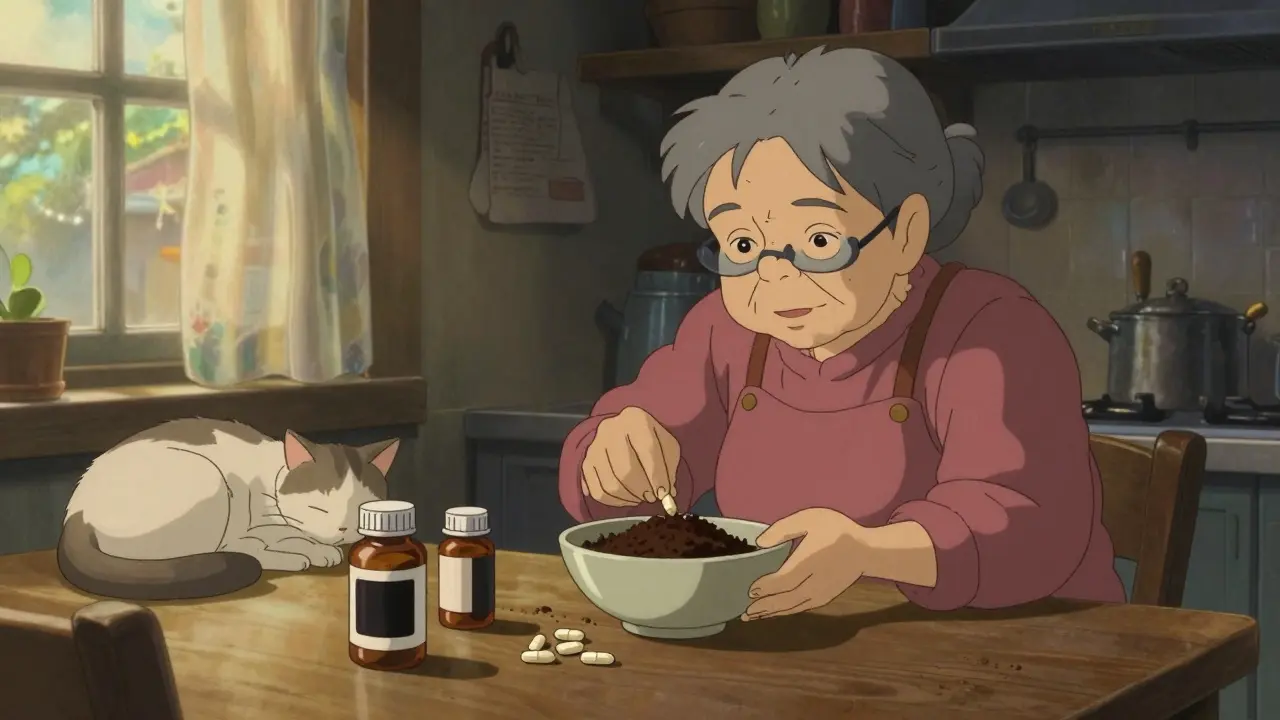
Most people don’t think twice about tossing old pills in the trash. But if you just dump them in the bin-untouched, in their original bottles-you’re putting your family, your neighbors, and the environment at risk. Every year, thousands of children accidentally swallow medications left in open cabinets. Thousands more misuse pills they find in the trash or at home. And chemicals from those pills? They end up in our water, soil, and even our food chain. The good news? You can stop this. It’s not hard. You just need to know the right steps.
Why You Can’t Just Throw Pills in the Trash
You might think, “It’s just a few pills. What’s the harm?” But here’s what happens when you don’t dispose of them properly. Medications in landfills can leach into groundwater. Studies show that traces of antidepressants, antibiotics, and painkillers are found in 80% of U.S. waterways. Even if you live far from a river, those chemicals move. They get into drinking water supplies. They show up in fish. They’re not gone just because you threw them out. And then there’s the safety issue. A 2021 FDA survey found that 37% of people who improperly disposed of medications didn’t even remove the label. That means someone could find your name, your prescription number, your address-and use that to steal your identity or grab your painkillers. Teens and adults alike have died from grabbing what they thought was a harmless leftover pill. This isn’t a small problem. It’s a public health issue.When Household Trash Is the Only Option
The best way to get rid of meds? Take them to a drug collection site. Walgreens, CVS, and local police stations often have drop boxes. But if you live in a rural area, or there’s no nearby location, or it’s after hours-then household trash is your next best option. The FDA and EPA both say it’s okay, as long as you do it right. And “right” means following five clear steps.Step 1: Check the FDA Flush List
Before you even think about the trash, check if your medication is on the FDA’s Flush List. This list has 15 specific drugs that are dangerous enough that flushing is actually safer than keeping them in the house. These are mostly strong opioids like fentanyl patches, oxycodone, and methadone, plus a few sedatives. If your pill is on this list, flush it. Don’t wait. Don’t store it. Don’t risk someone finding it. You can find the full list on the FDA’s website, but here’s the quick version: if your prescription says “take as needed for severe pain” and it’s a strong opioid, it’s probably on the list. If it’s not on the list? Then move to trash disposal. But don’t skip this step. Flushing the wrong drug can pollute water. Flushing the right one can save a life.Step 2: Remove Pills from Original Containers
Take all pills-capsules, tablets, liquids-out of their bottles. Don’t leave them inside. Why? Because those bottles are a goldmine for anyone looking for drugs. Your name, your doctor’s name, your dosage, your prescription number-all right there. Even if you think no one will look, someone might. And if they do, they could steal your identity or misuse your meds. You’re not just protecting your privacy-you’re following HIPAA rules. The law says you must remove personal info from medical waste. So take them out. Now.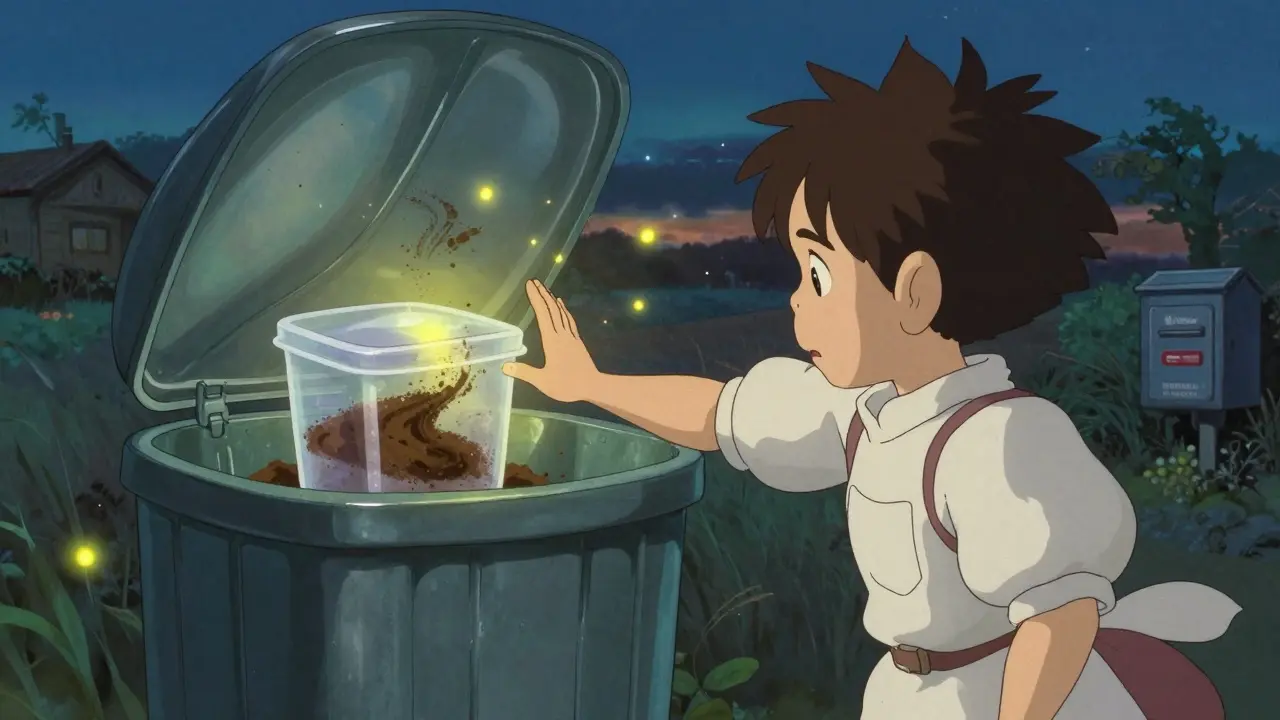
Step 3: Mix With Something Ugly
This is the most important step. Don’t just dump pills into a bag. Mix them with something unappealing. The FDA recommends used coffee grounds, cat litter, or dirt. Why? Because if someone (or a pet) digs through your trash, they won’t want to eat it. A 2022 University of Michigan study found that 92% of American homes already have one of these items on hand. You don’t need to buy special products. Use at least a 1:1 ratio. If you have a handful of pills, add a handful of coffee grounds. For liquids, pour them into a container with cat litter and stir until it soaks up. Don’t crush pills. The FDA warns that crushing can release dangerous dust, especially with opioids or chemotherapy drugs. Just mix them whole.Step 4: Seal It in a Leak-Proof Container
Now, put that mixture into a sealable container. A resealable plastic bag works. So does an empty yogurt tub, a margarine container, or even a glass jar with a tight lid. The goal is to stop leaks and keep it from spilling. Don’t use a flimsy sandwich bag-it can tear. You want something sturdy. This step prevents accidental spills in your trash bin and keeps curious hands or paws away.Step 5: Hide Your Personal Info
Take those empty pill bottles. Grab a permanent marker. Black out your name, your address, your doctor’s name, and your prescription number. If you don’t have a marker, use duct tape. Or scratch the label with a key until it’s unreadable. Don’t just peel it off-most labels are glued on, and the adhesive can still leave traces. You need to make sure no one can reconstruct your info. And here’s something most people don’t know: those little amber prescription bottles? They’re not recyclable. In 87% of U.S. cities, you can’t put them in the recycling bin. So after you’ve scrubbed off the label, throw them in the trash too.What Not to Do
Don’t flush anything unless it’s on the FDA’s list. Flushing non-listed drugs pollutes waterways and harms aquatic life. Don’t pour pills down the sink. Don’t keep old meds in your medicine cabinet. Don’t give them to friends or family. Don’t just toss them in a plastic bag without mixing them. And don’t assume “expired” means safe to ignore. Expired meds can still be active-and dangerous.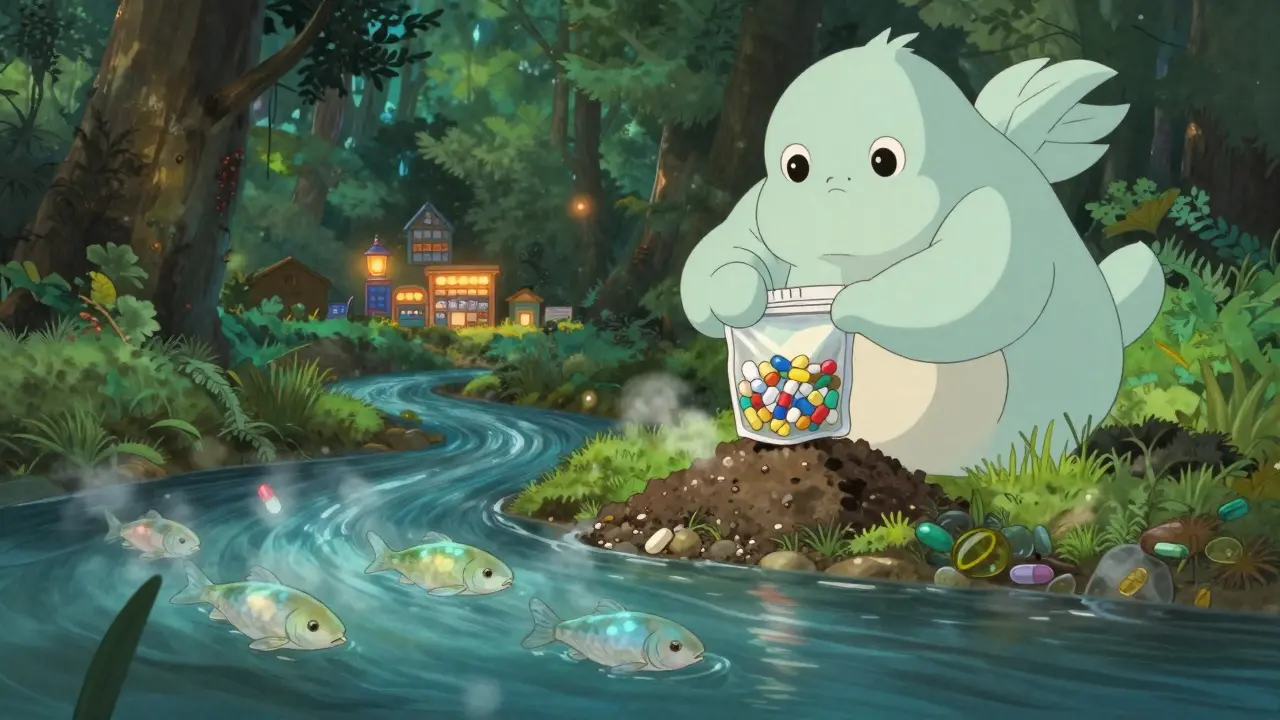
What If You Can’t Find a Take-Back Site?
If you’re in a rural area, or your town doesn’t have a drop box, you’re not alone. A 2023 report found that rural areas have less than one take-back location per 100,000 people. That’s why the trash method exists. But here’s a tip: check with your local pharmacy. Some offer mail-back envelopes. The Inflation Reduction Act of 2022 now covers these for Medicare Part D users. You can order a free disposal kit online. Just search “medication disposal mail-back” and your state name. Some cities, like Los Angeles and Orange County, run annual collection events. Call your city’s waste management office. Ask if they have a “household hazardous waste” day. They often collect meds along with paint and batteries.What’s Changing in 2025?
New rules are coming. In January 2024, California passed a law requiring all large pharmacies to offer free disposal kiosks. That’s good news for 39 million people in the state. The FDA is also testing curbside pickup in 12 communities. And by 2026, you might see new packaging-water-soluble pills that dissolve safely after use, so you never have to dispose of them at all. Three companies are already in final testing. But until then, you have to act. You can’t wait for the system to fix itself. You have to protect your home, your community, and your environment.Final Checklist: Did You Do It Right?
- ✅ Checked if the drug is on the FDA Flush List?
- ✅ Removed pills from original bottles?
- ✅ Mixed with coffee grounds, cat litter, or dirt (1:1 ratio)?
- ✅ Sealed in a leak-proof container?
- ✅ Scrubbed or covered all personal info on empty bottles?
- ✅ Threw it in the household trash, not the recycling?
Frequently Asked Questions
Can I flush any medication if I don’t have a take-back option?
No. Only medications on the FDA’s Flush List should be flushed. This includes 15 specific drugs, mostly strong opioids and sedatives, because they’re extremely dangerous if misused. Flushing other drugs pollutes water and harms wildlife. If your medication isn’t on the list, use the trash method with mixing and sealing.
What if I have liquid medications like cough syrup?
Pour the liquid into a container with cat litter or used coffee grounds. Stir it until it soaks up completely. Then seal it in a resealable bag or rigid container. Don’t pour it down the sink or toilet. Even if it’s just syrup, it still contains active chemicals that can contaminate water.
Can I recycle the pill bottles?
No. Most prescription bottles are made of #5 plastic, which isn’t accepted by 87% of U.S. recycling programs. Even if your city says it accepts #5, the labels and adhesives make them hard to process. After removing and obscuring your personal info, throw them in the trash.
Is it safe to mix medications with pet waste?
No. Don’t mix meds with pet waste. It’s not a reliable deterrent and can create biohazard risks. Stick to coffee grounds, dirt, or cat litter. These are proven, safe, and widely available. Pet waste doesn’t hide the pills effectively and can attract pests or spread bacteria.
What if I live in California?
California has stricter rules. Under SB 212, you cannot flush or throw any medication into the trash. You must use a pharmacy drop box or mail-back program. As of 2024, all large pharmacies in California must offer free disposal kiosks. If you can’t access one, contact your local health department for help. State law overrides federal guidelines here.
How often should I clean out my medicine cabinet?
Do it at least once a year-maybe during spring cleaning or after the holidays. Check expiration dates. Look for pills that changed color or smell. Get rid of anything you haven’t used in over a year. Keep only what you’re actively taking. A cluttered medicine cabinet is a risk, not a convenience.

Casper MacIntyre
Hello, my name is Casper MacIntyre and I am an expert in the field of pharmaceuticals. I have dedicated my life to understanding the intricacies of medications and their impact on various diseases. Through extensive research and experience, I have gained a wealth of knowledge that I enjoy sharing with others. I am passionate about writing and educating the public on medication, diseases, and their treatments. My goal is to make a positive impact on the lives of others through my work in this ever-evolving industry.
12 Comments
-
Greg Quinn
January 1, 2026 AT 10:06It’s funny how we’ll recycle a soda can but dump a bottle of antidepressants like it’s trash. We treat chemicals like they’re either sacred or worthless-no in-between. Maybe we need to stop thinking of meds as ‘disposable’ and start seeing them as biohazards with names.
Also, the FDA flush list is a weirdly specific list of drugs that could kill you in 10 minutes if you’re not careful. That’s not policy-that’s triage by pill bottle. -
Duncan Careless
January 2, 2026 AT 05:47Had no idea about the bottle labels being a privacy risk. Just threw mine in the bin like a dummy. Thanks for the wake-up call. Will do the coffee grounds thing now. 😅
-
Jim Rice
January 3, 2026 AT 21:57Why are we even talking about this? The real problem is that Big Pharma keeps making drugs that are addictive and then doesn’t fund safe disposal. Blame the makers, not the users. Also, cat litter? Really? That’s your solution? Pathetic.
-
Lisa Dore
January 5, 2026 AT 01:19Y’all are doing amazing just by reading this. Seriously. Taking this step means you care more than most. Keep going. You’re changing the culture, one pill bottle at a time. 💪❤️
-
Sharleen Luciano
January 5, 2026 AT 22:57Let’s be honest: if you’re using coffee grounds to mask opioids, you’re not solving a public health crisis-you’re performing performative harm reduction. The real solution is decriminalization, universal take-back infrastructure, and pharmaceutical accountability. This ‘mix with cat litter’ advice is the pharmaceutical industry’s PR arm whispering into your ear while they profit off the opioid epidemic. 🤡
-
Louis Paré
January 6, 2026 AT 14:55Step 3: Mix with something ugly. So now we’re turning medicine into a compostable horror show? What’s next? Burying them with a curse? This is the kind of advice that makes people think they’re doing something meaningful while doing nothing structural. Lazy. I’d rather see a national mandate than a DIY trash ritual.
-
Aliza Efraimov
January 7, 2026 AT 06:02I’m a nurse. I’ve seen kids overdose on grandma’s leftover oxycodone. I’ve seen adults steal pills from trash bins behind pharmacies. This guide? It’s not just helpful-it’s a lifeline. If you’re reading this and you’ve been putting off disposal, do it today. Don’t wait for a tragedy to make you act. I’ve held too many parents while they cry over what they didn’t know. You can prevent that.
Also-yes, the amber bottles can’t be recycled. I’ve tried. They jam the machines. They’re a nightmare for waste workers. Trash them. Properly. -
Jasmine Yule
January 9, 2026 AT 01:30@6414 I get what you’re saying about systemic change, but not everyone lives in a city with a take-back program. For people in rural areas? This is their only option. Don’t shame them for doing what they can.
Also, cat litter works. My neighbor’s dog dug through the trash last week and walked away with a bellyache. Not the pills. The litter. 😅 -
Manan Pandya
January 9, 2026 AT 20:43Excellent guide. I’ve shared this with my family in India. We don’t have disposal programs here, but we do have coffee grounds and old soil. The principle is universal: make it unappealing, obscure identity, contain securely. Knowledge is power, and this is vital knowledge.
-
Nisha Marwaha
January 10, 2026 AT 00:53From a public health informatics standpoint, the FDA’s Flush List represents a risk-based stratification heuristic aligned with pharmacokinetic half-life and bioavailability thresholds. The 1:1 mixing protocol is empirically validated for bioavailability suppression via adsorption matrix saturation. However, the lack of standardized containerization protocols across municipal waste streams introduces heterogeneity in containment efficacy. Recommend adopting ISO 13485-compliant disposal receptacles for optimal pathogen and chemical containment.
-
Greg Quinn
January 10, 2026 AT 11:09Manan Pandya nailed it. This isn’t just about pills. It’s about how we treat the invisible consequences of modern medicine. We prescribe, we consume, we discard-and pretend the chain ends there. But it doesn’t. The water doesn’t forget. The soil doesn’t forget. And the kids who find those bottles? They don’t forget either.
Maybe the real solution isn’t better trash methods. Maybe it’s fewer pills in circulation to begin with.


Write a comment
More Articles
Cyclosporine Nephrotoxicity: How to Monitor Kidney Function and Drug Levels
Cyclosporine is vital for transplant patients but can damage kidneys. Learn how to monitor blood levels, kidney function, and drug interactions to prevent toxicity and protect graft survival.
How to Buy Prednisone Online Safely in 2025
Curious about getting Prednisone online? Discover how and where to buy it safely, what to look out for, and real tips for your next purchase.
Carbamazepine and the Risk of Birth Defects: What Pregnant Women Need to Know
Carbamazepine increases the risk of birth defects like spina bifida and cleft palate during pregnancy. Learn the real risks, safer alternatives, and how to plan for a healthy pregnancy while managing epilepsy or bipolar disorder.
Jasmine Yule
December 30, 2025 AT 11:00This is the kind of post that actually saves lives. I used to just toss my dad's old painkillers in the bin-until my cousin’s kid got into them. Don’t be that person. 🙏