
When you're pregnant, every pill, supplement, or over-the-counter medicine feels like a high-stakes decision. You want to feel better - whether it’s nausea, heartburn, or high blood pressure - but you also don’t want to risk your baby’s health. That’s why so many expectant mothers ask: Are generic medications safe during pregnancy? The short answer is yes - if they’re FDA-approved. But the real story is more layered, and it matters because 90% of all prescriptions filled in the U.S. are generics, and more than half of pregnant women take at least one prescription drug.
Generic Drugs Are Not Second-Class Medications
Generic drugs aren’t cheaper because they’re weaker. They’re cheaper because they don’t need to repeat expensive clinical trials. The FDA requires that a generic version contains the exact same active ingredient, in the same strength, and works the same way in the body as the brand-name drug. This isn’t a suggestion - it’s a legal requirement under the Hatch-Waxman Act of 1984. To get approved, a generic must prove it delivers the same amount of medicine into the bloodstream within a tight range: 80% to 125% of the brand-name version. For some drugs, like levothyroxine (used for thyroid conditions during pregnancy), the range is even tighter - 90% to 112% - because even small changes can affect fetal development.
The FDA’s approval process doesn’t stop at chemistry. Generics must also match the brand-name drug in how quickly they dissolve in the body, how stable they are on the shelf, and how consistently they perform across batches. That’s why a generic prenatal vitamin or metformin for gestational diabetes isn’t a gamble - it’s a scientifically validated copy.
Pregnancy Safety Labels Apply Equally
Before 2015, drugs were labeled with simple letters - A, B, C, D, X - to show pregnancy risk. Those categories are gone now, replaced by detailed sections in drug labels that explain known risks, clinical considerations, and data from human and animal studies. The key point? These labels apply to both brand and generic versions of the same drug. If the brand-name version of ondansetron (Zofran) has a warning about potential fetal risks, so does every generic version. The FDA mandates that generic manufacturers update their labels at the same time as the brand-name maker - within 30 days of any change.
This means if your doctor prescribes a generic version of amoxicillin for a urinary tract infection during pregnancy, you’re getting the same safety profile as the brand-name version. The same goes for famotidine (Pepcid), calcium carbonate (Tums), and diphenhydramine (Benadryl). All are classified as low-risk during pregnancy, and their generic equivalents are treated the same way by regulators.
What About the Inactive Ingredients?
Here’s where confusion creeps in. Generics can differ in color, shape, flavor, and - most importantly - inactive ingredients like fillers, dyes, or preservatives. These don’t affect how the medicine works, but they can affect how your body reacts to it. For example, some people report more nausea with certain generic versions of ondansetron, even though the active ingredient is identical. A 2020 study found that 32.7% of pharmacists had seen patients report differences in side effects between generic versions made by different companies.
Why? Pregnancy changes your body. Your stomach empties slower. Your blood volume increases. Your kidneys filter faster. These shifts can make tiny differences in how a drug is absorbed - especially if the tablet dissolves slightly differently. That’s why some women notice a change when switching from one generic to another, even if both are labeled the same. It’s not that one is unsafe - it’s that your body might respond differently to the formulation.
For most medications, this doesn’t matter. But for drugs where precision matters - like thyroid meds, seizure medications, or blood thinners - your provider may recommend sticking with the same brand or generic version throughout pregnancy to avoid any fluctuation.
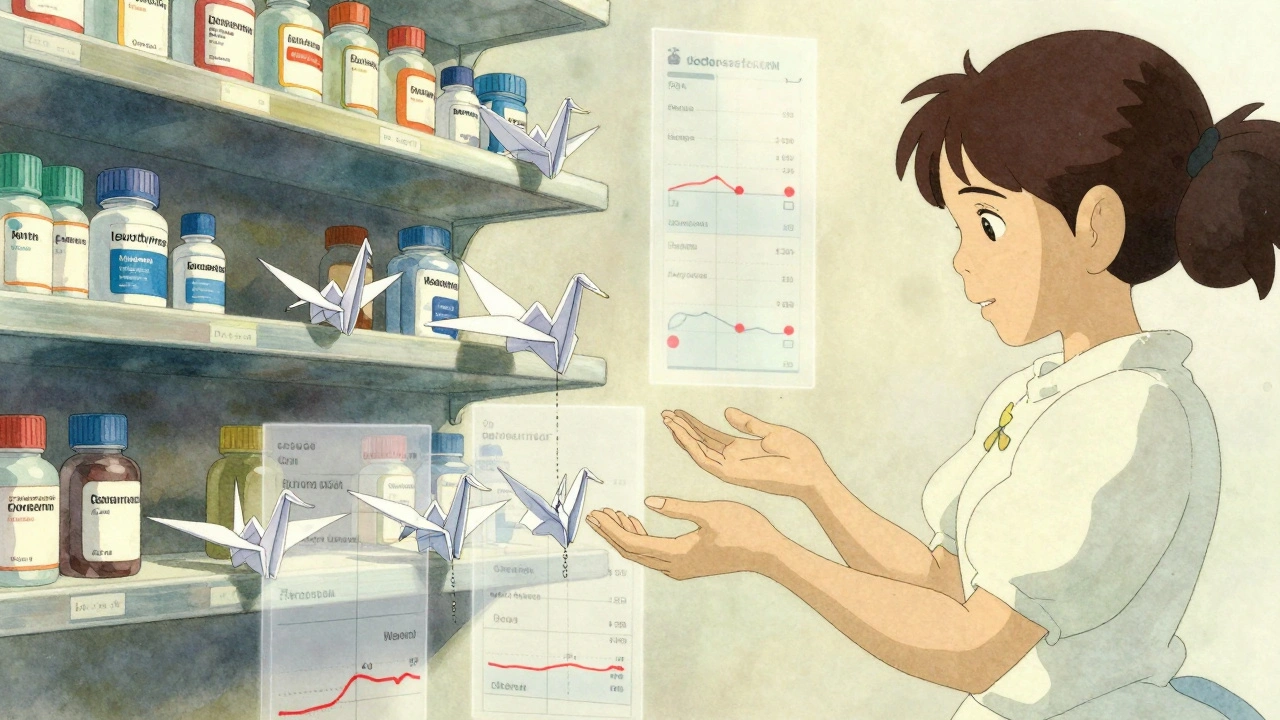
High-Risk Drugs: Generics Are Just as Strictly Controlled
Some drugs are dangerous during pregnancy - isotretinoin (Accutane) is one. It can cause severe birth defects. The FDA didn’t just approve generic versions of isotretinoin - they made sure every single one, no matter the manufacturer, is tied to the same strict risk program: iPLEDGE. That means monthly pregnancy tests, two forms of birth control, and mandatory counseling. The FDA’s own data from 2018 to 2022 shows no difference in pregnancy rates between brand-name and generic isotretinoin. Both have a 0.2% risk of pregnancy in patients using the drug - not because the drug is unsafe, but because the system works.
The same applies to other high-risk drugs. If a drug has a Risk Evaluation and Mitigation Strategy (REMS), that applies equally to generics. The FDA doesn’t cut corners just because it’s a cheaper version.
Real-World Data: What Studies Actually Show
Let’s look at hard numbers. A 2019 study in the Journal of Obstetrics and Gynaecology Canada tracked 127 pregnant women who switched from brand-name to generic medications for conditions like asthma, depression, and hypertension. The researchers found no difference in preterm birth, low birth weight, or birth defects. The p-value was 0.37 - meaning any differences were random, not caused by the switch.
Another study in Obstetrics & Gynecology in 2021 followed 157 pregnant women using generic metformin for gestational diabetes. Their outcomes - including baby size, NICU admissions, and cesarean rates - matched historical data from women using the brand-name version. No red flags.
Even for prenatal vitamins, where people often worry about absorption, data from MotherToBaby’s registry shows no increased risk from generic formulations. In fact, 89% of women who were initially worried about generics continued using them after talking to their provider.
Why Do So Many Women Still Worry?
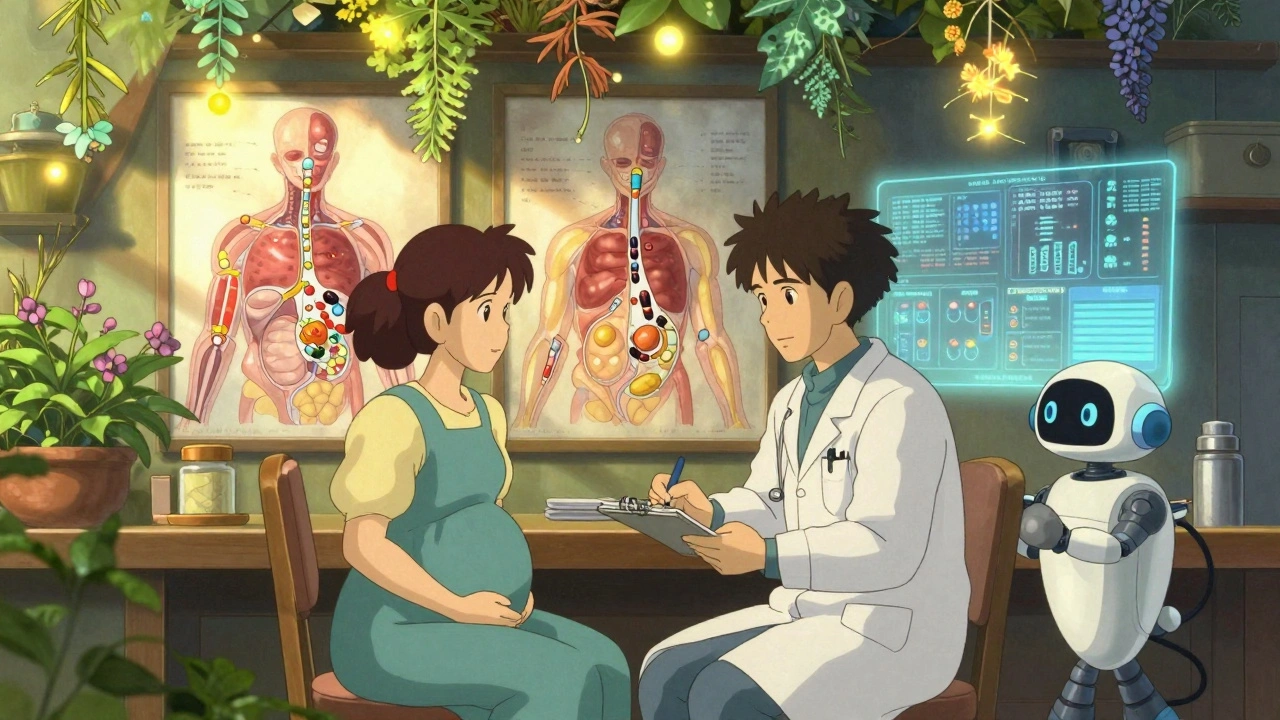
Despite all this, a 2022 survey found that 41.3% of obstetric providers say patients still hesitate to take generics. Why? Three reasons: misinformation, personal experience, and fear of the unknown.
Some women read stories online - like a Reddit thread where 29% of respondents said generic prenatal vitamins made them more nauseous. That’s real, but it’s not proof the drug is unsafe. It might be a dye, a filler, or even just the placebo effect of thinking “this is cheaper, so it’s worse.” One woman in a 2022 case study reported worse migraines after switching from brand-name sumatriptan to generic. But when her provider reviewed her records, there was no clear link - she’d also changed sleep patterns and stress levels around the same time.
Pharmacists report spending an average of 4.2 minutes per pregnancy consultation explaining this. That’s not a lot of time. But when they do, trust builds. Women who get clear, evidence-based answers are far more likely to stick with generics - and save hundreds of dollars in the process.
What Should You Do?
Here’s your practical guide:
- Ask your provider: “Is there a generic version of this medication? Is it safe for pregnancy?” Most are.
- Don’t switch brands mid-pregnancy unless necessary. If you’re stable on a generic, stay on it. If you’re on brand, don’t feel pressured to switch - but don’t refuse a generic if it’s offered.
- Check the label. Look for the active ingredient. If it matches your brand-name drug, it’s the same medicine.
- Watch for side effects. If you notice new symptoms after switching - like more nausea, dizziness, or headaches - tell your provider. It might be the filler, not the drug.
- Avoid compounded medications. These aren’t FDA-approved generics. They’re custom-made and can vary in strength. Skip them unless your doctor says they’re absolutely necessary.
The Bigger Picture
By 2027, 95% of medications used in pregnancy will have generic versions. That’s not just good for your wallet - it’s good for public health. More women will take needed medications if they’re affordable. The FDA’s new Sentinel Initiative is already tracking pregnancy outcomes for generics in real time through electronic health records. This isn’t guesswork anymore - it’s data-driven safety.
Generics aren’t a compromise. They’re a smart, science-backed choice. The same active ingredient. The same safety data. The same regulatory oversight. The only difference? The price tag.
Are generic medications as safe as brand-name drugs during pregnancy?
Yes. The FDA requires generic drugs to have the same active ingredient, strength, dosage form, and bioequivalence as the brand-name version. All pregnancy safety data, warnings, and risk assessments apply equally to both. Generics are not less safe - they’re regulated to be identical in therapeutic effect.
Can inactive ingredients in generics harm my baby?
Inactive ingredients like dyes or fillers don’t affect fetal development, but they can cause minor side effects in the mother - like nausea or stomach upset - especially during pregnancy when the digestive system changes. These aren’t dangerous to the baby, but if you notice a reaction after switching generics, talk to your provider. You may need to stick with one formulation.
What about prenatal vitamins? Are generics okay?
Yes. Generic prenatal vitamins contain the same essential nutrients - folic acid, iron, DHA, calcium - as brand-name versions. Studies show no difference in birth outcomes. Some women report more nausea with certain generics, likely due to fillers or coating. If that happens, try a different brand or switch back to your original.
Is it safe to switch from brand-name to generic during pregnancy?
For most medications, yes. But for drugs with narrow therapeutic windows - like levothyroxine, seizure meds, or blood thinners - your provider may recommend staying on the same version throughout pregnancy to avoid small variations in absorption. Always check with your doctor before switching.
Why do some doctors still hesitate to prescribe generics?
Most don’t. But some providers are cautious because of patient reports or outdated beliefs. A 2022 survey found that 41% of obstetricians still encounter patient hesitancy. The real issue isn’t the drug - it’s the fear. Evidence shows generics are just as safe. Providers who explain this clearly help patients feel more confident.
Are there any generics I should avoid during pregnancy?
No - if they’re FDA-approved. But avoid compounded medications, which aren’t regulated like generics. Also, never take a generic version of a drug that’s known to be dangerous in pregnancy (like isotretinoin) without strict oversight. The drug’s risk profile matters more than whether it’s generic or brand.
How can I tell if a medication is a true generic?
Look at the label. The active ingredient must match the brand-name drug exactly. You can also ask your pharmacist: “Is this FDA-approved as a generic equivalent?” If it’s listed in the FDA’s Orange Book as “AB-rated,” it’s approved as therapeutically equivalent.

Casper MacIntyre
Hello, my name is Casper MacIntyre and I am an expert in the field of pharmaceuticals. I have dedicated my life to understanding the intricacies of medications and their impact on various diseases. Through extensive research and experience, I have gained a wealth of knowledge that I enjoy sharing with others. I am passionate about writing and educating the public on medication, diseases, and their treatments. My goal is to make a positive impact on the lives of others through my work in this ever-evolving industry.
12 Comments
-
John Morrow
December 3, 2025 AT 21:46While the regulatory framework governing bioequivalence thresholds-specifically the 80–125% confidence interval for Cmax and AUC under the Hatch-Waxman Act-is statistically sound and empirically validated across thousands of bioequivalence studies, one must consider the non-linear pharmacokinetic dynamics that emerge during gestational adaptation: increased plasma volume, altered hepatic metabolism via CYP450 modulation, and delayed gastric emptying. These physiological perturbations, while not explicitly accounted for in the FDA’s approval protocols, may introduce clinically meaningful inter-individual variability in drug exposure, particularly for agents with narrow therapeutic indices such as levothyroxine or lamotrigine. The assumption of therapeutic equivalence, therefore, is a mathematical abstraction that does not necessarily translate to biological equivalence in the context of pregnancy.
-
Kristen Yates
December 4, 2025 AT 00:35I took generic prenatal vitamins for both my pregnancies. No issues. No nausea. No problems. My kids are healthy, active, and in school now. I didn’t read all the science, but my doctor said it was fine. I trusted her. Sometimes that’s enough.
-
Saurabh Tiwari
December 4, 2025 AT 19:57bro in india we use generics for everything even for cancer drugs and it works 😎 the system is not perfect but if you trust the science and not the ads you’ll be fine 🤙
-
Michael Campbell
December 6, 2025 AT 16:11They’re lying. The FDA doesn’t test the pills. They just read the paperwork. And don’t get me started on the Chinese factories. You think your baby’s safe? Wake up.
-
Victoria Graci
December 6, 2025 AT 17:56It’s fascinating how we’ve built a medical system that treats pregnancy as a clinical anomaly rather than a natural state. We’ve turned every pill into a moral test, every dose into a gamble. But the truth? The body knows how to adapt. The real tragedy isn’t the generic pill-it’s that we’ve been conditioned to fear the mundane. The same molecules that heal, when stripped of their brand halo, become suspect. We worship the label, not the science. And in doing so, we punish the very people who need care the most: those who can’t afford the privilege of anxiety.
-
Saravanan Sathyanandha
December 7, 2025 AT 16:03As someone who has worked in pharmaceutical quality control in both India and the U.S., I can affirm that FDA-approved generics undergo the same rigorous batch testing, stability analysis, and dissolution profiling as brand-name products. The difference lies only in packaging and cost-not in safety. In India, we produce generics for global markets under WHO-GMP standards, and the outcomes in pregnant populations are consistent with those observed in Western studies. Trust the data, not the fear-mongering.
-
alaa ismail
December 9, 2025 AT 15:57My wife took generic metformin during her pregnancy. No problems. No drama. Just a healthy baby and a lot of saved cash. Sometimes the simplest answer is the right one.
-
ruiqing Jane
December 9, 2025 AT 20:27For anyone still hesitating: the science is clear, the data is robust, and the regulatory oversight is non-negotiable. Choosing a generic isn’t a compromise-it’s an act of informed self-advocacy. You’re not sacrificing safety. You’re reclaiming agency. And if you’re worried about side effects? Document them. Talk to your provider. But don’t let misinformation cost you peace of mind-or your budget.
-
Fern Marder
December 10, 2025 AT 15:35Look. I used generic Zofran. Felt like my stomach was full of spiders. Switched back to brand. Instant relief. So yeah, maybe the science says ‘same’-but my body said ‘nope.’ Don’t ignore your gut. 🤢
-
Carolyn Woodard
December 11, 2025 AT 20:31The epistemological challenge here lies not in the pharmacological equivalence of active ingredients, but in the ontological weight assigned to the placebo effect within the gestational context. When a patient perceives a generic as inferior, neurochemical pathways associated with stress and anxiety are activated-cortisol elevates, vagal tone decreases, and systemic inflammation may increase. These physiological changes, independent of drug composition, may confound outcomes. Thus, the ‘safety’ of generics cannot be evaluated in isolation from the psychosocial framework in which they are administered.
-
Allan maniero
December 12, 2025 AT 17:09It’s interesting how we’ve come to equate cost with quality in healthcare, even when the evidence contradicts that assumption. In the UK, generics account for over 90% of prescriptions, and maternal outcomes remain among the best in the world. The real issue isn’t the pill-it’s the lack of time and resources in clinical settings to properly educate patients. When a midwife has five minutes to explain why a $2 generic is just as safe as a $20 brand, it’s no wonder people panic. We need more dialogue, not more fear. And we need to stop treating pregnant women like they’re incapable of understanding science.


Write a comment
More Articles

The Importance of Hydration in Overactive Bladder Management
As a blogger, I cannot stress enough the importance of hydration in managing an overactive bladder. Drinking adequate water helps maintain a healthy urinary system and prevents the concentration of urine, which can irritate the bladder. Staying hydrated can also help reduce the frequency of bathroom trips and minimize the risk of urinary tract infections. While it may seem counterintuitive, avoiding water can actually make the symptoms of an overactive bladder worse. So, don't forget to drink enough water daily and keep your bladder happy and healthy!

Generic Drug Shortages: Causes and How They Limit Patient Access
Generic drug shortages are crippling access to essential medications in the U.S., with 270 active shortages in 2026. Caused by low profits, concentrated manufacturing, and global supply chain risks, these shortages force patients into dangerous alternatives and strain healthcare workers. The system prioritizes price over reliability-and lives are paying the cost.

Osteoporosis: Understanding Bone Density Loss and How Bisphosphonates Work
Osteoporosis weakens bones and increases fracture risk. Bisphosphonates are the most common treatment, slowing bone loss and reducing fractures by up to 50%. Learn how they work, their risks, and how they compare to newer options.
Sandi Allen
December 2, 2025 AT 11:20Let me get this straight-FDA approves generics? LOL. Have you seen the factory in Bangalore where they make these? They use the same machines that produce cheap aspirin and rat poison. The active ingredient? Maybe. But what’s in the filler? Glyphosate? Talc? I’ve seen women have miscarriages after switching to ‘generic’ prenatal vitamins. It’s not coincidence-it’s corporate greed masked as ‘affordability.’ The FDA? A puppet of Big Pharma. They don’t care if your baby’s brain doesn’t develop right. They just want you to stop buying the brand-name stuff.