
Vitamin D and Statin Tolerance Checker
Enter your vitamin D blood test result (in ng/mL) to see if it relates to your statin tolerance.
Important: Based on the 2022 JAMA Cardiology study, vitamin D supplementation does not reduce muscle pain from statins for most people. The study found no difference in muscle symptoms between patients taking vitamin D and those taking placebo.
For millions of people taking statins to lower cholesterol and prevent heart attacks, muscle pain isn’t just an inconvenience-it’s a dealbreaker. About 7 to 29% of patients stop taking statins because of muscle aches, weakness, or cramps. That’s a huge number of people walking away from a medication proven to cut heart disease risk by 25-35%. And for years, doctors noticed something odd: many of these patients also had low vitamin D levels. So, they started giving them supplements. Some patients felt better. Others didn’t. Now, after more than a decade of conflicting studies, we have to ask: does vitamin D status actually affect how well you tolerate statins?
What’s the connection between vitamin D and muscle pain from statins?
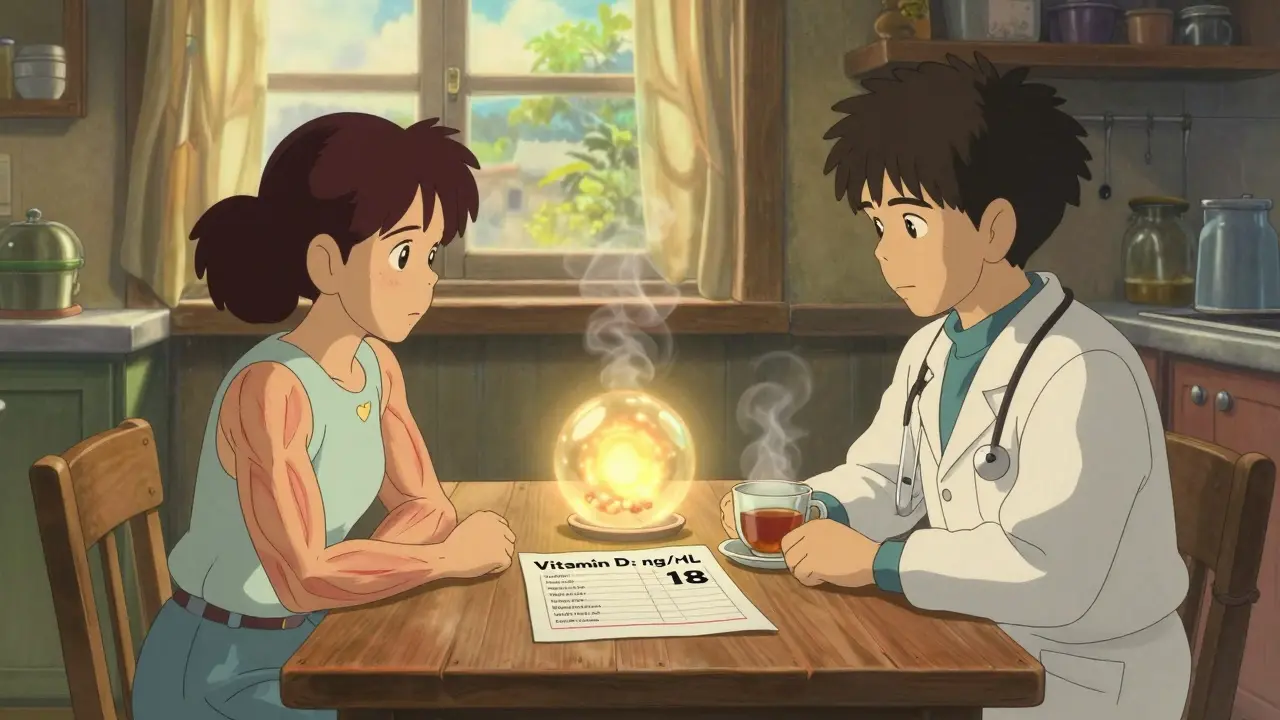
Vitamin D isn’t just about bones. It plays a direct role in muscle function. When your blood level drops below 20 ng/mL, you’re considered deficient-and that’s linked to unexplained muscle weakness, fatigue, and even severe myopathy. Statins, meanwhile, can cause muscle damage in some people by interfering with energy production in muscle cells. The overlap is hard to ignore. Many patients who develop statin-related muscle pain also test low for vitamin D. It’s tempting to assume one causes the other, or that fixing one fixes the other.
Early studies in the late 2000s and early 2010s made this link feel real. One 2009 study found that 92% of patients with statin-induced muscle pain saw their symptoms vanish after taking vitamin D supplements. Another in 2017 looked at 100 patients who couldn’t tolerate statins due to muscle pain. Nearly all of them had vitamin D levels below 20 ng/mL. After correcting the deficiency with supplements, 90% of those patients could successfully restart statins. That’s a powerful number. It’s no wonder many doctors started routinely checking vitamin D levels in anyone complaining about statin side effects.
But here’s where things got complicated
Observational studies-where researchers just watch what happens-can be misleading. People who take vitamin D supplements might also be more health-conscious overall. They might exercise more, eat better, or see their doctors more often. These factors can make it look like vitamin D is helping, when it’s really the whole lifestyle change doing the work.
That’s why the 2022 JAMA Cardiology study was such a game-changer. It wasn’t just watching-it was testing. Researchers enrolled over 2,000 people who were starting statins for the first time. Half got 2,000 IU of vitamin D daily. The other half got a placebo. Neither group nor the researchers knew who got what. After nearly two years, the results were clear: vitamin D didn’t reduce muscle pain or help people stay on statins. Both groups had the same rate of muscle symptoms (31%) and the same rate of stopping statins (13%).
This is the first large, randomized, double-blind trial on this topic. It’s the gold standard. And it says: no benefit.
So why do some patients still feel better after taking vitamin D?
There’s a simple answer: placebo effect. If you believe a supplement will help your muscle pain, your brain can actually reduce the sensation of discomfort. That’s real. It doesn’t mean the supplement is fixing your muscles-it means your mind is helping you cope. And in a situation where statin intolerance is so frustrating, even a small psychological boost can make a big difference.
Some doctors still swear by it. One lipid specialist reported seeing this pattern in their practice for years: patients with low vitamin D and muscle pain improved after correction. They didn’t run a controlled trial-they just watched. And they saw enough cases to change their practice. That’s not bad science. It’s clinical experience. But experience isn’t proof.
Does the type of statin matter?
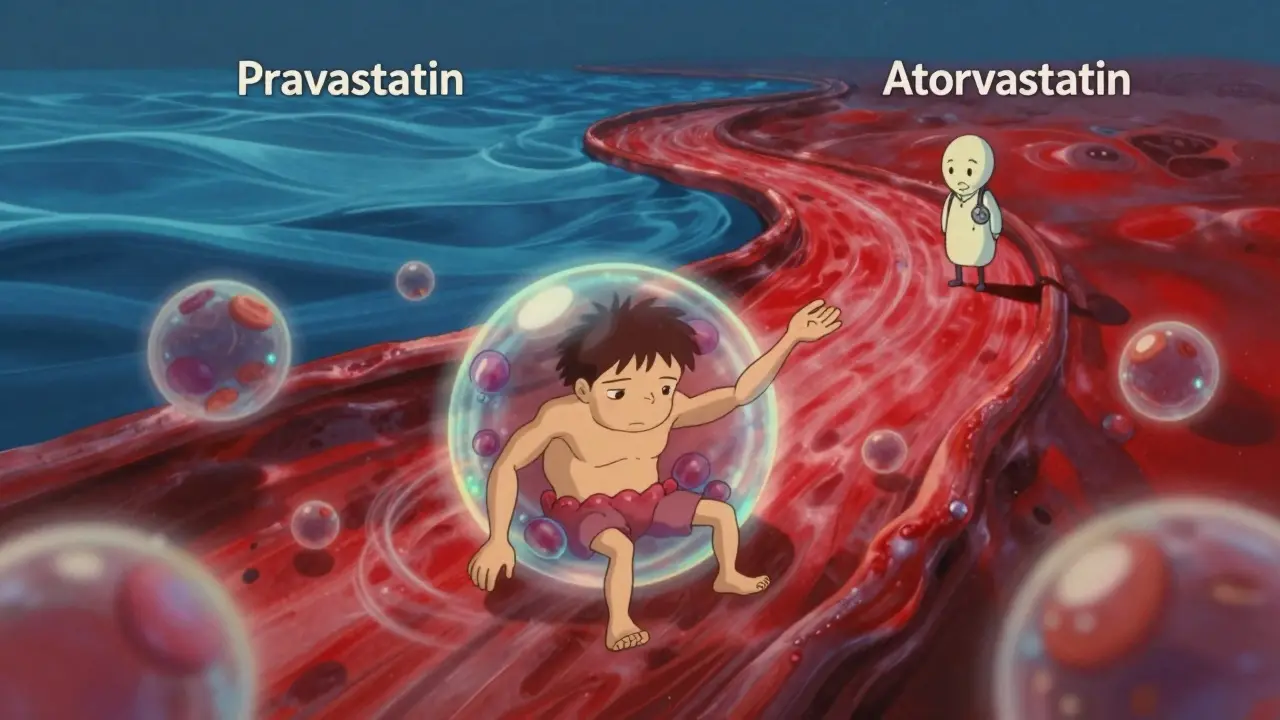
Yes-and it’s not just about vitamin D. Some statins are more likely to cause muscle issues than others. Pravastatin and rosuvastatin seem to be better tolerated in patients with low vitamin D, according to the 2017 study. That’s likely because they’re less dependent on liver enzymes (CYP3A4) that can get overloaded when vitamin D is low. Atorvastatin, on the other hand, is heavily processed by those enzymes, and may pile up in the bloodstream if the system is already strained.
One 2019 study even found that people taking atorvastatin had higher vitamin D levels than those not on statins. That’s surprising. It suggests statins might actually boost vitamin D production-or at least slow its breakdown. Which raises another question: are we treating a symptom that the statin itself is causing?
What should you do if you’re having muscle pain on statins?
Here’s the practical takeaway:
- If you’re on a statin and have muscle pain, don’t assume it’s vitamin D. Get your levels checked, but don’t expect a magic fix.
- If your vitamin D is below 20 ng/mL, supplementing may help your overall muscle health-even if it doesn’t fix the statin issue. It’s still good for your bones, immune system, and general well-being.
- If your level is above 20 ng/mL, supplementing won’t help your muscle pain from statins. The 2022 trial shows that clearly.
- Try switching statins. Pravastatin or rosuvastatin are often better tolerated. A lower dose, or taking it every other day, can also make a difference.
- Don’t stop statins without talking to your doctor. The cardiovascular benefits are huge, and there are alternatives if statins truly don’t work for you.
Why does this debate still exist?
The answer lies in how we interpret science. The 2017 study showed dramatic results: 90% of patients with severe deficiency improved. That’s compelling. But it was small, unblinded, and didn’t control for other factors. The 2022 study was big, rigorous, and found nothing. That’s also compelling.
It’s possible that a small subgroup-people with very low vitamin D (≤20 ng/mL) and no other causes of muscle pain-might benefit. But we don’t have enough data to prove it. And until we do, the safest, most evidence-based approach is to treat the statin intolerance directly, not the vitamin D.
What’s next?
Researchers are still looking. Some wonder if genetics play a role-maybe certain people metabolize vitamin D or statins differently. Others are studying whether very high doses (like 10,000 IU/day) could help, though that’s risky without supervision. For now, the best advice is simple: don’t chase vitamin D as a solution to statin intolerance. Focus on what works: the right statin, the right dose, and a doctor who listens.
Can low vitamin D cause statin muscle pain?
Low vitamin D can cause muscle weakness on its own, which might make statin-related muscle pain feel worse. But it doesn’t directly cause statin-induced myopathy. The 2022 JAMA study found no evidence that supplementing vitamin D reduces muscle symptoms in people taking statins.
Should I take vitamin D if I’m on statins?
Only if your blood test shows you’re deficient (below 20 ng/mL). Vitamin D is important for bone and immune health, regardless of statin use. But if your levels are normal or only slightly low, taking extra won’t help with muscle pain from statins.
Which statin is least likely to cause muscle pain?
Pravastatin and rosuvastatin are generally better tolerated than atorvastatin or simvastatin, especially in people with muscle sensitivity. They’re less dependent on liver enzymes that can become overloaded, making them safer options if you’ve had side effects before.
Is it safe to restart statins after stopping due to muscle pain?
Yes, in most cases. Many people can tolerate statins again after switching to a different type, lowering the dose, or taking it less frequently. Only about 10-15% of patients truly can’t tolerate any statin. Always restart under medical supervision.
Does vitamin D supplementation improve statin adherence?
It might, but not because it fixes muscle pain. If patients believe the supplement is helping, they may feel more confident continuing their statin. That’s a psychological effect, not a biological one. The evidence doesn’t support vitamin D as a reliable tool to improve adherence.

Casper MacIntyre
Hello, my name is Casper MacIntyre and I am an expert in the field of pharmaceuticals. I have dedicated my life to understanding the intricacies of medications and their impact on various diseases. Through extensive research and experience, I have gained a wealth of knowledge that I enjoy sharing with others. I am passionate about writing and educating the public on medication, diseases, and their treatments. My goal is to make a positive impact on the lives of others through my work in this ever-evolving industry.
11 Comments
-
Joseph Cantu
February 27, 2026 AT 08:27You think this is about science? Nah. It's about control. The medical industrial complex needs you dependent. Low vitamin D? Maybe. Or maybe it's glyphosate in your food. Or EMFs. Or the fact that your doctor never checks your CoQ10. They don't want you to know statins deplete it. They want you to keep taking pills. And supplements. And blood tests. And follow-ups. It's a pyramid scheme dressed in white coats.
-
Jacob Carthy
February 28, 2026 AT 19:03Look I don't care what some study says I took D3 for two weeks and my leg cramps vanished. That's all I need. If you're gonna argue with real life results you're not here for facts you're here to be a jerk
-
Lisandra Lautert
March 1, 2026 AT 01:23The 2022 JAMA study is definitive. Not 'compelling.' Not 'suggestive.' Definitive. Double-blind. Randomized. Over 2,000 participants. No benefit. End of story. Any doctor still pushing D3 for statin tolerance is either misinformed or selling something.
-
Cory L
March 2, 2026 AT 20:47I used to be the guy who took every supplement under the sun. Then I got smart. Vitamin D? Sure, if you're deficient. But it's not a statin side effect fix. I switched to pravastatin, cut my dose in half, and now I'm hiking every weekend. No magic pills. Just smart choices. Your body's not broken. You just need the right fit.
-
Joanna Reyes
March 4, 2026 AT 01:47I appreciate the nuance here. The 2017 study did show dramatic results, and I get why doctors cling to it-it's hope. But hope isn't data. I work in a clinic, and we've seen patients who swear by D3, then in the controlled setting, it does nothing. The placebo effect is real, powerful, and often the only thing standing between someone and quitting their statin entirely. Maybe the real value of D3 isn't in the muscle cells-it's in the mind. And that's worth something, even if it's not biological.
-
Stephen Archbold
March 5, 2026 AT 00:57Ive been on rosuvastatin for 3 years now. Low D3. Took supplements. Felt better. But then I read the jama study. Confused. So i stopped d3. No change. My pain stayed the same. So maybe it was the placebo. Or maybe my body just adapted. Either way. I still take the statin. And i still get my sun. No drama. Just life.
-
Nerina Devi
March 6, 2026 AT 23:13In India, we've been using vitamin D supplements for decades-not because of statins, but because so many people are deficient due to limited sun exposure and diet. I've seen patients with severe muscle weakness improve after supplementation. That doesn't mean it fixes statin pain. But it does mean vitamin D matters for muscle health overall. Maybe the issue isn't whether D3 helps with statins-it's whether we're ignoring the root cause of deficiency in the first place.
-
Spenser Bickett
March 7, 2026 AT 05:23So let me get this straight. You're telling me that after a decade of doctors pushing vitamin D like it's holy water, the one study that actually matters says 'lol nope'? And now everyone's gonna pretend they never believed it? Classic. The medical community doesn't admit mistakes. It just rebrands them as 'clinical experience.' Meanwhile, patients are still taking 5000 IU a day because some guy on YouTube said it 'cleanses the mitochondria.'
-
Christopher Wiedenhaupt
March 7, 2026 AT 06:08The evidence is clear. The 2022 JAMA study is the highest quality evidence available. It should change clinical guidelines. Supplementing vitamin D in patients on statins with normal levels provides no benefit for muscle tolerance. This is not a gray area. It is a black-and-white finding. I hope clinicians stop wasting time and resources on this and focus on statin switching, dose adjustment, and patient education.
-
John Smith
March 8, 2026 AT 02:04People still believe in this? Wow. I'm surprised they didn't try giving them crystal healing or a gluten-free statin. The placebo effect is strong. But so is confirmation bias. And now we have a generation of patients who think their muscle pain was 'cured' by a $10 bottle of pills. Meanwhile, the real solution-switching statins-is ignored because it's less sexy than a vitamin.


Write a comment
More Articles

Duphaston (Dydrogesterone) vs. Other Progesterone Options: A Practical Comparison
A detailed, easy‑to‑read comparison of Duphaston (dydrogesterone) with other progesterone options, covering mechanisms, side effects, costs, and when each drug is best.

Medication List Templates: Free Printable and Digital Options for Better Safety
Free printable and digital medication list templates help prevent dangerous drug interactions and improve communication with healthcare providers. Simple, updated lists save lives - especially for seniors and caregivers.
Lou Suito
February 26, 2026 AT 14:23This whole vitamin D thing is a myth. I've been on statins for 8 years. My levels were always normal. Still got muscle pain. Supplementing? Waste of money. The real issue? Pharma wants you to believe there's a simple fix so they can keep selling statins. Meanwhile, your liver's turning into a brick.