
Switching your prescriptions to an online pharmacy used to mean calling your doctor, waiting for a new paper script, and driving to a new location. Now, it takes minutes - sometimes less than an hour - and requires no new paperwork. All you need is the name of your medication and the name of your current pharmacy. The system handles the rest.
How Digital Prescription Transfer Works
Digital prescription transfer is not just faxing or emailing a script. It’s a secure, electronic handshake between pharmacies using standards built over decades. The backbone is the SCRIPT Standard Version 201900 a national protocol for exchanging prescription data between pharmacies and providers, which ensures your name, dosage, refill history, and insurance info move accurately. For controlled substances like opioids or ADHD meds, the system also follows DEA EPCS regulations federal rules requiring two-factor authentication and audit trails for electronic prescriptions of controlled drugs.
Before August 2023, if you wanted to move a controlled substance like Adderall or oxycodone to an online pharmacy, you had to get a new prescription from your doctor - even if you still had refills left. That changed when the Drug Enforcement Administration (DEA) U.S. federal agency regulating controlled substances updated its rules. Now, one electronic transfer is allowed between DEA-registered pharmacies. That means if you’re switching from Walgreens to Amazon Pharmacy, your prescription can move once, as long as it stays digital and untouched.
Why People Are Switching
Convenience is the biggest driver. A 2022 GoodRx survey found that 78% of users chose online pharmacies because they saved time. No more waiting in line. No more forgetting to call in refills. With auto-refill options turned on, your meds arrive before you run out.
Cost matters too. Amazon Pharmacy, for example, often matches or beats the prices of local pharmacies - especially for people with Prime memberships. CVS and Walgreens offer similar discounts through their loyalty programs. And with over 2.1 billion e-prescriptions flowing through networks like Surescripts a nationwide health information network that connects 90% of U.S. pharmacies in 2022, the infrastructure is built to handle millions of transfers.
Studies show it also improves adherence. A 2023 Government Accountability Office report found that Medicare patients who switched to online pharmacies filled 12% more of their prescriptions. That’s not just about convenience - it’s about health outcomes.
How to Transfer Your Prescription
It’s simpler than you think. Here’s how it works on major platforms:
- Go to the online pharmacy’s website or app - CVS, Walgreens, or Amazon Pharmacy all have easy-to-find transfer tools.
- Enter your name, date of birth, and the name of the medication you want to transfer.
- Provide your current pharmacy’s name and location. Some apps will even auto-fill this if you’ve used them before.
- Confirm your insurance info. If it’s not already linked, you may need to upload a photo of your card.
- Wait for confirmation. Most non-controlled substances arrive within 24 hours. Controlled substances may take up to 72 hours due to extra checks.
Many apps now require just two pieces of info: the medication name and your current pharmacy. That’s it. The rest is handled electronically. CVS reports a 92% success rate on first attempts. Amazon Pharmacy says transfers can complete in as little as 90 minutes for non-controlled drugs.
What Can Go Wrong - And How to Fix It
It’s not perfect. About 19% of transfers fail because of mismatched patient details - like a typo in your middle name or a different birth year on file. Insurance issues also pop up. Around 23% of transfers get stuck because the online pharmacy doesn’t recognize your plan, especially for specialty drugs.
Controlled substances are trickier. The DEA’s one-transfer rule means if you’ve already filled part of your prescription at your old pharmacy, the remaining refills might not transfer. Sixty-three percent of online pharmacies can’t accept partial fills for controlled substances due to confusing state laws. California’s new law (SB 1056) adds extra steps that don’t align with federal rules, forcing pharmacies to manually verify each transfer.
Compounded medications - custom mixes made by specialty pharmacies - are another pain point. Nearly 70% of transfer attempts for these require human intervention. If you’re on a custom hormone therapy or a rare allergy medication, you’ll likely need to call customer service.
If your transfer fails, don’t panic. Most online pharmacies offer 24/7 support. Amazon Pharmacy’s average call wait time is 4.2 minutes. CVS and Walgreens are around 8-10 minutes. You can usually upload documents through a secure portal or chat with a pharmacist directly.
Who’s Leading the Market
Three players dominate digital prescription transfers:
- CVS Health operates the largest physical-to-digital network with over 10,000 locations that can initiate transfers to their online service - ideal if you want to start the process in person.
- Amazon Pharmacy integrates directly with Prime accounts and serves over 200 million subscribers - best for fast, low-cost transfers with auto-refills.
- OptumRx a subsidiary of UnitedHealth Group that manages prescriptions for 60 million people - common if you get your meds through employer or Medicare plans.
Together, these three handle over 75% of all digital transfers. CVS leads in volume, Amazon in growth (up 62% annually), and OptumRx in integration with health plans.

The Future: What’s Coming Next
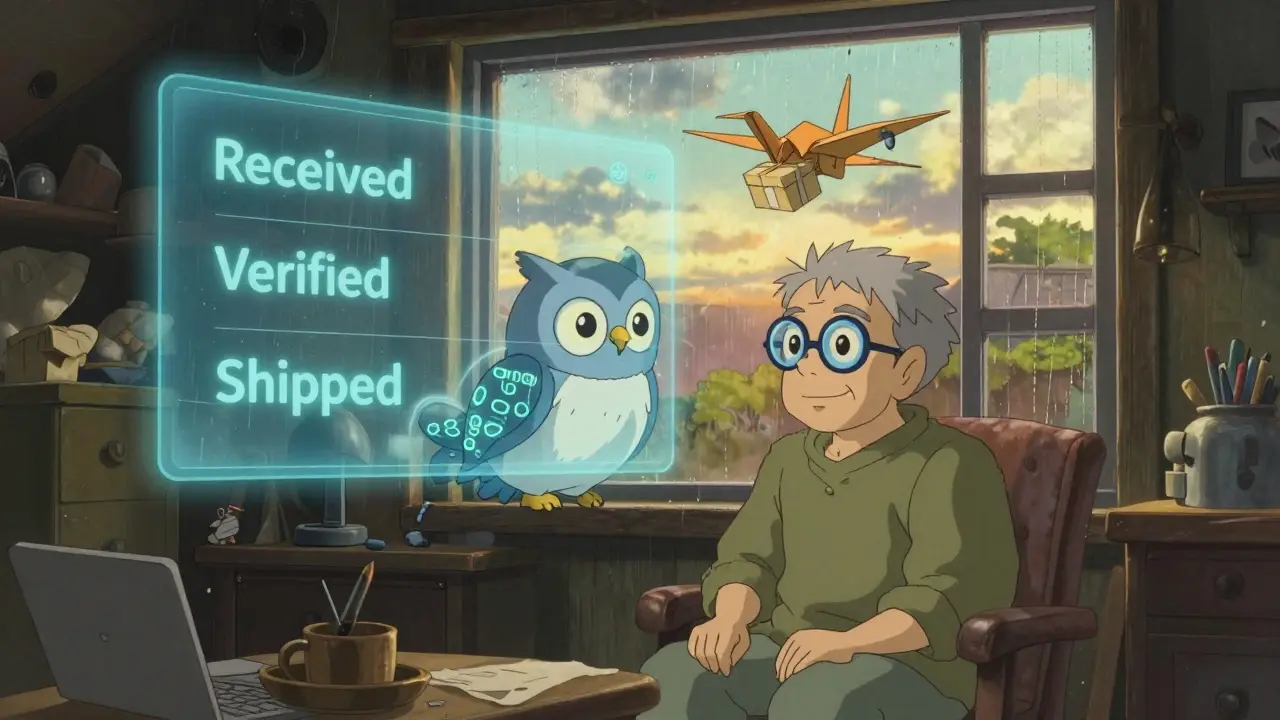
Change is accelerating. In early 2024, Surescripts will launch Transfer 2.0, a new protocol that lets you see real-time status of your transfer - like tracking a package. You’ll know when it’s received, when it’s being processed, and when it’s shipped.
Amazon is testing voice-activated transfers through Alexa. Say, "Alexa, transfer my blood pressure med to Amazon Pharmacy," and it happens. Pilot testing with 5,000 users is already underway.
The DEA is also reviewing whether to allow more than one transfer for controlled substances. Early data from the first six months after the 2023 rule change shows patients often switch pharmacies multiple times - and the current rule creates friction. If they change it, the system will become even more flexible.
By 2027, Gartner predicts 75% of new pharmacy relationships will start with an online transfer. Younger patients, especially those under 40, are already skipping brick-and-mortar pharmacies entirely. They want convenience, price transparency, and delivery - not waiting rooms.
Final Thoughts
Digital prescription transfer isn’t a futuristic idea - it’s here, and it’s working. You no longer need to choose between your local pharmacy and online convenience. You can have both. The system is faster, safer, and more reliable than ever. The 2023 DEA rule change removed a major barrier. The tech is ready. And the results - fewer missed doses, lower costs, less hassle - speak for themselves.
If you’ve been putting off switching, now’s the time. It takes less than 10 minutes. And once you do, you might wonder why you waited so long.
Can I transfer a controlled substance like Adderall or Xanax to an online pharmacy?
Yes, but only once. Since August 2023, the DEA allows one electronic transfer of controlled substances between DEA-registered pharmacies. If you’ve already filled part of the prescription at your old pharmacy, the remaining refills may not transfer. Always check with the online pharmacy first - some can’t accept partial fills due to state laws.
How long does a prescription transfer take?
For non-controlled substances, most transfers complete within 24 hours. CVS and Amazon Pharmacy often confirm within 90 minutes. Controlled substances take longer - usually 48 to 72 hours - because of extra DEA verification steps. If your transfer is delayed beyond 72 hours, contact customer support.
Do I need a new prescription to transfer to an online pharmacy?
No. You don’t need a new prescription. The transfer moves your existing prescription electronically from your current pharmacy to the online one. All you need is the name of your medication and your current pharmacy’s details. The system handles the rest.
What if my insurance doesn’t cover my med at the online pharmacy?
About 23% of transfers hit this issue. If your insurance isn’t recognized, the pharmacy will notify you. You can usually upload a photo of your insurance card through their secure portal, or call their support line. Some online pharmacies also offer cash pricing that’s cheaper than your copay.
Can I transfer compounded medications?
It’s difficult. About 68% of compounded medication transfers require manual review. These are custom formulas made by specialty pharmacies, and most online systems can’t process them automatically. You’ll likely need to call the online pharmacy and speak to a pharmacist directly to arrange the transfer.
Which online pharmacy is best for transfers?
It depends. CVS is best if you want to start the process in person at a local store. Amazon Pharmacy is fastest and cheapest for Prime members. Walgreens offers solid service and good customer support. If you’re on a Medicare Part D plan, check if your plan partners with OptumRx - it often integrates most smoothly.

Casper MacIntyre
Hello, my name is Casper MacIntyre and I am an expert in the field of pharmaceuticals. I have dedicated my life to understanding the intricacies of medications and their impact on various diseases. Through extensive research and experience, I have gained a wealth of knowledge that I enjoy sharing with others. I am passionate about writing and educating the public on medication, diseases, and their treatments. My goal is to make a positive impact on the lives of others through my work in this ever-evolving industry.
10 Comments
-
trudale hampton
March 23, 2026 AT 01:18Been using CVS online for two years now. Super smooth. Even helped my mom switch her meds last month.
She’s 72 and thought it’d be complicated. Turns out she just needed someone to click the button for her.
They even called her to confirm the transfer. That’s customer service. -
Bryan Woody
March 23, 2026 AT 03:18People still think this is new? It’s 2024. We’ve had e-prescriptions since the Clinton administration.
DEA finally caught up. Took them long enough.
And now you’re acting like this is some miracle? Bro.
My cat has more tech literacy than half the people in this thread.
Just use the damn app. It’s not magic. It’s software. Written by engineers. Not wizards.
Stop acting like you discovered fire.
Also Amazon Prime = free shipping on meds. Duh.
Also also - if your transfer fails, maybe don’t typo your middle name as ‘J33’
Just a thought. -
Timothy Olcott
March 24, 2026 AT 00:30AMAZON PHARMACY ALL THE WAY 🚀🇺🇸
WALGREENS IS A DINO 🦖
CVS? Still using fax machines probably 😂
DEA? Yeah they’re late to the party but hey at least they ain’t asleep anymore
IF YOU AIN’T USING ONLINE PHARMA YOU AIN’T LIVING IN 2024
PRIME MEMBER HERE - I’VE SAVED $1200 ON MEDS THIS YEAR
YOU WELCOME AMERICA -
Desiree LaPointe
March 25, 2026 AT 01:05Oh how quaint. The masses have finally stumbled upon the fact that technology exists.
Did you know your phone can also send emails? Or that lightbulbs don’t require a candle?
I transferred my compounded thyroid med via fax in 2018. It took three days.
Now? I just say ‘Alexa, transfer my script’ and it’s done.
But sure, let’s act like this is revolutionary. I’ll keep my monocle and champagne.
Meanwhile, the rest of us are already on Transfer 2.0.
And yes, I know what Surescripts is. You don’t. I can tell. -
Jackie Tucker
March 26, 2026 AT 10:22Convenience is not innovation.
It’s just efficiency dressed up as progress.
We’ve outsourced our health to algorithms and corporate logistics.
What happens when the server goes down?
What happens when your insurance changes?
What happens when the pharmacy’s AI misreads your name and sends your insulin to someone in Nebraska?
It’s not a system. It’s a gamble with your life.
And yet, we cheer.
Because convenience is the new opiate of the masses. -
Sandy Wells
March 27, 2026 AT 10:22Transfer failed twice because my insurance ID was listed as ‘Medicare Part D’ instead of ‘Part D’.
Customer service was polite but unhelpful.
Took 5 days.
Meanwhile, my local pharmacy did it in 15 minutes with a phone call.
Not impressed. -
Shaun Wakashige
March 27, 2026 AT 14:09Yeah but what about privacy?
Who’s got all my med history now?
Amazon? UnitedHealth?
What if they sell it?
What if they use it to raise my premiums?
Just saying…
Not saying don’t do it.
Just saying… 🤔 -
Paul Cuccurullo
March 28, 2026 AT 05:12This is the kind of progress that restores my faith in humanity.
Imagine a world where people don’t have to choose between time and health.
Where a grandmother in rural Ohio can get her meds delivered without driving 40 miles.
Where someone with anxiety doesn’t have to face a crowded pharmacy to refill their SSRIs.
This isn’t just convenience.
This is dignity.
Thank you to the engineers, pharmacists, and policymakers who made this possible.
Let’s keep building. -
Solomon Kindie
March 29, 2026 AT 07:37So the DEA allows one transfer now but 63 of online pharmacies still refuse partial fills because of state laws that contradict federal rules so we’re stuck in a bureaucratic loop where the system is both broken and working at the same time which is exactly what happens when you let bureaucrats and tech bros design healthcare and now we have a 19 failure rate because someone typed their birth year as 1988 instead of 1989 and now my mom’s blood pressure med is stuck in limbo because OptumRx doesn’t talk to Amazon because of some API handshake that failed in 2021 and no one fixed it because nobody cares enough to fix it until it breaks for them and by then its too late and we’re all just waiting for the next glitch to happen


Write a comment
More Articles
Antiplatelet Medications: Bleeding Risks and GI Protection
Antiplatelet drugs prevent heart attacks and strokes but carry a serious risk of gastrointestinal bleeding. Learn how to protect your stomach while staying safe from clots-with clear guidance on PPIs, drug choices, and what to do if you bleed.
Pharmaceutical Equivalence for Generics: What It Really Means When You Fill a Prescription
Pharmaceutical equivalence means generic drugs have the same active ingredient, strength, and dosage as brand-name drugs. Learn what it really means for your health, safety, and savings - and how to know if your generic is truly equivalent.
Understanding the contraindications of brinzolamide use
As a copywriter, I've learned that understanding the contraindications of brinzolamide use is crucial for patient safety. Brinzolamide is an eye medication used to treat glaucoma, but it's not suitable for everyone. Some people may have an allergy to the drug or its ingredients, which could cause severe reactions. Additionally, those with kidney problems or certain other medical conditions should avoid using brinzolamide. It's important to consult a healthcare professional before starting any new medication to ensure it's the right choice for you.
shannon kozee
March 22, 2026 AT 07:00Just transferred my Adderall to Amazon Pharmacy last week. Took 87 minutes. No calls, no paperwork. Life changed.
Now I get it delivered before I run out. No more 7 a.m. pharmacy lines.