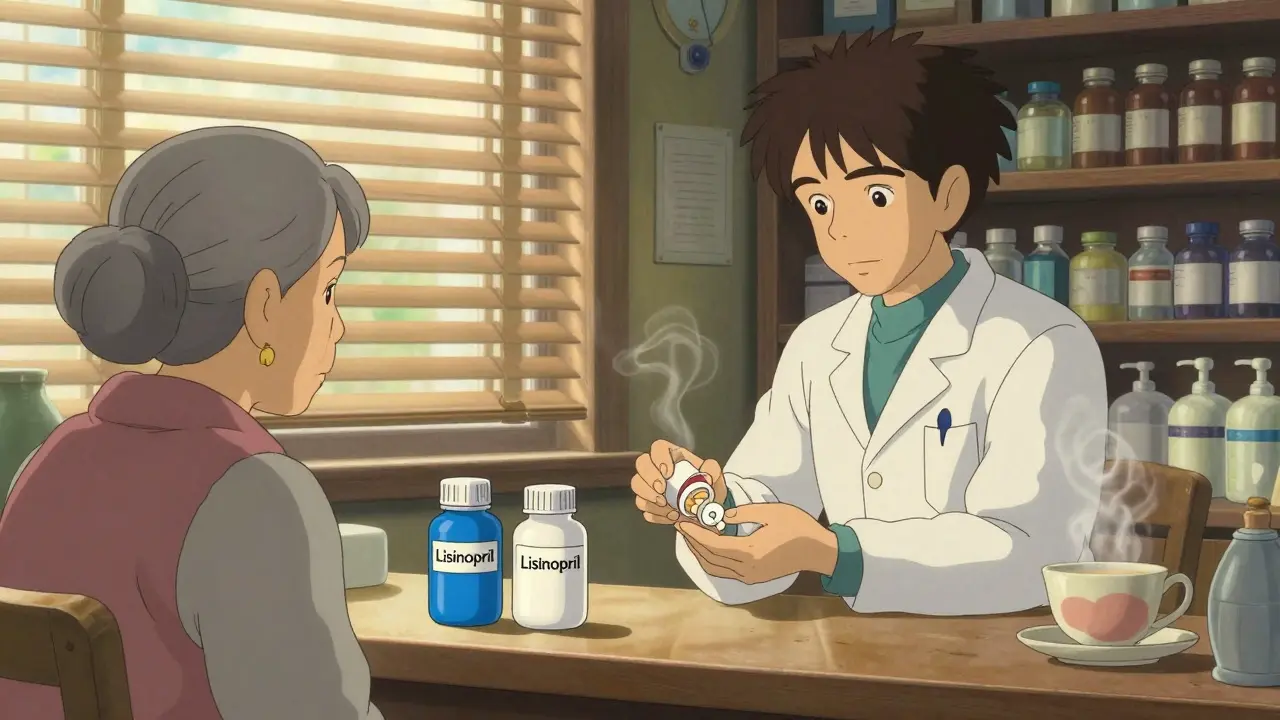
When you pick up a prescription and see a different name on the bottle - maybe it’s no longer Advil but just ibuprofen - you might wonder: is this really the same thing? The answer starts with a term most people never hear: pharmaceutical equivalence. It’s not marketing. It’s science. And it’s the reason millions of Australians, Americans, and people worldwide safely use generic drugs every day.
What Pharmaceutical Equivalence Actually Means
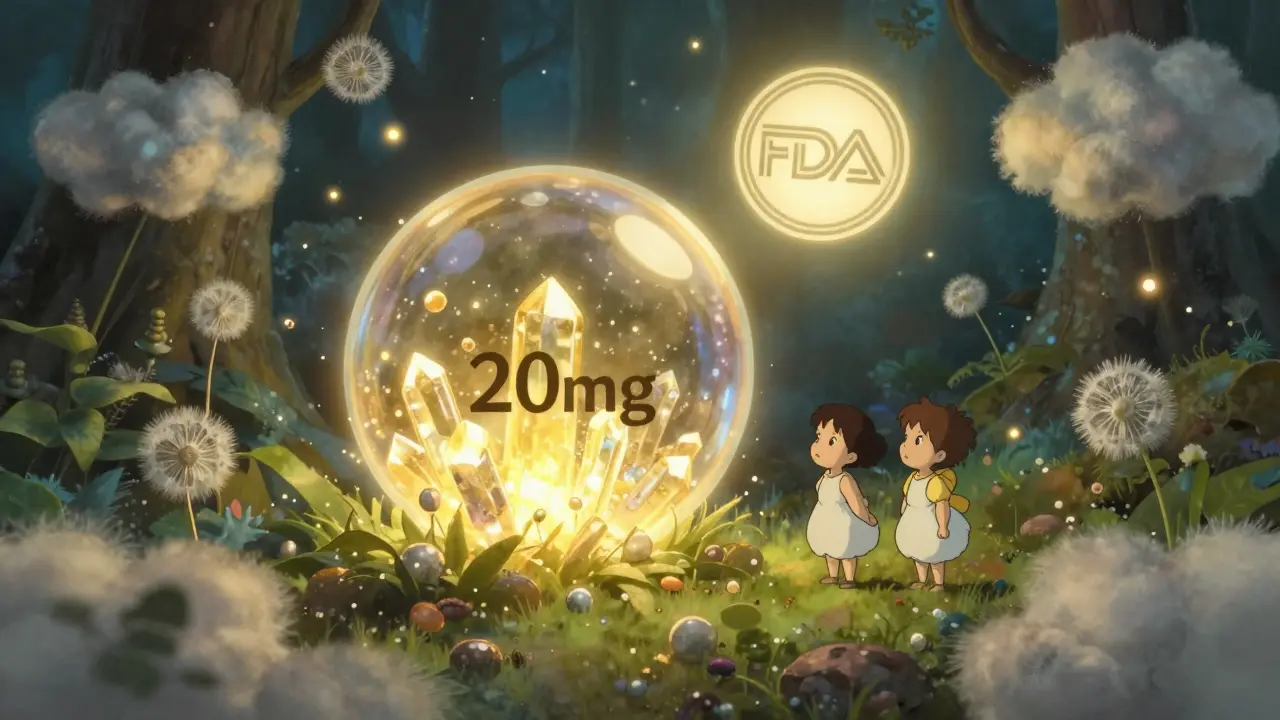
Pharmaceutical equivalence means two drugs - one brand-name, one generic - have the exact same active ingredient, in the exact same amount, in the exact same form, and meant to be taken the same way. If your brand-name pill is a 20mg tablet of lisinopril taken by mouth, the generic version must also be a 20mg tablet of lisinopril taken by mouth. No exceptions.The U.S. Food and Drug Administration (FDA) defines this clearly: the active pharmaceutical ingredient (API) must match in identity, strength, quality, purity, and quantity. That’s it. The FDA requires manufacturers to prove this using lab tests like high-performance liquid chromatography (HPLC), which checks that the amount of active ingredient is within ±5% of what’s listed on the label. That’s tighter than most food nutrition labels.
What doesn’t have to match? Everything else. The color, shape, size, flavor, or even the fillers (called excipients) can be different. A generic metformin tablet might be white and round, while the brand version is blue and oval. One might use cornstarch as a binder; another might use cellulose. Those differences don’t affect how the drug works - as long as the active ingredient is identical and released properly.
Why This Matters for Your Health
You might think: if the active ingredient is the same, why not just take the cheaper one? The answer is simple - it’s because pharmaceutical equivalence is the first, non-negotiable step before you can even consider whether the drug will work the same in your body.Think of it like two cars with the same engine. Same fuel type. Same horsepower. But one has a different air filter, different tires, and a slightly different exhaust system. The engine is identical - that’s pharmaceutical equivalence. But will they drive the same? That’s where bioequivalence comes in.
Pharmaceutical equivalence alone doesn’t guarantee your body will absorb the drug the same way. That’s why the FDA requires a second test: bioequivalence. This measures how much of the drug enters your bloodstream and how fast. For most drugs, the generic must deliver between 80% and 125% of the brand-name drug’s blood levels. That’s a wide range - but it’s based on real human variability. Your body absorbs drugs differently than mine. That’s normal.
For drugs like warfarin, levothyroxine, or lithium - where tiny differences in blood levels can cause big problems - the FDA and doctors watch even closer. These are called narrow therapeutic index drugs. Even though the generic might pass pharmaceutical and bioequivalence tests, some prescribers still prefer the brand for these. Not because the generic is unsafe - but because the margin for error is razor-thin.
What the FDA and Pharmacists Actually Use
The FDA doesn’t just approve generics and walk away. Every approved drug - brand or generic - gets a rating in the Approved Drug Products with Therapeutic Equivalence Evaluations, better known as the Orange Book. As of June 2024, this database listed over 15,000 generic drugs. Of those, more than 12,800 were rated “AB” - meaning they’re both pharmaceutical and bioequivalent to the brand. That’s the gold standard.Pharmacists rely on this rating system when substituting. In Australia, the Pharmaceutical Benefits Scheme (PBS) uses similar standards. In the U.S., 97% of hospitals have formal policies to switch to AB-rated generics unless the doctor says otherwise. In community pharmacies, automatic substitution is common - but only if the generic has that “AB” rating.
Here’s the catch: some generics are rated “BX” or “BZ.” That means they’re not considered therapeutically equivalent. Maybe the release profile is different. Maybe the excipients interfere with absorption. These are rare - less than 17% of generics fall into this category - but they exist. That’s why your pharmacist might ask if you’re okay with a different brand, even if it’s the same active ingredient.
Excipients: The Silent Players
You’ve probably never heard the word “excipient.” But you’ve felt their effects.These are the non-active ingredients - binders, dyes, preservatives, fillers - that help the pill hold its shape, dissolve properly, or taste better. They’re not meant to treat anything. But for some people, they cause problems.
A 2022 survey found that 87% of pharmacists had at least one patient report a side effect from a generic’s excipients. Maybe it was a rash from a dye. Maybe it was stomach upset from a new filler. Only 2.3% of those cases required switching back to the brand. Still, if you’ve ever had an allergic reaction or unexplained symptom after switching generics, it might not be the drug - it could be the coating.
The FDA doesn’t require manufacturers to list excipients on the drug label, only the active ingredient. But the American Society of Health-System Pharmacists is pushing for better disclosure. If you have known allergies - to lactose, gluten, or certain dyes - ask your pharmacist for the full ingredient list. You have a right to know.
Why Generics Cost So Much Less
A brand-name drug can cost $500 a month. The generic? $10. Why?Because the generic manufacturer didn’t spend $2 billion on clinical trials. They didn’t pay for 10 years of research. They just had to prove their version matched the brand’s active ingredient - and that it got into the bloodstream the same way. That’s it.
Since the 1984 Hatch-Waxman Act created this system, the U.S. has saved over $2.2 trillion on prescription drugs. The average savings per prescription? Over $1,000. That’s not a guess. That’s from IQVIA’s 2023 data.
Generics aren’t “cheaper because they’re worse.” They’re cheaper because the original company already did the hard work. The generic maker just copies the recipe - and competes on price.
What You Should Do When Switching
Here’s what you need to do - and not do - when your prescription switches to a generic:- Do check the Orange Book rating if you’re on a narrow therapeutic index drug (like warfarin, thyroid meds, or seizure meds). Ask your pharmacist: “Is this rated AB?”
- Do watch for changes in how you feel - especially in the first two weeks. Headaches? Dizziness? Upset stomach? It could be the excipient.
- Do ask for the full ingredient list if you have allergies.
- Don’t assume “generic” means weaker. It means identical active ingredient - and proven delivery.
- Don’t believe the myth that generics only contain 80% of the active ingredient. That’s the bioequivalence range - not the API content. The active ingredient is still 100% of what’s stated on the label.
If you’re switching and feel off, don’t panic. Talk to your pharmacist. They can check the rating, compare excipients, and even help you get the brand if needed. Most insurers will cover the brand if there’s a documented medical reason.

The Future: More Precision, More Transparency
The FDA isn’t resting. In 2024, they launched a new program to improve how they evaluate complex generics - like inhalers, injectables, and topical creams. These aren’t as simple as a pill. The way the drug is delivered matters. So new tools like Raman spectroscopy and X-ray diffraction are being tested to check the physical structure of the drug at a molecular level.Also, there’s growing pressure to make excipient lists public. Right now, you have to ask for them. Soon, you might find them right on the packaging. That’s good news for people with sensitivities.
By 2027, we’ll likely see generics evaluated not just on what’s in the pill - but how the pill behaves in the body, down to the crystal structure of the active ingredient. That’s the next frontier.
Bottom Line: Trust the Science, Stay Informed
Pharmaceutical equivalence isn’t a loophole. It’s a rigorous, science-backed standard. Generics are not inferior. They’re identical in what matters most: the active ingredient that treats your condition.Most people switch without issue. Millions do it every day. But if you’re on a high-risk medication, or you’ve had a reaction before, don’t assume. Ask questions. Check the rating. Know your excipients.
Generic drugs save lives - and money. But only if you understand what’s really in them.
Are generic drugs really as strong as brand-name drugs?
Yes. Generic drugs contain the exact same active ingredient, in the exact same amount, as the brand-name version. The FDA requires that the active ingredient be within ±5% of the labeled amount. The difference isn’t in strength - it’s in the inactive ingredients, packaging, or shape. The drug works the same way because the medicine inside is identical.
Can I switch between different generic brands safely?
For most drugs, yes. All generics rated “AB” by the FDA are considered therapeutically equivalent. But if you’re on a narrow therapeutic index drug like warfarin or levothyroxine, switching between different generic brands - even if both are AB-rated - can sometimes cause small changes in how your body responds. Talk to your doctor or pharmacist before switching between generics if you’re on one of these drugs.
Why do some generics make me feel different?
It’s usually not the active ingredient. It’s the excipients - the fillers, dyes, or binders used to make the pill. Some people are sensitive to lactose, cornstarch, or artificial colors. If you notice new side effects after switching to a generic, ask your pharmacist for the ingredient list. You might need to switch to a different generic brand with different excipients.
Is it true that generics only have 80% of the active ingredient?
No, that’s a common misunderstanding. The 80%-125% range refers to bioequivalence - how much of the drug gets into your bloodstream, not how much is in the pill. The pill itself contains 100% of the labeled active ingredient. The 80%-125% range just means your body might absorb it slightly faster or slower than the brand - but still within a safe and effective range.
How do I know if my generic is approved and safe?
Check the Orange Book rating. If it’s listed as “AB,” it’s been approved by the FDA as both pharmaceutical and bioequivalent to the brand. Your pharmacist can confirm this. In Australia, check the PBS listing. You can also look up your drug on the FDA’s website or ask your pharmacist for the product’s therapeutic equivalence rating. If it’s not rated, it’s not officially approved as equivalent.
Next Steps: What to Do Today
If you’re on a generic medication:- Look at your prescription label. Does it say the generic name? Good.
- Ask your pharmacist: “Is this rated AB in the Orange Book?”
- If you’ve had side effects since switching, write them down - and ask if the excipients changed.
- If you’re on a high-risk drug (blood thinners, thyroid, epilepsy), don’t switch generics without checking with your doctor first.
- Keep your current generic - even if you switch brands later. Your body may respond better to one formulation than another.
Generic drugs aren’t a compromise. They’re a smart, safe, and scientifically validated choice. The system works - when you understand it.

Casper MacIntyre
Hello, my name is Casper MacIntyre and I am an expert in the field of pharmaceuticals. I have dedicated my life to understanding the intricacies of medications and their impact on various diseases. Through extensive research and experience, I have gained a wealth of knowledge that I enjoy sharing with others. I am passionate about writing and educating the public on medication, diseases, and their treatments. My goal is to make a positive impact on the lives of others through my work in this ever-evolving industry.
9 Comments
-
Zabihullah Saleh
December 24, 2025 AT 14:12It’s funny how we trust a pill more when it’s got a brand name on it, like the logo adds magic. But the active ingredient? Same molecule. Same quantum structure. Same biological handshake with your receptors. We’ve outsourced our trust to marketing, and now we’re surprised when the generic works just fine. The real drug isn’t the pill-it’s the system that made us believe the brand was sacred.
-
Winni Victor
December 24, 2025 AT 18:08Oh please. My cousin took a generic version of her antidepressant and started crying uncontrollably in the grocery store. The ‘same active ingredient’ my ass. They’re cutting corners with chalk and regret. And don’t even get me started on the ‘excipients’-sounds like a sci-fi villain’s secret ingredient.
-
Lindsay Hensel
December 26, 2025 AT 13:21Pharmaceutical equivalence is a triumph of regulatory science. The FDA’s standards are among the most rigorous in the world. To dismiss generics based on anecdote is to misunderstand both pharmacology and human psychology. We owe it to ourselves-and to the global health system-to embrace evidence over fear.
-
Linda B.
December 27, 2025 AT 05:40They say the active ingredient is identical but what about the nano-particles they add to make it dissolve faster? Who’s monitoring that? The FDA is owned by Big Pharma. They let the generics pass because they want you to think you’re saving money-but you’re just getting a slower-acting placebo with a different dye. And don’t forget the tracking chips. I saw it on a documentary.
-
Christopher King
December 27, 2025 AT 10:06Let me tell you something-generics are a gateway drug to corporate control. First they make you accept the white pill, then they make you accept the digital pill that reports your vitals to your insurer. Next thing you know, your thyroid meds are being rationed by an algorithm. This isn’t science-it’s social engineering dressed up as cost-saving. Wake up.
-
Bailey Adkison
December 28, 2025 AT 12:43Generic manufacturers must meet FDA bioequivalence standards-80–125% AUC and Cmax. That’s not a loophole. It’s a statistically validated range based on population pharmacokinetics. If you’re having issues, it’s likely excipient-related, not efficacy-related. Stop conflating anecdote with evidence. And yes, I checked the Orange Book. It’s AB-rated. End of story.
-
Michael Dillon
December 28, 2025 AT 19:21My mom switched from brand-name levothyroxine to generic and her TSH went from 2.1 to 5.8. She felt like a zombie for six weeks. Turns out, different generics have slightly different dissolution profiles-even if they’re both AB-rated. Your body isn’t a test tube. It’s a living system that remembers. Don’t gamble with your hormones.
-
Gary Hartung
December 30, 2025 AT 14:21...And yet... you know... the *real* tragedy... is not that generics exist... but that we’ve normalized the idea that our health should be a commodity... that our bodies should be optimized for corporate profit margins... and that the only thing that matters... is the price tag... on the bottle... while the real medicine... the one that heals... the one that connects... the one that says... ‘you are worth more than this’... is being quietly erased... by the very system that claims to protect you...


Write a comment
More Articles

Antidepressant Overdose: Recognizing Serotonin Syndrome Warning Signs Before It's Too Late
Serotonin syndrome is a life-threatening reaction to too much serotonin, often caused by antidepressant overdose or drug interactions. Know the warning signs - tremors, clonus, high fever - and act fast.

Opioids and Adrenal Insufficiency: A Rare but Life-Threatening Side Effect You Need to Know
Opioid-induced adrenal insufficiency is a rare but life-threatening side effect of long-term opioid use. It suppresses cortisol production, leading to fatigue, dizziness, and risk of adrenal crisis during illness. Early testing and steroid support can reverse it.
Mussin Machhour
December 24, 2025 AT 11:25Man, I switched to generic lisinopril last year and haven’t looked back. Saved me $400 a month. My blood pressure’s actually better now, weirdly enough. Guess the body just adapts. Pharma companies want you scared of the white pill, but the science’s solid.