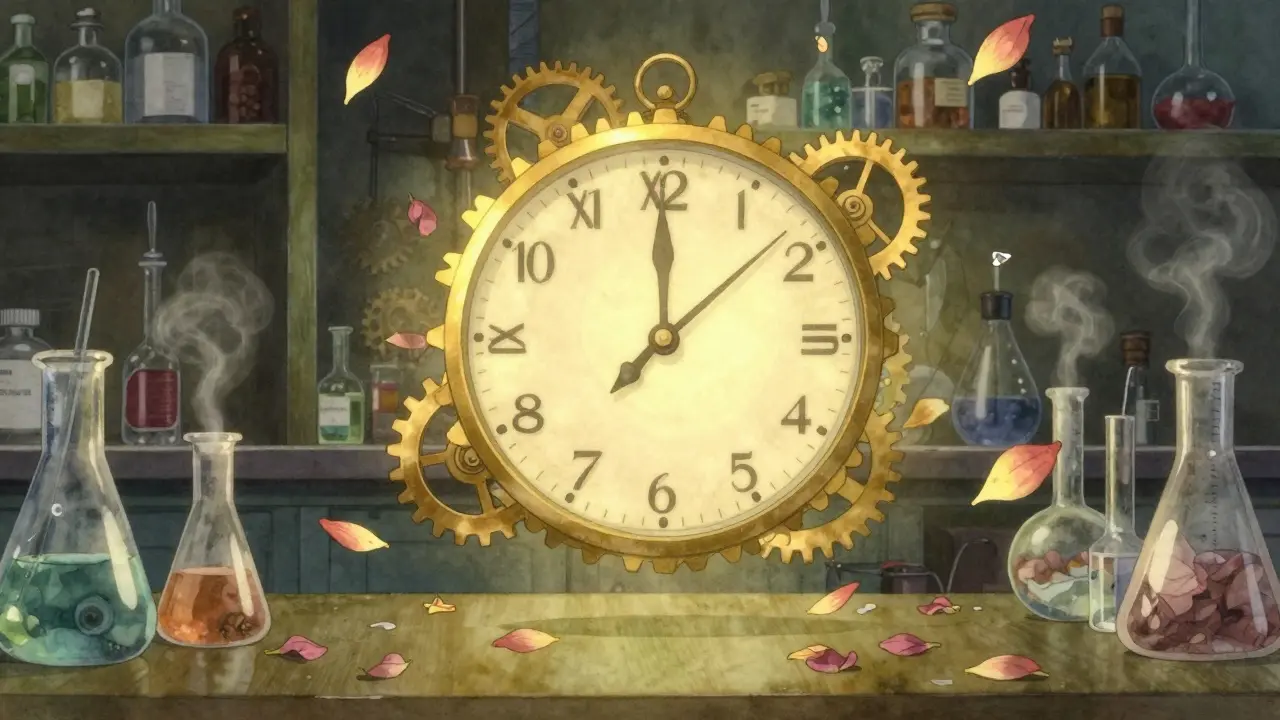
Most people assume that when a pharmaceutical company gets a patent on a new drug, they have 20 years to sell it without competition. That’s not true. In reality, by the time a drug hits the market, the patent clock has already been running for half its life. The effective patent life-the actual time a drug enjoys market exclusivity-is often just 10 to 13 years, not the full 20. And that’s after accounting for legal extensions. For patients, this means generics arrive sooner. For drugmakers, it means billions in revenue vanish overnight. For the system, it’s a delicate balance between innovation and access.
Why the 20-Year Patent Doesn’t Mean 20 Years of Exclusivity
The U.S. patent system grants 20 years of protection from the date the patent is filed. But here’s the catch: that clock starts ticking the moment scientists submit their first patent application, often during early-stage research, years before human trials even begin. By the time a drug completes Phase I, II, and III clinical trials, gets reviewed by the FDA, and finally hits pharmacy shelves, five to ten years have already passed. That leaves only 10 to 15 years of actual market exclusivity-sometimes less. Take a typical new cancer drug. The company files its core patent in 2012. It spends the next eight years running trials, collecting safety data, and navigating FDA bureaucracy. The drug gets approved in 2020. That’s eight years gone. Even if the patent lasts until 2032, the company only had 12 years to make back its $2.6 billion investment. And that’s before accounting for manufacturing delays, pricing negotiations, or insurance coverage hurdles.The Hatch-Waxman Act: The Law That Tried to Fix the Clock
In 1984, Congress passed the Drug Price Competition and Patent Term Restoration Act-better known as the Hatch-Waxman Act. Its goal was simple: reward innovation while speeding up generics. The law allowed drugmakers to apply for Patent Term Extension (PTE) to make up for time lost during FDA review. The catch? The extension can’t exceed five years, and the total market exclusivity can’t go beyond 14 years after FDA approval. So if a drug gets approved in 2020, the latest it can stay exclusive is 2034-even if the original patent would have expired in 2032. That’s not a loophole. It’s a hard cap. And it’s why some drugs, despite having patents that technically last longer, stop being protected in practice by that 14-year mark.What Happens After the Patent Expires? The Patent Cliff
The moment a drug loses patent protection, generic manufacturers can legally sell identical versions. And they do-fast. Within a year, generic versions often capture 80-90% of the market. Prices drop by 80-90%. Revenue for the original company plummets. This is called the patent cliff. For companies, it’s a financial earthquake. EY estimates that by 2025, $250 billion in global drug sales will be at risk from expiring patents. Companies like Pfizer, Merck, and AbbVie have each lost billions in annual revenue when their top-selling drugs went generic. That’s why they spend millions on lifecycle management-extending exclusivity through every legal trick available.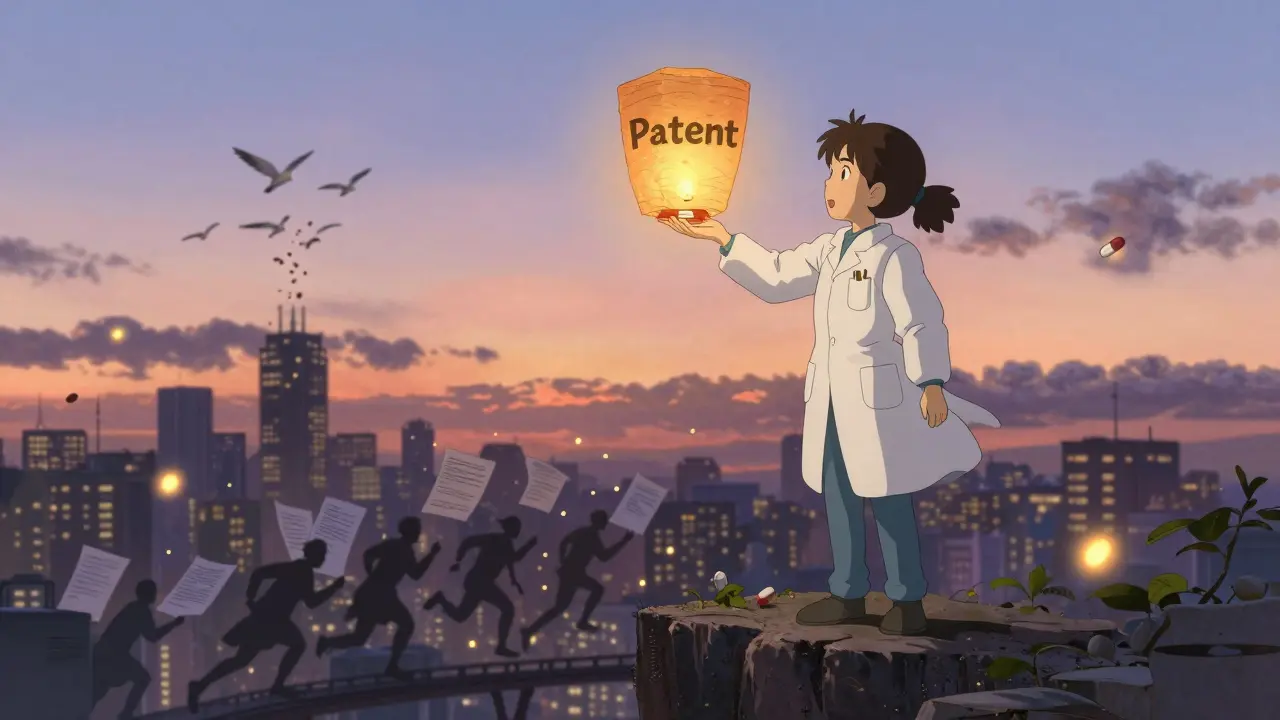
Secondary Patents: The Real Game Changer
Here’s where things get strategic. While the core patent covers the active ingredient, companies file dozens of secondary patents on minor changes: a new pill coating, a different dosage form, a combination with another drug, or even a new method of delivery. These aren’t new drugs-they’re tweaks. But under U.S. law, each one can block generics. A 2023 study by the R Street Institute found that blockbuster drugs average 20-30 patents each. Some drugs have over 100. These aren’t accidental. They’re calculated. Higher-revenue drugs are 37% more likely to get these secondary patents. This practice, called evergreening, keeps generics off shelves long after the original patent expires. The FDA lists all patents in the Orange Book, a public database. But it doesn’t judge whether a patent is legitimate or just a delay tactic. That’s up to courts. And courts often side with the brand-name company, especially if the patent looks technically valid-even if it adds no real benefit to patients.Regulatory Exclusivities: The Hidden Layers of Protection
Patents aren’t the only tool. The FDA also grants regulatory exclusivities-independent of patents-that block generics for set periods, even if the patent has expired. - New Chemical Entity (NCE) Exclusivity: 5 years of data protection. No generic can rely on the innovator’s clinical data during this time. - New Clinical Investigation Exclusivity: 3 years for new uses or formulations. - Orphan Drug Exclusivity: 7 years for drugs treating rare diseases (under 200,000 U.S. patients). - Pediatric Exclusivity: 6 months added to any existing exclusivity if the company tests the drug in children. These don’t replace patents. They stack on top. A drug might have 5 years of NCE exclusivity, then 3 more years of clinical exclusivity, then 5 more years from a patent extension, and another 6 months for pediatric testing. That’s 19 years before a generic can even try to enter the market-even if the core patent expired in year 10.
How Other Countries Handle It
The U.S. isn’t alone. Other countries have similar systems-but with different rules. - Canada offers a Certificate of Supplementary Protection (CSP), adding up to 24 months after patent expiry for new medicines. - Japan allows up to 5 years of patent term extension, similar to the U.S., but with stricter review. - The European Union has Supplementary Protection Certificates (SPCs), which can extend protection by up to 5 years, with an additional 6 months for pediatric studies. But here’s the key difference: in Europe and Canada, regulators are more aggressive about blocking secondary patents that don’t add clinical value. The U.S. system, by contrast, is more permissive. That’s why many companies file their first patent applications in the U.S. and delay filing elsewhere.Who Pays the Price?
Patients don’t pay for patents. But they pay for the delays they cause. When generics are blocked for years longer than necessary, drug prices stay high. Insurers and Medicare spend billions more. Patients skip doses or go without. A 2023 analysis by the American Journal of Managed Care showed that 1 in 4 Americans skip prescriptions because of cost-often because the branded version is still protected by a secondary patent. Meanwhile, generic manufacturers sit idle, waiting for the legal green light. They’re ready to produce a $50 version of a $5,000 drug. But if the patent holder sues them within 45 days of receiving a generic application notice, the FDA must delay approval for 30 months. That’s two and a half years of lost savings.Is the System Working?
The Hatch-Waxman Act was designed to balance two goals: encourage innovation and ensure affordable access. In theory, it worked. In practice, it’s been stretched thin. Pharmaceutical companies argue they need long exclusivity to recoup the $2.6 billion average cost of developing a single drug. That’s true. But the system now lets them extend exclusivity far beyond what Congress intended. The Yale Law and Policy Review found that 91% of drugs with patent extensions continue monopolies well past expiration-through secondary patents, exclusivities, and litigation. The result? A system that rewards legal strategy more than medical breakthroughs. A drug that improves a minor side effect might get 10 patents. A drug that saves lives might get one-and lose exclusivity in 12 years. The fix isn’t simple. But it’s clear: we need better rules for what counts as a real innovation. We need faster generic approvals. We need transparency on patent filings. And we need regulators to stop letting companies game the system with patents that don’t help patients-only profits.For now, the clock keeps ticking. And every day it ticks, billions hang in the balance.
What is the average effective patent life for a new drug in the U.S.?
The average effective patent life for a new pharmaceutical in the U.S. is about 13.35 years, according to data from Drug Patent Watch (2023). This is calculated from the time of FDA approval, after accounting for 5-10 years spent in research and regulatory review. Even with patent term extensions, the maximum market exclusivity is capped at 14 years after approval.
Can a drug have more than one patent?
Yes. Most drugs have multiple patents: one for the active ingredient (the core patent), and many secondary patents covering formulations, delivery methods, dosages, combinations with other drugs, or manufacturing processes. A single blockbuster drug can have 20 to 30 patents. These secondary patents are often used to delay generic competition, even after the original patent expires.
What’s the difference between a patent and regulatory exclusivity?
A patent protects the invention itself and is granted by the U.S. Patent and Trademark Office (USPTO). It can be filed at any time during development. Regulatory exclusivity, granted by the FDA, protects the data used to get approval. It can’t be filed-it’s automatic upon approval. Exclusivity blocks generics from using the innovator’s clinical data to get approval, even if the patent has expired. Both can run at the same time, and they stack.
Why do generic drugs cost so much less?
Generic manufacturers don’t need to repeat expensive clinical trials. Once a drug’s patent and exclusivity expire, they can prove their product is bioequivalent to the brand-name version using existing data. That cuts development costs by 80-90%. They also face competition from other generics, which drives prices down further. A drug that costs $5,000 per month as a brand can drop to $50 as a generic within a year.
Does the FDA check if secondary patents are legitimate?
No. The FDA lists all patents submitted by the drugmaker in the Orange Book, but it doesn’t evaluate whether they’re valid or just used to delay competition. That’s left to the courts. If a generic company believes a patent is invalid or not infringed, it can challenge it in court. But litigation is expensive and slow, which often delays generic entry even if the patent is weak.
Can a company get a patent extension for an old drug?
No. Patent Term Extension (PTE) is only available for drugs containing an active ingredient that hasn’t been previously approved by the FDA. You can’t extend a patent on a drug that’s been on the market for decades just because you changed the pill shape or added a new flavor. The law requires the active ingredient to be new.
How does the 30-month stay work?
If a brand-name company sues a generic manufacturer for patent infringement within 45 days of receiving the generic’s application notice, the FDA must delay final approval for 30 months-or until a court rules in favor of the generic, whichever comes first. This gives the brand company time to litigate, but it also delays affordable generics from reaching patients. Many companies file lawsuits even for weak patents, knowing the delay itself is a powerful tool.
What’s the future of effective patent life?
The pressure is growing. With $250 billion in drug sales at risk by 2025, companies are investing more in lifecycle management-new formulations, delivery systems, and combination therapies-to extend exclusivity. At the same time, regulators and lawmakers are cracking down on evergreening. Courts are becoming more skeptical of secondary patents that don’t improve patient outcomes. The future will likely see tighter rules, faster generic approvals, and more transparency-but change moves slowly in a system built on billions in revenue.

Casper MacIntyre
Hello, my name is Casper MacIntyre and I am an expert in the field of pharmaceuticals. I have dedicated my life to understanding the intricacies of medications and their impact on various diseases. Through extensive research and experience, I have gained a wealth of knowledge that I enjoy sharing with others. I am passionate about writing and educating the public on medication, diseases, and their treatments. My goal is to make a positive impact on the lives of others through my work in this ever-evolving industry.
More Articles

The Role of Psychological Counseling in Dementia of the Alzheimer's Type Care
In my latest blog post, I discuss the vital role psychological counseling plays in the care of individuals with Alzheimer's-type dementia. I highlight how counseling not only supports patients in coping with the emotional and cognitive challenges of the disease but also provides essential guidance to their caregivers. Furthermore, I emphasize the importance of early intervention to maximize the benefits of counseling. Through my research, I've discovered that psychological counseling can significantly improve the overall quality of life for both patients and their families. So, let's spread awareness about the invaluable support that counseling can offer in Alzheimer's care.

Low Density Living and Lower Crime Rates: Why Space Matters
Explore how low density residential layouts influence crime rates, the role of social cohesion, design strategies, and policy tools that make neighborhoods safer.
The Importance of Hydration in Overactive Bladder Management
As a blogger, I cannot stress enough the importance of hydration in managing an overactive bladder. Drinking adequate water helps maintain a healthy urinary system and prevents the concentration of urine, which can irritate the bladder. Staying hydrated can also help reduce the frequency of bathroom trips and minimize the risk of urinary tract infections. While it may seem counterintuitive, avoiding water can actually make the symptoms of an overactive bladder worse. So, don't forget to drink enough water daily and keep your bladder happy and healthy!