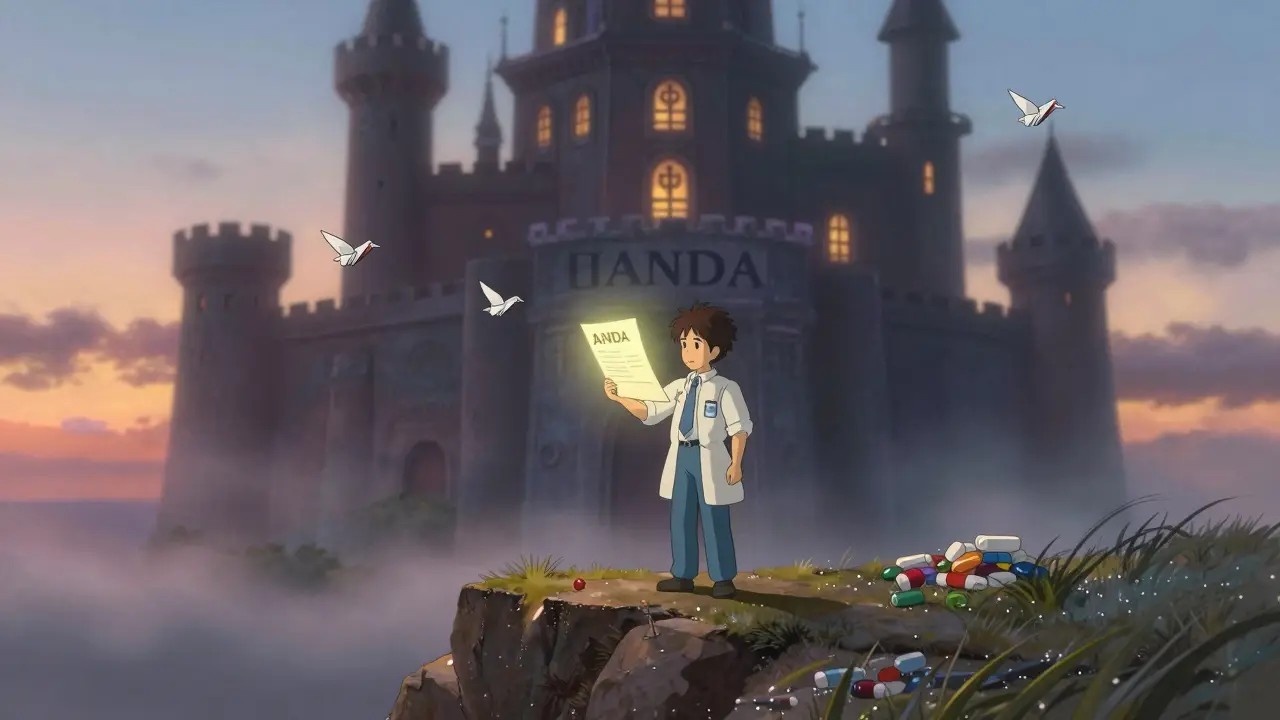
The FDA's 180-day exclusivity isn’t just a rule-it’s a financial lifeline for generic drug companies willing to take on the biggest hurdle in pharmaceuticals: patent battles. When a brand-name drug’s patent is challenged by a generic manufacturer, the first one to file an Abbreviated New Drug Application (ANDA) with a Paragraph IV certification gets 180 days of exclusive rights to sell that generic version. No other company can enter the market during that time. That’s not just a head start-it’s a chance to capture the majority of the market before prices drop further.
Why This Rule Exists
The system was created in 1984 under the Hatch-Waxman Act. Back then, brand-name drugmakers had a monopoly for years after their patents expired. Generic versions were slow to appear because they had to repeat expensive clinical trials. Hatch-Waxman changed that. It let generics prove their drugs were bioequivalent without redoing full trials. But to make it worth the risk, the law gave the first filer a reward: 180 days of exclusivity. The goal? Get cheaper drugs to patients faster. And it worked. Since 1984, over 14,000 generic drugs have been approved in the U.S., and today, 90% of prescriptions are filled with generics-yet they cost only 23% of what brand drugs do.How the Exclusivity Clock Starts
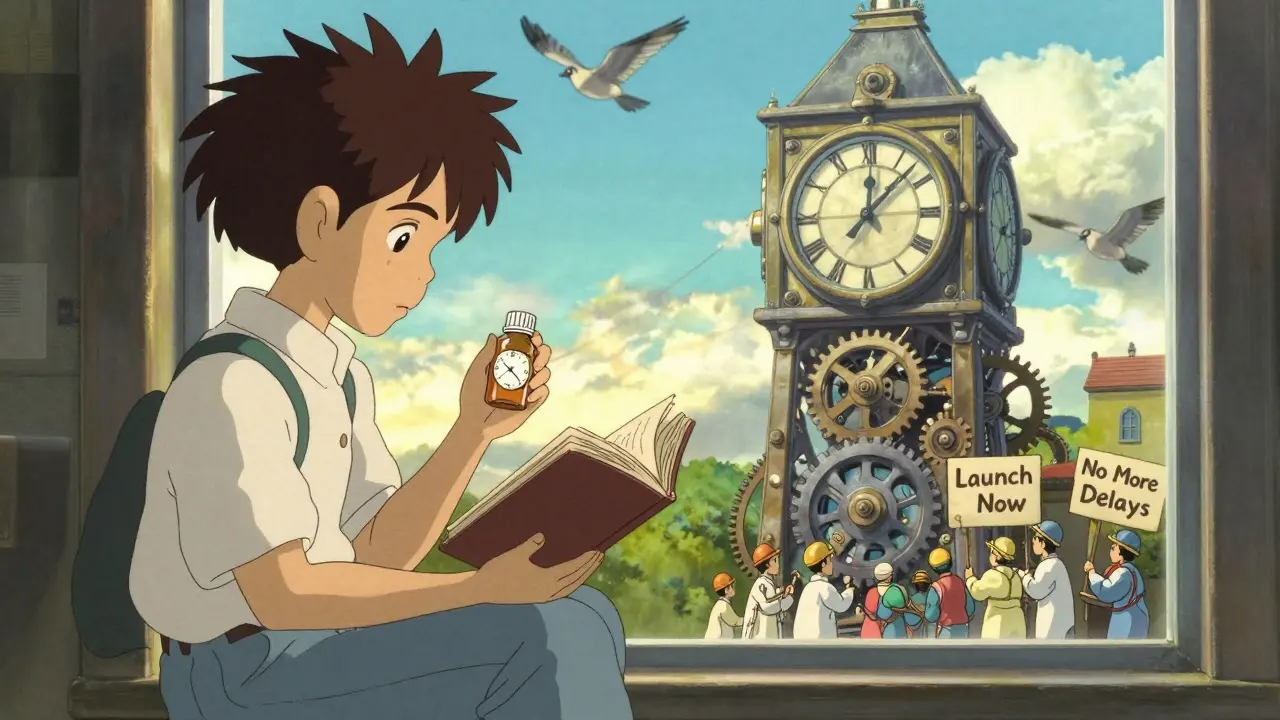
The 180-day clock doesn’t start when the FDA approves the drug. It starts on the earliest of two events: either when the first generic company actually starts selling the drug, or when a court rules the brand’s patent is invalid, unenforceable, or not infringed. That’s a key detail. Many assume approval triggers the clock. It doesn’t. A company can get FDA approval and sit on it for months-or even years-while patent appeals drag on. During that time, no other generic can enter. The exclusivity period runs in the background, even if the drug isn’t on shelves.This loophole has been exploited. In some cases, a generic manufacturer wins approval but delays launch to keep the brand drug’s price high. That’s not what Hatch-Waxman intended. The Federal Trade Commission found 147 cases between 2015 and 2020 where this delay tactic was used to block competition. In one example, a generic company received approval in 2018 but didn’t launch until 2021-keeping the brand drug on the market longer than it should have been.
Who Gets the Exclusivity?
If two or more companies file ANDAs with Paragraph IV certifications on the same day, they’re all considered “first applicants.” They share the 180 days. That happened in 2020 with apixaban, a blood thinner. Six companies filed on the same day. Only three launched within the legal window. The other three forfeited their rights. The three that launched split the 180-day window. That’s why you sometimes see multiple generic versions hit the market at once-because they shared the exclusivity.But sharing doesn’t always mean fairness. Bigger companies like Teva, Viatris, and Sandoz have captured 58% of all 180-day exclusivity periods since 2018. Smaller firms struggle to compete with their legal teams and financial firepower. Still, 63% of small generic manufacturers say this exclusivity is the main reason they bother filing Paragraph IV challenges at all. Without it, many couldn’t afford the risk.

Forfeiture: Losing the Prize
It’s easy to think winning approval means you’ve won the exclusivity. Not always. The Medicare Modernization Act of 2003 added strict forfeiture rules. If a company doesn’t start selling the drug within 75 days of getting a Notice of Commercial Marketing (NOCM), or if they don’t get tentative approval within 30 months of filing their patent challenge, they lose the exclusivity. About 35% of first applicants forfeit their rights. On average, they wait 147 days after tentative approval before doing anything-too late.Why? Sometimes it’s legal strategy. Sometimes it’s funding issues. Other times, it’s just confusion. The FDA’s guidance is clear, but the process is messy. One company might win approval, then wait to see if another applicant launches first. If they don’t, they might think they can delay. But the clock keeps ticking. And if they miss the window, they’re out.
The Push for Reform
The current system is broken. The 180-day exclusivity was meant to speed up generic entry. Instead, it’s often used to delay it. In 2022, the FDA proposed a fix: model the exclusivity after the Competitive Generic Therapy (CGT) program. Under CGT, the 180 days start only when the drug is first sold. No more clock running during lawsuits. No more years-long delays. The clock ticks only when the product is on the shelf.The Congressional Budget Office estimates this change would cut drug costs by $5.3 billion a year and get generics to market 8.2 months faster. That’s huge. But generic manufacturers are split. Big players fear losing the ability to sit on approval and control the market. Smaller firms worry the new system won’t offer enough financial incentive to take on risky patent challenges.
Meanwhile, lawmakers are stepping in. Senator Chuck Grassley’s 2023 bill, the Preserve Access to Affordable Generics and Biosimilars Act, targets “sham” patent challenges-cases where a generic company files a challenge not to compete, but just to block others. The FTC is also cracking down. In 2023 alone, they flagged 37 cases where companies got exclusivity but delayed launch for over 18 months.
What This Means for Patients
When the exclusivity works as intended, patients win. Generic drugs launch at 15-20% of the brand’s price. Once more generics enter, prices drop to 9-12%. But when the clock is stalled, patients pay more. The Rand Corporation found that drugs with delayed generic entry cost consumers an extra $13 billion a year. That’s not just a corporate issue-it’s a health issue. People skip doses. They ration pills. They choose between meds and rent.The 180-day exclusivity was designed to save money, not inflate it. The system still delivers-over 750 generic drugs launch each year thanks to it. But the loopholes are costing lives. Reform isn’t just about fairness. It’s about access.
What’s Next?
The FDA’s proposed changes are still under review. If adopted, the CGT model could become the new standard for all Paragraph IV challenges. That would mean more predictable timelines, fewer delays, and faster price drops. But change won’t happen overnight. Legal battles, lobbying, and regulatory reviews will take years.In the meantime, generic companies must navigate a minefield. They need to file early, launch fast, and understand the forfeiture rules. For patients, the message is simple: ask your pharmacist if a generic is available. If not, ask why. The system is complex-but it’s not unfixable.

Casper MacIntyre
Hello, my name is Casper MacIntyre and I am an expert in the field of pharmaceuticals. I have dedicated my life to understanding the intricacies of medications and their impact on various diseases. Through extensive research and experience, I have gained a wealth of knowledge that I enjoy sharing with others. I am passionate about writing and educating the public on medication, diseases, and their treatments. My goal is to make a positive impact on the lives of others through my work in this ever-evolving industry.
8 Comments
-
Madhav Malhotra
January 12, 2026 AT 15:16Interesting! In India, we see this all the time - big pharma blocking generics with endless lawsuits. But your system at least has a rule, even if it’s broken. We don’t even have that. Here, generics are cheap because we ignore patents. No 180-day drama, just pills on the shelf. 😊
-
Jason Shriner
January 13, 2026 AT 23:43so like… the system was made to help people… but now it’s just a game of ‘who can wait the longest before selling the drug’? and the people who need it? they’re just… sitting there? waiting? for the corporate gods to decide when they’re worthy of a $2 pill instead of a $200 one? wow. just wow. i’m not crying. you’re crying. also, i think the FDA is now a fanfic author.
-
Alfred Schmidt
January 14, 2026 AT 09:06This is a SCAM. A. SCAM. They approve the drug - and then sit on it for THREE YEARS? That’s not innovation - that’s theft. And you think the FTC is doing anything? HA. They’re too busy sipping lattes and writing press releases. Patients are dying because some lawyer in a suit decided to ‘strategically delay.’ This isn’t healthcare - it’s extortion with a logo.
-
Vincent Clarizio
January 15, 2026 AT 12:27Let’s zoom out for a second - because this isn’t just about drug pricing, it’s about the soul of American capitalism. The Hatch-Waxman Act was born from idealism - a belief that competition could save lives. But what happened? We turned a moral imperative into a corporate chess match where the pawns are the elderly, the uninsured, the diabetic grandmas who ration insulin. The 180-day window? It’s not a reward - it’s a weapon. And the fact that we’ve normalized this? That we’ve accepted delays as ‘legal strategy’? That’s not capitalism. That’s nihilism dressed in a lab coat. We’re not just failing patients - we’re failing our own conscience. And the worst part? We all know it. We just scroll past it while buying our $120 insulin on Amazon.
-
Alex Smith
January 16, 2026 AT 08:22So if two companies file on the same day, they split the 180 days? That’s kind of fair… until you realize that the big boys have legal teams that could bankrupt a small startup just by filing a motion. And the FTC flags 37 cases of delay? That’s just the ones they caught. What about the 300 they didn’t? And why does no one talk about how this system disincentivizes innovation? If you’re a small lab with one drug and a dream - you’re not fighting Big Pharma. You’re fighting the entire regulatory machine. The CGT model might fix it - but only if we stop letting lobbyists write the rules. And we won’t. Because we like our drama.
-
Roshan Joy
January 17, 2026 AT 09:09Wow, this is super clear! I didn’t know the clock starts only when they sell it - not when approved. That’s a big deal! 😊 And I’m glad small companies still use this to compete. Even if it’s tough, it gives hope. Maybe one day, the rules will be fairer for everyone. 🙏
-
Adewumi Gbotemi
January 18, 2026 AT 19:41So the rich companies wait to sell the cheap medicine so they can make more money? That’s not right. People need pills. Not games.


Write a comment
More Articles

Low Density Living and Lower Crime Rates: Why Space Matters
Explore how low density residential layouts influence crime rates, the role of social cohesion, design strategies, and policy tools that make neighborhoods safer.
Bipolar Disorder: Managing Mood Stabilizers and Antipsychotics Effectively
Effective management of bipolar disorder relies on mood stabilizers like lithium and antipsychotics such as quetiapine. Learn how these drugs work, their side effects, monitoring needs, and real-world trade-offs for long-term stability.
Sam Davies
January 10, 2026 AT 15:48Oh wow, the FDA lets a single company sit on a drug for years just to keep prices high? How revolutionary. I mean, who would’ve thought capitalism could be this… *delicate*? The 180-day exclusivity is basically a VIP pass to price-gouging with a law degree. Bravo, America. You turned healthcare into a poker game where the house always wins - unless you’re Teva, then you win twice.