
Hair Loss Treatment Effectiveness Calculator
This calculator uses clinical data from dermatology studies to show expected results for different hair loss treatments based on your priorities.
Your Priorities
Treatment Options
Finasteride (Finax)
1mg dailyMinoxidil
5% twice dailyDutasteride
0.5mg dailyCombination
Finasteride + MinoxidilResults
Hair Loss Stops
N/ARegrowth
N/ACost Estimate
N/ASide Effects
N/ARecommended: Select a treatment option and priority
Finax is the brand name for finasteride, a pill many men take to stop hair loss. It’s not a miracle cure, but for thousands, it’s the only thing that’s kept their hairline from disappearing. Still, it’s not the only option. Some people can’t tolerate it. Others want something stronger, cheaper, or more natural. So what else is out there? And does anything come close?
How Finax (Finasteride) Actually Works
Finax works by blocking a hormone called DHT - dihydrotestosterone. This hormone shrinks hair follicles over time, leading to thinning and eventual balding in men with a genetic predisposition. Finasteride cuts DHT levels in the scalp by about 70%. That’s why, in clinical trials, 83% of men taking 1mg daily kept their hair or saw improvement after two years. The results aren’t instant. You need at least 3-6 months to see any change. Most notice real difference after a year.
It’s not without side effects. About 1-2% of users report sexual side effects - lower libido, erectile dysfunction, or reduced semen volume. These usually go away after stopping the drug, but a small number of men say they persist. That’s why some look for alternatives.
Propecia: The Original Brand
Propecia is the original brand-name version of finasteride. It’s the same drug, same dose (1mg), same mechanism. The only difference? Price. Propecia costs up to 10 times more than generic Finax in most countries. In Australia, a 30-day supply of Propecia can run $80-$120. Finax, sold as a generic, costs $15-$30. No difference in effectiveness. No difference in side effects. If you’re paying more for Propecia, you’re paying for the name.
Some doctors still prescribe Propecia out of habit. Others say it’s more reliable because it’s been around longer. But there’s no evidence it’s better. Finax is manufactured under the same strict standards. If you’re looking to save money without losing results, Finax is the clear pick.
Minoxidil: The Topical Alternative
Minoxidil - sold as Rogaine or Regaine - is the other FDA-approved treatment for male pattern baldness. Unlike finasteride, it’s applied directly to the scalp as a liquid or foam. It doesn’t touch DHT. Instead, it opens potassium channels in hair follicles, which may boost blood flow and extend the growth phase of hair.
Studies show about 40% of men using 5% minoxidil twice daily see moderate to dense regrowth after 4-6 months. It works best on the crown, not the front hairline. And here’s the catch: you have to use it forever. Stop applying it, and you lose all the gains within 3-6 months.
Side effects? Scalp irritation, dryness, flaking. Some users report unwanted facial hair growth - especially if the product drips down. It’s messy. You need to apply it twice a day, every day. No skipping. But for men who can’t take finasteride due to side effects, minoxidil is the go-to backup.
Dutasteride: The Stronger Option
Dutasteride (brand name Avodart) is a drug originally approved for enlarged prostate. But doctors often prescribe it off-label for hair loss because it blocks both types of enzymes that make DHT - not just one, like finasteride. That means it lowers DHT by up to 90%.
A 2019 study in the Journal of the American Academy of Dermatology found dutasteride 0.5mg daily led to significantly better hair regrowth than finasteride 1mg after 12 months. More men saw thickening, more saw visible improvement.
But stronger doesn’t mean better for everyone. The side effect profile is similar - sexual dysfunction, depression, fatigue. And because it’s not officially approved for hair loss in most countries, insurance won’t cover it. It’s also harder to get. You need a doctor who’s comfortable prescribing off-label. And because it stays in your system longer (half-life of 5 weeks), side effects may linger longer after stopping.
Dutasteride is a serious option - but only if finasteride failed, or you’re willing to accept higher risk for slightly better results.

Natural Alternatives: Do They Work?
There’s a whole industry built around ‘natural’ hair loss solutions: saw palmetto, pumpkin seed oil, biotin, rosemary oil, ketoconazole shampoo. Many claim to block DHT. Some even cite small studies.
Saw palmetto has shown modest DHT reduction in lab tests. One 2012 trial found it improved hair count in 60% of men after 6 months - but the group was small, and results were nowhere near finasteride. Pumpkin seed oil showed promise in a 2014 Korean study: 40% increase in hair count after 24 weeks. But again - tiny sample, no control group.
These aren’t scams. Some people feel better using them. But if you’re serious about stopping hair loss, don’t rely on them alone. They’re supplements, not treatments. Think of them like vitamins for your scalp - maybe helpful, but not a replacement for proven drugs.
Combination Therapy: Finasteride + Minoxidil
Many dermatologists now recommend using finasteride and minoxidil together. Why? They work in completely different ways. Finasteride stops the cause. Minoxidil wakes up dormant follicles. Together, they’re more effective than either alone.
A 2020 meta-analysis of 11 studies found men using both drugs had a 94% chance of seeing improvement, compared to 76% with finasteride alone. Hair density increased by 30-50% more than with one drug.
The downside? More cost. More application. More potential for side effects. But if you’re committed to saving your hair, this is the most effective combo available. Most men who try it stick with it - and rarely regret it.
What About Hair Transplants?
Transplants are surgery. They move healthy hair follicles from the back of your head to thinning areas. It’s permanent. It looks natural. But it’s expensive - $4,000 to $15,000 in Australia, depending on grafts. And it doesn’t stop future hair loss.
If you’re already at Norwood Stage 5 or higher, a transplant can restore a full look. But if you’re still losing hair, you’ll need to keep taking finasteride or minoxidil afterward. Otherwise, the hair around the transplant will keep thinning, leaving you with an island of transplanted hair in a sea of baldness.
Transplants are a great final step - not a replacement for medical treatment.

Who Should Avoid Finasteride?
Finasteride isn’t for everyone. Avoid it if:
- You’re planning to father a child in the next 6 months (it can affect sperm quality)
- You have liver disease (finasteride is processed by the liver)
- You’ve had allergic reactions to 5-alpha-reductase inhibitors
- You’re experiencing persistent sexual side effects and want to avoid them
If you’re in any of these groups, minoxidil, dutasteride (with caution), or natural support options become your best bets.
Real Results: What to Expect
Here’s what most men actually see after 12 months:
- Finasteride only: Hair loss stops in 80%. Visible regrowth in 50-60%.
- Minoxidil only: Hair loss stops in 70%. Regrowth in 30-40%.
- Finasteride + Minoxidil: Hair loss stops in 95%. Regrowth in 75-85%.
- Dutasteride: Hair loss stops in 90%. Regrowth in 80-88%.
These aren’t guesses. They’re pulled from clinical trials and real-world data from dermatology clinics in Sydney and Melbourne.
The takeaway? Finax works - but it’s not the only thing that works. The best choice depends on your goals, budget, and tolerance for risk.
Final Decision Guide
Still unsure? Here’s a simple flow:
- If you want the most proven, affordable option → Start with Finax.
- If you can’t tolerate finasteride → Try minoxidil.
- If finasteride didn’t work well enough → Ask your doctor about dutasteride.
- If you want maximum results and don’t mind the cost → Combine Finax + minoxidil.
- If you’re already balding heavily → Consider a transplant - but keep taking medication to protect the rest of your hair.
- If you want to support your treatment naturally → Add rosemary oil or ketoconazole shampoo - but don’t skip the proven drugs.
There’s no one-size-fits-all. But there is a clear path to better results - if you know what you’re choosing.
Is Finax the same as Propecia?
Yes. Finax is the generic version of Propecia. Both contain 1mg of finasteride. They work the same way, have the same side effects, and produce identical results. The only difference is price - Finax costs a fraction of what Propecia does.
Can finasteride cause permanent side effects?
In most cases, side effects like low libido or erectile dysfunction go away after stopping the drug. But a small number of men report symptoms lasting months or even years after discontinuation. This is called Post-Finasteride Syndrome, though it’s not officially recognized by all medical bodies. If you experience persistent side effects, stop taking it and consult a doctor.
Does minoxidil work better than finasteride?
No. Finasteride is more effective at stopping hair loss and promoting regrowth. Minoxidil works well, especially for the crown, but it doesn’t block the root cause (DHT). It’s best used as a backup or in combination with finasteride.
Is dutasteride safe for long-term use?
Dutasteride has been used long-term for prostate issues with a good safety record. For hair loss, it’s used off-label, so long-term data is limited. Side effects are similar to finasteride but may last longer after stopping. Only use it under medical supervision.
Can I stop taking finasteride once my hair grows back?
No. Finasteride only works while you’re taking it. If you stop, DHT levels rise again within weeks, and you’ll lose the hair you gained - usually within 6-12 months. It’s a maintenance treatment, not a cure.
Are natural remedies like saw palmetto effective?
Some small studies show mild benefits, but nothing close to finasteride or minoxidil. Saw palmetto may help slightly, but it’s not reliable enough to rely on alone. Think of it as a supportive addition, not a replacement.

Casper MacIntyre
Hello, my name is Casper MacIntyre and I am an expert in the field of pharmaceuticals. I have dedicated my life to understanding the intricacies of medications and their impact on various diseases. Through extensive research and experience, I have gained a wealth of knowledge that I enjoy sharing with others. I am passionate about writing and educating the public on medication, diseases, and their treatments. My goal is to make a positive impact on the lives of others through my work in this ever-evolving industry.
8 Comments
-
Erin Nemo
December 2, 2025 AT 10:17I tried finax for 8 months and lost my libido but kept my hair. Then I switched to minoxidil and got a greasy scalp and a weird mustache. Worth it? Maybe. I’d rather have a fuzzy upper lip than a balding crown.
-
Alexander Williams
December 3, 2025 AT 11:40Everyone’s acting like finasteride is some miracle drug. Meanwhile, the real cause of male pattern baldness is chronic inflammation from processed food and low vitamin D. DHT is just a scapegoat. Look at traditional societies-no balding men. No finasteride. No minoxidil. Just real food and sunlight. We’ve been sold a pharmaceutical lie to keep people dependent on pills.
-
Suzanne Mollaneda Padin
December 4, 2025 AT 05:58As a dermatology nurse in Austin, I’ve seen thousands of men come in for hair loss. The combo of finasteride + minoxidil is the gold standard-no question. But the biggest mistake? Stopping too early. Most give up at 4 months because they don’t see results. You need 12 months. And if you’re worried about side effects? Start low. 0.5mg finasteride 3x/week. Many get results with fewer issues. Also-ketoconazole shampoo (2%) helps reduce scalp inflammation. It’s not magic, but it’s free and safe. Use it.
-
elizabeth muzichuk
December 4, 2025 AT 08:55I can’t believe people are still taking this stuff. You know what else blocks DHT? Not having sex for 3 months. Or just accepting that you’re going bald. Why are we so obsessed with looking like we’re 22? Society tells men they’re worthless without hair. That’s the real problem. I’ve got a full head of hair and I’m miserable. My friend with a shaved head? He’s the happiest man I know. Stop chasing a myth. Embrace the bald. It’s freedom.
-
Rachel Stanton
December 4, 2025 AT 14:05For anyone considering dutasteride: get baseline liver enzymes and testosterone levels first. It’s not just about hair-it affects your entire hormonal axis. I’ve had patients on it for 5+ years with no issues, but others develop depression or brain fog. If you’re going down this route, work with a functional medicine doctor who tracks free T, SHBG, and estradiol. Also-don’t skip the PSA test. Dutasteride lowers it by 50%, which can mask prostate cancer. Transparency is key. You deserve to know the full picture, not just the marketing.
-
Mary Ngo
December 4, 2025 AT 15:45Finasteride is a chemical weapon disguised as a solution. The pharmaceutical industry profits from your insecurity. They created the problem-balding as a disease-and sold you the cure. But what about the men who lose their sex drive, their confidence, their sense of self? They’re not statistics. They’re human beings. And now, they’re being told to ‘just take it’ because ‘83% of men benefit.’ What about the 17%? Are they disposable? The real question isn’t ‘what works’-it’s ‘what are we willing to sacrifice for vanity?’ And who benefits? Not you. Not your body. The shareholders.
-
ariel nicholas
December 5, 2025 AT 19:14Look, I’m American. I don’t need some Australian guy telling me what’s ‘proven.’ Finasteride? That’s a foreign drug. We’ve got our own science here. And guess what? The FDA didn’t approve it for hair loss originally-it was repurposed from prostate pills. That’s not innovation. That’s corporate loophole exploitation. Meanwhile, in the U.S., we’ve got natural remedies like saw palmetto and pumpkin seed oil-backed by real science, not Big Pharma bribes. If you’re smart, you avoid the chemical trap. America doesn’t need finasteride. We need self-reliance.


Write a comment
More Articles
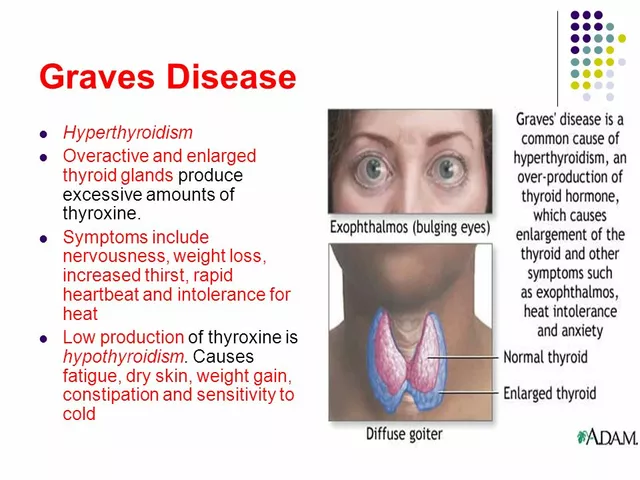
Diagnosing Graves' Disease: Signs, Symptoms, and Tests
I recently learned about Graves' disease, an autoimmune disorder that affects the thyroid gland. The common signs and symptoms include anxiety, weight loss, and a rapid heartbeat. It's important to be aware that some people might experience eye issues like bulging or discomfort. To diagnose this condition, doctors usually perform blood tests to measure thyroid hormone levels, and sometimes they might use imaging tests like ultrasounds. If you suspect you have Graves' disease, it's essential to consult with a healthcare professional to get a proper diagnosis and treatment plan.

Debbie Naquin
December 1, 2025 AT 18:51Finasteride inhibits 5α-reductase type II, reducing scalp DHT by ~70%-a pharmacodynamic threshold that correlates with clinical efficacy in androgenetic alopecia. The 83% stabilization rate in trials aligns with meta-analyses from the Cochrane Database. But the real variable is individual enzyme polymorphism-some men have higher type I activity, which finasteride doesn’t touch. That’s why dutasteride’s dual inhibition shows superior regrowth in head-to-head studies. The side effect profile? Still underreported. Post-finasteride syndrome isn’t anecdotal-it’s a neuroendocrine dysregulation in a subset with genetic susceptibility. We need longitudinal biomarker studies, not just anecdotal Reddit threads.