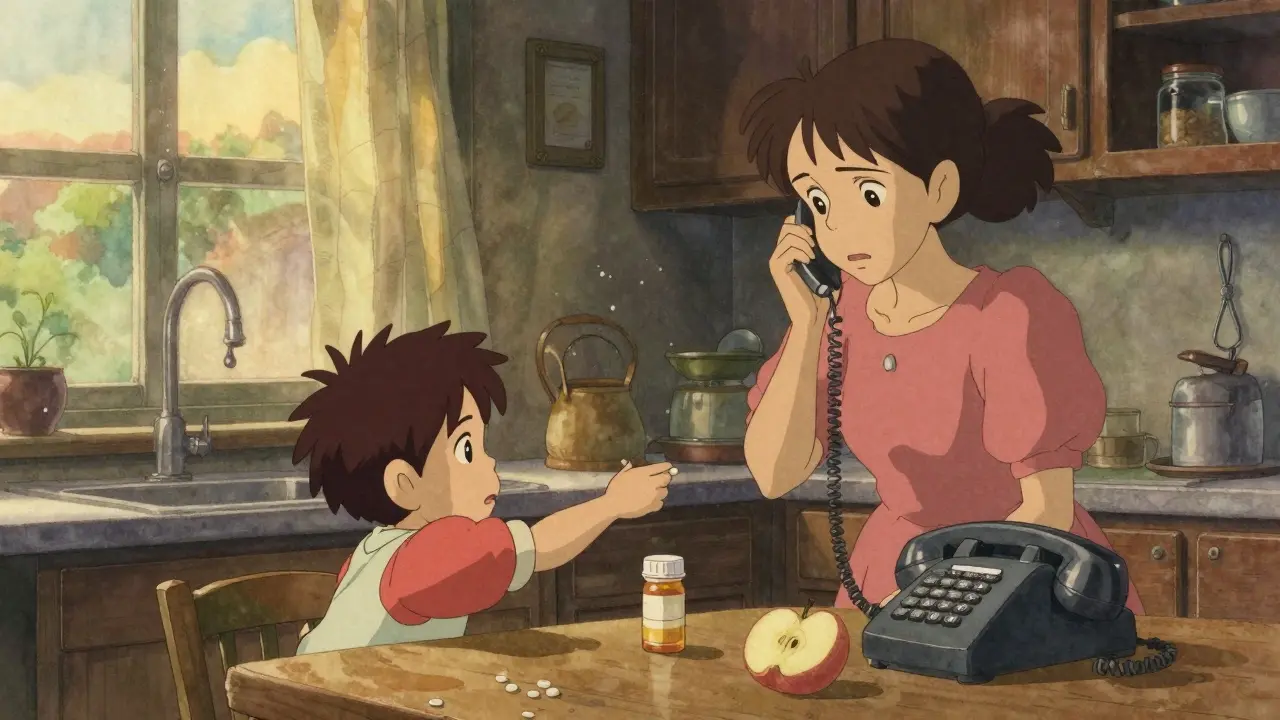
Every year, over 2 million people in the U.S. call the Poison Control Hotline-most of them because of a medication mistake. It could be a child grabbing a bottle of pills, an older adult mixing prescriptions, or someone accidentally taking too much of a painkiller. You don’t need to wait for symptoms to appear. You don’t need to drive to the ER. You just need to call 1-800-222-1222.
How the Poison Control Hotline Actually Works
The Poison Control Hotline isn’t just a phone number. It’s a network of 53 accredited centers across the country, staffed by real medical professionals-pharmacists, nurses, and doctors-who’ve trained for years in toxicology. They don’t guess. They don’t read from scripts. They use 1,540 evidence-based algorithms built from decades of real poisoning cases. When you call, your area code automatically routes you to the nearest center. You’re connected within seconds. No hold music. No automated menu. Just a specialist ready to help. You can also text "poison" to 797979 or use the webPOISONCONTROL tool at poisonhelp.org. The online tool walks you through six simple questions: what was taken, how much, when, how old the person is, how much they weigh, and where you live. It gives you a risk assessment in under three minutes. And it’s 97% as accurate as speaking to a human specialist. The system runs on the National Poison Data System (NPDS)-the only real-time poisoning database in the country. Every call, every case, every outcome gets logged. That data doesn’t just help you-it helps doctors, researchers, and regulators spot new dangers before they become epidemics. In 2021, NPDS flagged a dangerous new weight-loss drug that hadn’t even hit the market yet. That early warning saved lives.What You Must Report About Medications
When you call about a medication, the specialist needs details. Not guesses. Not "I think it was Advil." They need exact names, exact amounts, exact times. Here’s what works:- Exact medication name: Say "Tylenol Extra Strength, 500mg per tablet," not just "painkiller." Brand and generic matter. Some generics have different fillers that change how the body reacts.
- Amount ingested: "Three pills" isn’t enough. Say "three 500mg acetaminophen tablets." If it’s a liquid, give the volume in milliliters (mL). If it’s a patch, say how many were used and how long they were on.
- Time of exposure: "About an hour ago" won’t cut it. Say "2:45 PM today." Timing determines if you need an antidote or if the body has already absorbed the drug.
- Patient’s weight in kilograms: Most people don’t know their weight in kg. If you don’t know, give it in pounds-the specialist can convert it. But don’t guess. A 30-pound child reacting to 10 pills is a very different case than a 200-pound adult.
- Symptoms: "They’re dizzy" is better than "they seem off." Note when symptoms started, how bad they are, and if they’ve changed. Vomiting? Seizures? Sleepiness? Write it down before you call.
What Happens After You Call
Most calls-60% of medication cases-are resolved at home. No ambulance. No ER. No cost. The specialist gives you clear, step-by-step instructions. Maybe it’s "watch for drowsiness and call back in 4 hours." Maybe it’s "give activated charcoal now." Maybe it’s "go to the ER immediately." They don’t sugarcoat it. They tell you exactly what to do and why. For acetaminophen (Tylenol) overdoses, they’ll schedule follow-up calls at 4, 8, and 24 hours. Why? Because liver damage doesn’t show up right away. If you don’t answer the callback, they’ll keep trying. In New Mexico, they successfully reach 92% of people they need to check on. You’ll also get an email summary with everything discussed: what was taken, what the risk was, what you were told to do, and when to call back. Most people save that email. Some print it. One parent I spoke with kept it in her phone’s notes section for months-just in case.
When You Shouldn’t Wait to Call
Don’t wait to see if symptoms show up. Don’t Google it. Don’t ask a friend. Call immediately if:- A child swallowed any pill, even one they’re prescribed.
- Someone took more than the recommended dose-even if they feel fine.
- There’s a mix of medications, including over-the-counter, supplements, or alcohol.
- The person is confused, drowsy, vomiting, having trouble breathing, or having seizures.
- You’re unsure what was taken or how much.
Why This Service Is Free-and Why It Matters
There’s no charge. No insurance needed. No ID required. They speak over 150 languages. You don’t even need to give your name. It’s funded by government grants, hospital support, and state funding-about $125 million a year. And it saves the healthcare system $1.8 billion annually by keeping people out of emergency rooms. For every dollar spent on poison control, society gains $7.67 in saved medical costs and lost productivity. Hospitals across the country are required to have formal referral agreements with their local poison center. That’s how seriously they take it. If you’re ever admitted to the ER for a suspected overdose, they’ll call Poison Control before they even start treatment. They trust the data. They trust the experts.What Doesn’t Work
Don’t try to induce vomiting. Don’t give ipecac. Don’t use home remedies like milk, charcoal from the grill, or salt water. These can make things worse. Don’t wait for a doctor’s office to open. Don’t call 911 unless the person is unconscious, not breathing, or having seizures. Poison Control is the first call for medication issues. And don’t assume your pharmacist can handle it. Pharmacists are great-but they don’t have access to the same real-time toxicology databases or the same training in acute poisoning management. Poison Control specialists are the only ones who know exactly how a new synthetic opioid or a rare drug interaction behaves in the body.
Real Cases That Saved Lives
A 7-year-old in Ohio swallowed 12 melatonin gummies. Mom called Poison Control. They said: "Watch for drowsiness. If they’re hard to wake up, go to the ER." She kept watching. By 11 PM, he was unresponsive. They rushed him. He recovered fully. The specialist later told her: "If you’d waited until morning, he could’ve had respiratory arrest." A 68-year-old in Florida took his blood pressure pill and a new painkiller his friend gave him. He started feeling faint. He called Poison Control. They identified the interaction instantly: the painkiller blocked his blood pressure medication’s effect, causing dangerous spikes. They told him to stop the new pill, drink water, and check his blood pressure every hour. He avoided a stroke. On Reddit, a pharmacist shared how they helped a parent give N-acetylcysteine (the antidote for acetaminophen overdose) within the critical 8-hour window. The child’s liver was saved. No hospital stay. No long-term damage.What’s Next for Poison Control
The system is getting smarter. In 2023, the CDC gave $4.7 million to update algorithms for new drugs-especially weight-loss medications and synthetic opioids that keep popping up. Thirty-one centers now offer video consultations for complex cases. And poison control data is being linked directly to hospital electronic records, so ER doctors see the full history before they even walk into the room. But funding is tight. Inflation could cut service capacity by 12-15% by 2027 unless Congress acts. That’s why every call matters-not just for the person calling, but for the system that keeps everyone safe.What if I’m not sure whether it’s a poison emergency?
If you’re unsure, call anyway. Poison Control specialists handle over 2 million calls a year-and half of them are from people who weren’t sure. It’s better to be safe. They’ve seen everything: from kids eating a single pill to adults mixing 15 different medications. They won’t judge you. They’ll help you figure it out.
Can I call for someone else, like a neighbor or relative?
Yes. You don’t need to be the parent or caregiver. If you see someone take the wrong pill, call. If you’re helping an elderly neighbor and notice their meds are mixed up, call. Poison Control doesn’t care who you are-they care about the person at risk. Your call could save a life.
Is the Poison Control Hotline only for kids?
No. While about 47% of calls involve children, the fastest-growing group is adults over 60. Older adults are more likely to take multiple medications, have memory issues, or accidentally double-dose. Poison Control handles all ages, all types of exposures, and all kinds of medications-from insulin to antidepressants to herbal supplements.
Do they report me to authorities if I call about a drug overdose?
No. Poison Control is confidential and non-judgmental. Their only goal is to save lives. Even in cases of intentional overdose, they won’t call the police unless the person is a danger to themselves or others and needs immediate protection. You can call for yourself without fear.
What if I can’t speak English?
They have interpreters for over 150 languages. Just say the language you need, and they’ll connect you immediately. Spanish, Mandarin, Arabic, Tagalog, Vietnamese-it doesn’t matter. The service is designed to work for everyone, no matter what language you speak.
Can I use the hotline for pets?
No. Poison Control handles human exposures only. For pets, call the ASPCA Animal Poison Control Center at (888) 426-4435. It’s a separate service, and there’s a fee. But if you’re unsure whether your pet ate something dangerous, call them immediately. Many human medications are deadly to dogs and cats-even one pill.
What to Do Right Now
Save the number: 1-800-222-1222. Put it in your phone. Write it on the fridge. Share it with your family. Teach your kids that if they ever see pills they shouldn’t touch, they should find an adult and call this number. Download the webPOISONCONTROL app. It’s free. It works offline. It has a barcode scanner so you can scan pill bottles if you’re in a panic. Keep a list of all medications you or your family members take-names, doses, why they’re taken. Update it every month. That list is your best tool if you ever need to call. This isn’t just about avoiding accidents. It’s about making sure that when something goes wrong, you’re not alone. There’s a team of experts waiting to help-24/7. All you have to do is call.
Casper MacIntyre
Hello, my name is Casper MacIntyre and I am an expert in the field of pharmaceuticals. I have dedicated my life to understanding the intricacies of medications and their impact on various diseases. Through extensive research and experience, I have gained a wealth of knowledge that I enjoy sharing with others. I am passionate about writing and educating the public on medication, diseases, and their treatments. My goal is to make a positive impact on the lives of others through my work in this ever-evolving industry.
12 Comments
-
Donna Peplinskie
January 4, 2026 AT 01:44I’m a nurse, and I’ve seen too many cases where people waited too long-because they thought it ‘wasn’t that bad.’ Poison Control isn’t just a hotline; it’s a lifeline. I always tell my patients: if you’re even a little unsure, call. No shame. No judgment. Just help.
-
Lee M
January 5, 2026 AT 10:29This system is the last bastion of rational, science-based public health in America. It’s not flashy, it doesn’t get viral TikToks, but it saves lives daily. And yet, we’re on the verge of defunding it because politicians care more about optics than outcomes. We’ve outsourced wisdom to algorithms and forgotten the power of trained human expertise.
-
Kristen Russell
January 6, 2026 AT 16:05My mom took three extra pills last year. Called Poison Control. Got clear instructions. Stayed home. Saved money, stress, and time. This service is a miracle. Everyone needs to know this number.
-
Phoebe McKenzie
January 6, 2026 AT 17:21Of course they say it’s free-because they’re just a front for Big Pharma. You think they really care about you? They’re logging every single call, feeding data to the FDA, building profiles on families. Next thing you know, your insurance will raise rates because you ‘called about a medication.’ Don’t fall for the fairy tale.
-
gerard najera
January 8, 2026 AT 09:30Humanity’s greatest tool isn’t AI or blockchain-it’s collective knowledge encoded in real-time toxicology databases. Poison Control is the quiet engine of public safety. We don’t notice it until it’s gone. And then we’ll wonder why our children died from something preventable.
-
Stephen Gikuma
January 9, 2026 AT 19:22They say it’s funded by government grants-yeah, right. That’s just the cover. The real money comes from the WHO and global health elites pushing their agenda. Why do they need to know your weight? Why do they ask about every supplement? This isn’t help-it’s surveillance. And they’ll use it to control what you can take.
-
Bobby Collins
January 10, 2026 AT 17:12my mom called them once after my little brother ate a whole bottle of gummy vitamins. they were chill as hell. told her to just watch him for a bit. no drama. no cops. no hospital. i was like… wait, this is real? they just… help? i thought they’d be like, ‘we’re calling the state.’
-
Layla Anna
January 12, 2026 AT 11:29Just called for my cousin in Lagos-he took a wrong pill and was scared. They connected him to a Yoruba interpreter in under 10 seconds. I cried. This service is global magic. Everyone in my family now has the number saved. 🙏
-
Olukayode Oguntulu
January 14, 2026 AT 00:26While the institutional infrastructure of poison control is undeniably sophisticated, one must interrogate the epistemological hegemony embedded within its algorithmic frameworks. The NPDS, though statistically robust, is predicated on a Western biomedical paradigm that pathologizes non-Western pharmacopeias-herbal remedies, Ayurvedic formulations, traditional Chinese medicine. These are systematically misclassified as ‘supplements’ or ‘unverified substances,’ thereby reducing their pharmacological complexity to binary risk assessments. One wonders: whose toxicity is being measured here?
-
jaspreet sandhu
January 14, 2026 AT 23:56I live in India and we don’t have anything like this. People here just give milk or salt water or call the local quack. I read this whole thing and I’m like-how is this even possible? You have real doctors on the line? You have apps that scan pills? You have data tracking? In my country, if you take too many pills, you go to the hospital and wait 6 hours to see someone who doesn’t even know what you took. This is what rich countries do. We’re still trying to get clean water.
-
Alex Warden
January 15, 2026 AT 09:28They say it’s free-but who’s really paying? Taxpayers. And now they want to expand video consultations and link to hospital records? That’s just the first step. Next thing you know, they’ll be tracking your meds through your smart fridge and your Fitbit. This isn’t safety-it’s control. And if you’re not careful, they’ll decide what meds you’re allowed to take.


Write a comment
More Articles
Unlock Your Potential: The Power of Androstenedione Dietary Supplements
In my recent exploration of dietary supplements, I've discovered the power of Androstenedione. This naturally occurring hormone, often used by athletes, has significant potential to increase our body's performance and muscle growth. But it's not just about physical enhancement, this supplement can also boost your energy levels and overall well-being. However, it's crucial to use it responsibly due to potential side effects. Stay tuned for a deeper dive into this fascinating topic.
FDA Sentinel Initiative: How Big Data Detects Drug Safety Issues
The FDA Sentinel Initiative uses big data from millions of patient records to detect drug safety issues in real time, replacing outdated reporting systems with active surveillance powered by AI and real-world evidence.
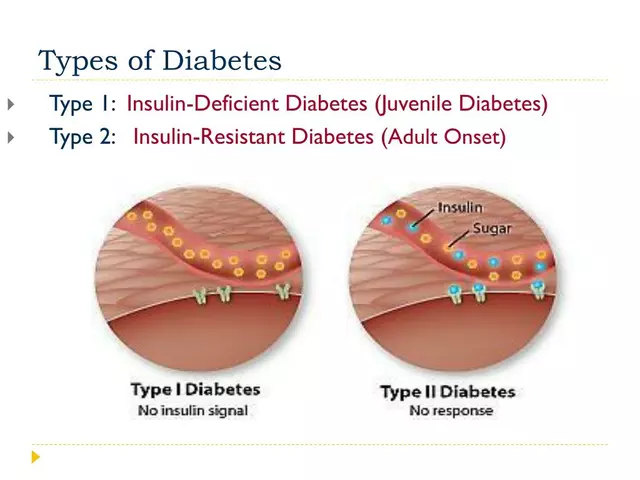
How Saxagliptin Affects Insulin Resistance in Type 2 Diabetes
As a blogger focused on health and wellness, I recently came across some interesting research on how Saxagliptin affects insulin resistance in Type 2 Diabetes. From what I've gathered, Saxagliptin is a medication that helps to control blood sugar levels by increasing the release of insulin and reducing the amount of glucose produced by the liver. This ultimately results in better management of Type 2 Diabetes and improved overall health. I was impressed to learn that this medication can not only help those struggling with insulin resistance but also reduce the risk of long-term complications associated with diabetes. I'm eager to continue following this topic and sharing more insights with my readers.
Heather Josey
January 2, 2026 AT 15:10Just saved this number in my phone right now. I didn’t realize how much goes into this service-53 centers, real toxicologists, real-time data tracking. It’s insane how underappreciated this is. I’m telling my whole family tonight. No more guessing when something goes wrong.