
Using steroid eye drops can be a game-changer for people dealing with serious eye inflammation. Conditions like uveitis, severe allergic conjunctivitis, or damage from chemical burns often respond quickly to these medications. But here’s the thing: they’re not harmless. While they bring fast relief, they can also quietly damage your eyes if used too long or without proper monitoring. Many people don’t realize the risks until it’s too late-because the damage often shows up without symptoms until vision is already affected.
How Steroid Eye Drops Work
Steroid eye drops, like prednisolone acetate (Pred Forte), dexamethasone, and loteprednol etabonate, are powerful anti-inflammatory drugs. They work by blocking the body’s natural inflammation response at the cellular level. Specifically, they inhibit enzymes like phospholipase A2 and stop the production of prostaglandins, which are chemicals that cause swelling, redness, and pain in the eye. This makes them incredibly effective for sudden flare-ups of eye inflammation.
For example, someone with acute anterior uveitis-where the middle layer of the eye becomes inflamed-can go from blurry vision and light sensitivity to near-normal sight within days of starting treatment. The same goes for severe allergic reactions that don’t respond to regular antihistamine drops. In these cases, steroid eye drops aren’t just helpful-they’re necessary to prevent permanent damage.
The Hidden Dangers: Elevated Eye Pressure
The biggest risk isn’t something you feel right away. It’s steroid-induced glaucoma. This happens when the pressure inside your eye (intraocular pressure, or IOP) rises due to steroid use. High pressure damages the optic nerve over time, and once that nerve is hurt, the vision loss is permanent.
Here’s what most people don’t know: about 30-40% of the general population will see some increase in eye pressure when using steroid drops. Of those, 4-6% are called “steroid responders”-they have a strong reaction that can push pressure up by more than 15 mmHg. That’s enough to cause serious harm. And it doesn’t matter if you’re young or healthy. Even people with no history of eye problems can become responders.
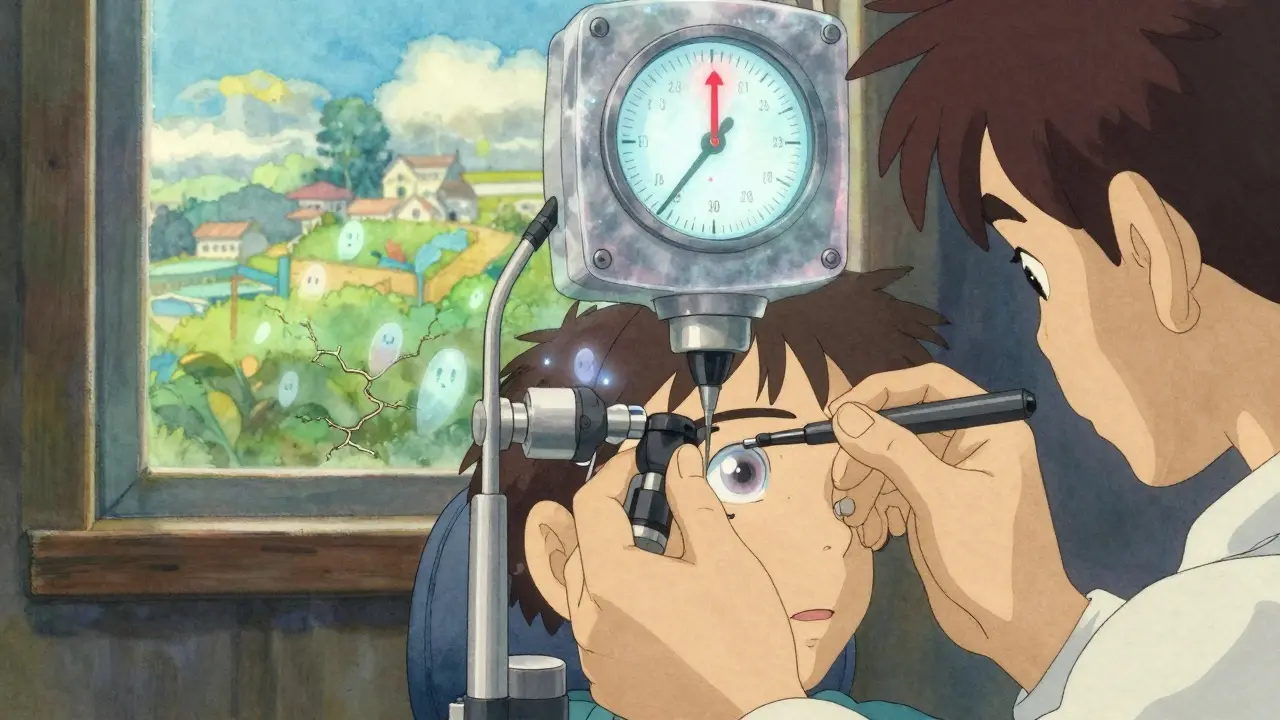
What makes this dangerous is how sneaky it is. Most people don’t feel any pain, pressure, or discomfort. No headaches. No redness. Just slowly worsening peripheral vision-like your side sight is fading. By the time you notice, you might already have glaucoma damage. That’s why regular eye pressure checks are non-negotiable.
Cataracts: Another Silent Threat
Long-term use of steroid eye drops also increases the risk of developing a specific type of cataract: posterior subcapsular cataracts. Unlike age-related cataracts that form slowly over decades, steroid-induced ones can appear in weeks or months. They form right at the back of the lens, directly in your line of sight. That means even small clouding can cause major vision problems-glare, halos around lights, and blurry vision up close.
GoodRx and the Mayo Clinic both note that using these drops for 10 days or longer raises the risk. After three to six months, the chance of developing a cataract jumps significantly. For some, this means needing cataract surgery years earlier than they otherwise would. Cataract surgery is successful in 95% of cases, but it still carries risks like infection or the lens becoming cloudy again later.
Infection Risk: When Steroids Backfire
Steroids suppress your eye’s immune response. That’s great for calming inflammation-but terrible if you have an underlying infection. Herpes simplex virus (which causes cold sores) can flare up in the eye and turn into a full-blown corneal ulcer. Fungal infections, though rare, can also take hold and are extremely hard to treat.
One patient I know started steroid drops for a mild allergy. Two weeks later, she lost vision in one eye because of a herpes infection that had gone unnoticed. She didn’t have pain or discharge-just worsening blur. By the time she saw her doctor, the cornea was scarred. She’ll need a transplant to restore vision.
That’s why doctors always check for infections before prescribing steroids. If you have a history of cold sores or eye infections, you should be extra cautious. Never use steroid drops if your eye is red, painful, or has discharge unless your doctor confirms it’s safe.
Who’s at Highest Risk?
Not everyone reacts the same way. Some people are more likely to have complications. You’re at higher risk if you:
- Have a family history of glaucoma
- Already have glaucoma or high eye pressure
- Have diabetes
- Are on long-term steroid treatment (over 2 weeks)
- Use high-potency drops like prednisolone acetate
Even if you don’t fall into these categories, you should still be monitored. The truth is, no one is completely safe. That’s why the American Academy of Ophthalmology recommends baseline pressure testing before starting steroids, followed by checks every 2-4 weeks during treatment. For high-risk patients, that should be every 1-2 weeks.
How Often Should You Get Checked?
Monitoring isn’t optional. It’s part of the treatment. Here’s what a proper monitoring plan looks like:
- Before starting: A full eye exam, including pressure measurement with Goldmann applanation tonometry (the gold standard), optic nerve evaluation, and slit-lamp exam to check for early signs of cataracts or corneal damage.
- During treatment: Pressure checks every 2-4 weeks. If you’re on high-dose or long-term therapy, increase to weekly. Your doctor should also look at your lens and cornea at each visit.
- After stopping: One final check 2-4 weeks after you stop the drops. Pressure can stay elevated for a while after you stop using them.
Don’t assume your optometrist will automatically schedule these. You need to ask. If you’re using steroid drops for more than two weeks, make sure you’re being monitored. If you’re not, push for it.
How Long Is Safe to Use Them?
There’s no one-size-fits-all answer, but general guidelines help:
- Less than 2 weeks: Low risk for side effects. Most people won’t have issues.
- 2-4 weeks: Moderate risk. Pressure changes can begin. Monitoring should start.
- More than 4 weeks: High risk. Cataracts and glaucoma become real concerns. Use should be reviewed by an ophthalmologist.
- More than 2 months: Strongly discouraged unless no other options exist. Requires specialist oversight.
Most uveitis patients use steroids for 1-2 months. That’s often enough to control the flare. After that, doctors try to taper off or switch to non-steroidal options like NSAID eye drops. These don’t pack the same punch, but they also don’t raise pressure or cause cataracts.

What to Do If You Can’t Stop
Sometimes, inflammation comes back when you stop the drops. That’s called rebound inflammation. Never stop steroid drops suddenly. Your doctor will need to slowly reduce the dose-maybe from four times a day to twice a day, then every other day-before stopping completely. Skipping this step can make your condition worse than before.
If you need long-term control, alternatives exist. Non-steroidal anti-inflammatory drugs (NSAIDs) like ketorolac or bromfenac can help with milder cases. Immunosuppressants like cyclosporine eye drops are another option for chronic inflammation. They take longer to work but are safer over time.
Symptoms That Need Immediate Attention
You might not feel pressure building up-but if you notice any of these, call your eye doctor right away:
- Blurry vision that doesn’t improve
- Seeing halos or glare around lights
- Loss of side vision (tunnel vision)
- Eye pain or pressure
- Nausea or vomiting with eye discomfort
- Sudden redness or worsening light sensitivity
These could mean glaucoma, cataracts, or an infection is progressing. Don’t wait. Early action can save your vision.
Final Thoughts: Use Smart, Not Just Often
Steroid eye drops are powerful tools. They can stop inflammation before it destroys vision. But they’re not meant to be a long-term fix. The risks-glaucoma, cataracts, infection-are real and often silent. The key isn’t avoiding them altogether, but using them wisely: the right dose, for the shortest time possible, with regular monitoring.
If you’re on these drops, make sure you’re being checked. Ask your doctor: “What’s my eye pressure today?” and “Am I at risk for cataracts or glaucoma?” If they don’t have a monitoring plan, get a second opinion. Your vision isn’t something to gamble with.
Can steroid eye drops cause permanent vision loss?
Yes, if used improperly or without monitoring. Elevated eye pressure from steroid use can lead to glaucoma, which damages the optic nerve. Once nerve cells die, vision loss is permanent. Cataracts caused by steroids can also lead to blindness if untreated. That’s why regular pressure checks and follow-up exams are essential.
How long can I safely use steroid eye drops?
For most people, up to two weeks is low risk. Beyond that, the chance of side effects like high eye pressure or cataracts increases. If you need them longer than four weeks, you should be under the care of an ophthalmologist with regular pressure checks and eye exams. Long-term use (more than 2-3 months) should only happen if no other treatment works.
Do all steroid eye drops carry the same risks?
No. Potency matters. Prednisolone acetate (Pred Forte) is a high-potency steroid and carries a higher risk of side effects than milder ones like loteprednol (Alrex). Even low-dose steroids can cause problems if used for weeks or months. Always follow your doctor’s advice on which type and how long to use it.
Can I use steroid eye drops if I have glaucoma?
Generally, no. If you already have glaucoma, steroid eye drops can make it worse quickly. In rare cases, they might be used under strict supervision with frequent pressure checks, but only if the inflammation is severe and no other treatment works. Most eye doctors will avoid them entirely in glaucoma patients.
What should I do if I forget to go for my eye pressure check?
Don’t wait. Call your eye doctor and ask if you can schedule an urgent pressure test. If you’ve been using steroid drops for more than two weeks, skipping a checkup puts you at risk. Many clinics offer walk-in tonometry tests. Don’t assume you’re fine just because you feel okay-steroid damage is silent until it’s too late.

Casper MacIntyre
Hello, my name is Casper MacIntyre and I am an expert in the field of pharmaceuticals. I have dedicated my life to understanding the intricacies of medications and their impact on various diseases. Through extensive research and experience, I have gained a wealth of knowledge that I enjoy sharing with others. I am passionate about writing and educating the public on medication, diseases, and their treatments. My goal is to make a positive impact on the lives of others through my work in this ever-evolving industry.
13 Comments
-
Sabrina Sanches
March 14, 2026 AT 12:35I almost lost my vision once because I thought 'it feels fine so it must be fine'... don't be me
-
Byron Boror
March 15, 2026 AT 03:04This is why America needs to stop letting big pharma push these drugs like candy. Your body isn't a lab rat. If you're using steroids for more than two weeks, you're already playing Russian roulette with your eyes.
-
Katherine Rodriguez
March 16, 2026 AT 15:17They say 'monitoring' but what they really mean is 'pay extra for unnecessary appointments'. I used them for 3 weeks. No issues. Why should I waste money on a test that's just to cover their butts?
-
Devin Ersoy
March 17, 2026 AT 16:07Ah yes, the classic 'steroid-induced glaucoma' scare tactic. I've seen more people go blind from misdiagnosed dry eye than from steroid drops. You're being manipulated into fear-based compliance. The real villain? Ophthalmology's profit margins.
-
Shruti Chaturvedi
March 18, 2026 AT 22:04I'm from India and we use steroid drops all the time here without much monitoring. I know someone who used them for 4 months and still sees fine. Maybe it's not as scary as they say? We need to stop overmedicalizing everything
-
Noluthando Devour Mamabolo
March 20, 2026 AT 11:17I'm a retinal tech and I've seen 17 cases of steroid-induced PSC cataracts in the last year. The stats are real. It's not 'maybe'-it's 'when'. If you're on these drops, you're in a high-risk cohort. Period.
-
Alex MC
March 20, 2026 AT 23:04I'm a former steroid user. I was paranoid at first, but my doc had a solid plan: baseline, then every 14 days. I got through it. It's not about fear-it's about awareness. You can use them safely if you're smart.
-
Scott Smith
March 21, 2026 AT 06:50I work in public health. We've had outbreaks of herpes keratitis in rural clinics where steroid drops were prescribed without viral screening. This isn't theoretical. People are losing vision because of lazy prescribing. We need better training.
-
Sally Lloyd
March 22, 2026 AT 15:08I read somewhere that the FDA doesn't require long-term safety studies for topical steroids because they're 'low risk'. But then why do the warnings say 'permanent vision loss'? Coincidence? Or is this a cover-up?
-
Rosemary Chude-Sokei
March 23, 2026 AT 23:01I appreciate the thoroughness of this post. The distinction between low-potency and high-potency agents is critical. Many patients assume all steroid drops are equal. They are not. Loteprednol has a significantly lower risk profile for IOP elevation and cataractogenesis. This nuance deserves more attention.
-
Leah Dobbin
March 24, 2026 AT 13:03I'm not saying the risks aren't real... but have you considered that maybe the people who get glaucoma from steroids were just destined to get it anyway? It's not the drops. It's fate.
-
douglas martinez
March 25, 2026 AT 03:13As someone who's been managing chronic uveitis for 12 years, I can say this: steroids saved my sight. But I've had 7 pressure checks this year. I know the drill. If you're going to use them, be a partner in your care. Don't just take the script and disappear. Your vision is worth the effort.


Write a comment
More Articles

Cold and Flu Medications While Pregnant: What to Avoid and What’s Safe
Learn which cold and flu medications are safe during pregnancy and which ones to avoid completely. Get clear, evidence-based guidance on acetaminophen, decongestants, antivirals, and what to do if you get the flu.


Jimmy V
March 14, 2026 AT 12:09I've been on Pred Forte for 6 weeks for uveitis. No symptoms, no pain, but my optometrist caught my IOP at 32. Thank god I went in. They switched me to cyclosporine. Steroids aren't magic-they're a loaded gun. Always get checked.