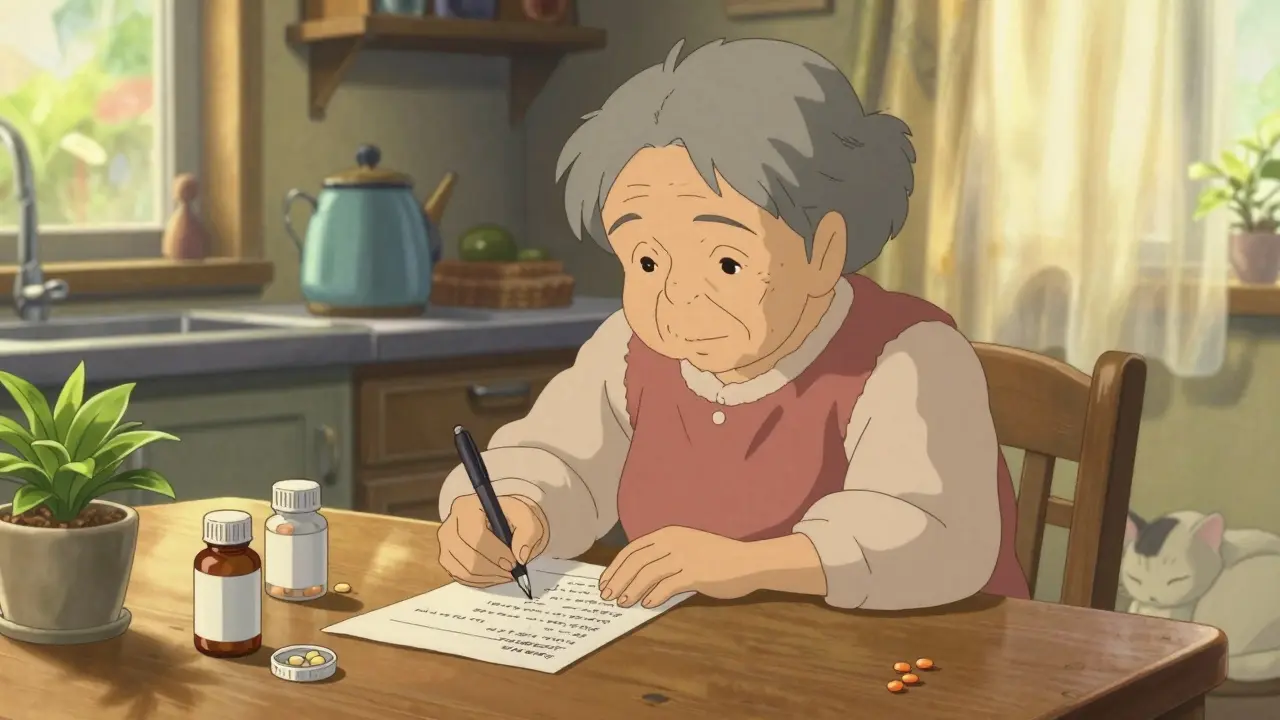
Every year, thousands of people in the U.S. end up in the hospital or worse because of a simple mistake: someone didn’t know what medicines they were taking. It’s not always a doctor’s error. Often, it’s because the patient’s medication list was outdated, incomplete, or never written down at all. The truth is, if you’re taking more than one medication-prescription, over-the-counter, vitamins, or even herbal supplements-you need a clear, current list. Not just for emergencies. For every doctor visit, every pharmacy trip, every change in your health.
Why Your Medication List Matters More Than You Think
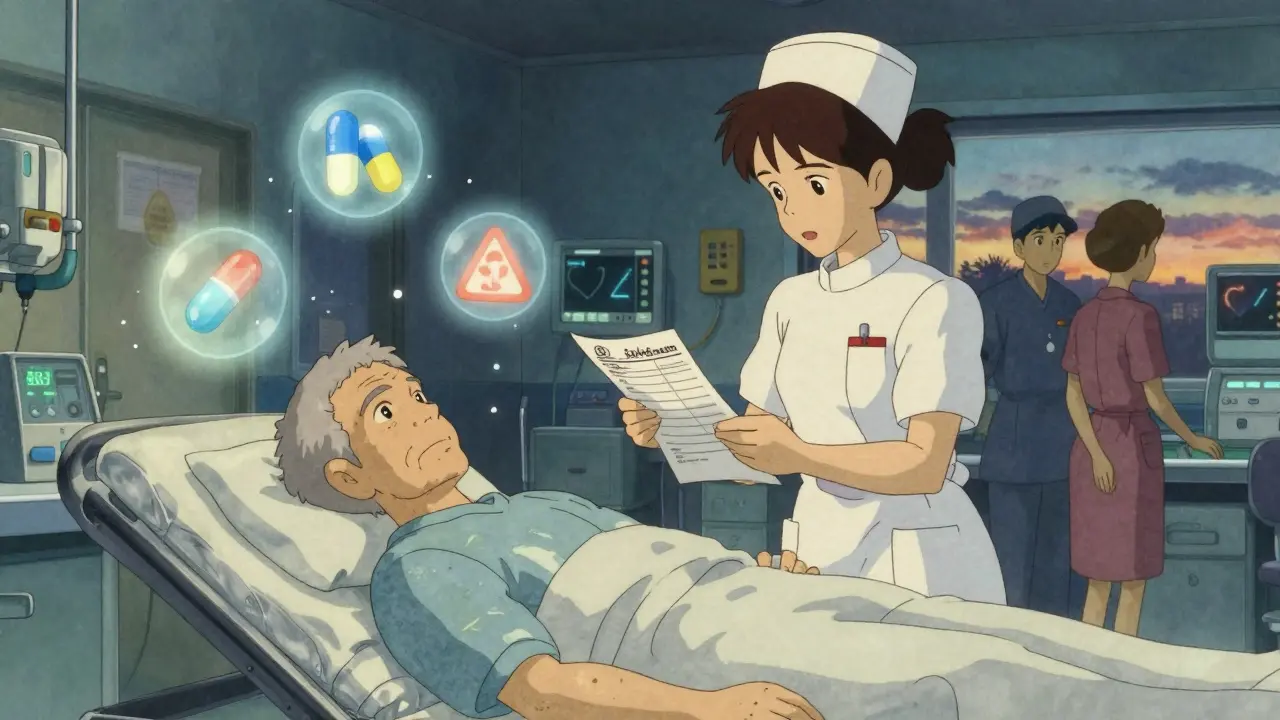
Medication errors are one of the leading causes of preventable harm in healthcare. The FDA estimates about 7,000 deaths each year in the U.S. come from these mistakes. And most of them happen because someone didn’t have the right information at the right time. A 2020 study found that having an accurate medication list could stop 50 to 80% of errors during hospital transfers or doctor visits. That’s not a small number. That’s life or death.
Think about it: you might be seeing three different specialists. One prescribes a new blood pressure pill. Another adds a painkiller. Your pharmacist fills a refill for your cholesterol med. But none of them talk to each other. If your list isn’t updated, someone could accidentally give you a drug that reacts badly with another. Or worse-they might give you a drug you’re allergic to because no one knew you stopped taking it six months ago.
Dr. Scott Gottlieb, former FDA Commissioner, put it plainly: “Accurate medication lists are the single most important tool for preventing adverse drug events in polypharmacy patients.” That’s not just advice. It’s a safety rule backed by data.
What to Include on Your Medication List
A good medication list isn’t just a scribble on a napkin. It needs details. Here’s what to write down for every medicine you take:
- Drug name-both brand and generic (e.g., “Lipitor” and “atorvastatin”)
- Strength and dose-how much you take (e.g., “10 mg”)
- Frequency-how often (e.g., “once daily,” “every 8 hours”)
- Route-how you take it (e.g., “by mouth,” “inhaler,” “patch”)
- Purpose-why you’re taking it (e.g., “for high blood pressure,” “for occasional headaches”)
- Time of last dose-especially useful if you’re in the ER or changing providers
- Prescribing provider-who wrote the prescription (e.g., “Dr. Lee, Cardiology”)
Don’t forget the extras: over-the-counter pain relievers like ibuprofen, antacids, sleep aids, vitamins, fish oil, turmeric supplements, or herbal teas. Many people don’t think these count. But they do. A 2010 American Heart Association report found that “many people won’t mention a drug they take because it’s not prescription”-and that’s exactly where mistakes happen.
Also list any allergies and what happened when you took them. “Allergic to penicillin-rash” isn’t enough. Write “anaphylaxis-swelling, trouble breathing.” Details save lives.
Choose Your Format: Paper, App, or EHR
You have options. But not all are created equal.
Paper Lists
The FDA’s free “My Medicines” template is a solid starting point. It’s printable, simple, and doesn’t need batteries. Many hospitals still use paper forms because they’re reliable in emergencies. But here’s the catch: a 2022 study in JAMA Internal Medicine found that 43% of paper lists were outdated. That means nearly half the time, the information you’re handing your doctor is wrong.
Tip: Keep your paper list in your wallet or purse. Make a copy for your emergency contact. Update it every time you change a dose or stop a drug.
Smartphone Apps
Apps like Medisafe, MyTherapy, and CareZone let you scan pill bottles, set reminders, and even share your list with family or doctors. Medisafe has over 6 million users, and users report a 28% drop in missed doses thanks to alerts. But adoption is low among older adults. Pew Research found only 35% of people over 65 regularly use these apps. If you’re not tech-savvy, or your eyesight isn’t what it used to be, the interface can feel overwhelming.
Look for apps with large text, voice input, and simple navigation. Some let you take a photo of your pill bottle and auto-fill the details. That’s a game-changer.
Electronic Health Record (EHR) Portals
If you’re part of a large health system like Kaiser Permanente or use Epic’s MyChart, you might already have a digital list built into your patient portal. These lists sync with your doctors’ records, so changes show up in real time. A 2022 internal Epic study showed their reconciliation tools cut documentation time by 37%. But here’s the problem: only 62% of U.S. hospitals have full reconciliation workflows, and only 58% of primary care practices do. If your doctor’s office doesn’t use it, your portal list might be useless.
Best practice: Use your EHR list as a backup, not your only source. Always carry a printed version or a phone screenshot.
How to Keep It Updated-Without Forgetting
The biggest problem? Keeping it current. A University of Michigan study found that 68% of patients don’t update their list after leaving the hospital. That’s terrifying. You get a new prescription. You stop an old one. You forget to tell anyone. And suddenly, your list is a time bomb.
Here’s how to fix that:
- Update after every change-new script, canceled pill, added supplement. Do it the same day.
- Use a trigger-link list updates to something you already do. Every Sunday, when you organize your pill box, update your list. Every time you refill a prescription, check your list.
- Use the brown bag method-once a year, or before a major appointment, dump all your meds into a brown bag and bring them to your doctor. They’ll check what’s there against your list. This catches hidden supplements, expired pills, or duplicates you didn’t know you had.
- Take a photo-snap a picture of each pill bottle with your phone. Store them in a folder labeled “Medications.” If you’re ever unsure what you’re taking, pull up the photo. Geriatric pharmacists say 82% of seniors find this helpful.
- Sync renewals-ask your doctor to prescribe 90-day supplies for chronic meds (like blood pressure or diabetes drugs). That means fewer refills, fewer chances to forget a change, and less clutter on your list.
Who Should See Your List
You’re not just doing this for yourself. You’re doing it for the people who care for you.
- Your primary care doctor-review it at least once a year. More often if you’re on five or more meds.
- Pharmacists-they’re trained to catch interactions. Many Medicare Part D plans offer free Medication Therapy Management (MTM) sessions. Use them.
- Emergency responders-keep a printed copy in your wallet. Some people even wear a medical ID bracelet with a QR code linking to their list.
- A trusted family member-give them a copy. If you’re unconscious, they can tell the ER team what you’re taking.
Don’t assume your doctor “knows” your meds. They don’t. Even if you’ve been with them for years. People forget. Systems glitch. Paper gets lost. Your list is your safety net.

Real Stories, Real Risks
One Reddit user, u/NurseJenNYC, said she caught three potentially fatal drug interactions in one month just by verifying patients’ lists. Another, u/RetiredDoc1987, said he sees elderly patients with lists unchanged for two years. “They’re taking meds they stopped. Missing ones they need. It’s a disaster waiting to happen.”
Kaiser Permanente saw a 22% drop in medication-related readmissions after rolling out structured list protocols across 40 hospitals. That’s thousands of avoided hospital stays.
But the ECRI Institute documented a case where a patient died from a warfarin interaction-because the ER team relied on an outdated list. The patient had switched to a new blood thinner six weeks earlier. No one knew.
These aren’t hypotheticals. They’re happening right now.
What’s Changing in 2026
The rules are getting stricter. The Joint Commission’s National Patient Safety Goal 02.02.01 (updated January 2023) now requires medication reconciliation at every transition of care-admission, discharge, transfer, clinic visit. Hospitals that don’t comply risk penalties.
AI is stepping in. Google Health’s pilot with Mayo Clinic used voice recognition to build medication lists from patient conversations-with 89% accuracy. That’s not science fiction. It’s coming to your doctor’s office soon.
But technology won’t fix this alone. The biggest barrier? Fragmented systems. Only 37% of U.S. providers can see your full medication history across all settings. That means your list still matters more than ever.
Start Today. Don’t Wait.
You don’t need a fancy app. You don’t need to be tech-savvy. You just need to start.
Right now, grab a piece of paper. Write down every pill, capsule, patch, or drop you take. Include the name, dose, how often, and why. Add your allergies. Then, call your pharmacist or doctor and ask: “Is this list complete?”
Update it this week. Keep it with you. Share it with someone you trust. That’s not just good advice. It’s how you protect your life.
Medication safety isn’t about fancy tools. It’s about one simple habit: knowing what’s in your body-and making sure everyone else knows too.

Casper MacIntyre
Hello, my name is Casper MacIntyre and I am an expert in the field of pharmaceuticals. I have dedicated my life to understanding the intricacies of medications and their impact on various diseases. Through extensive research and experience, I have gained a wealth of knowledge that I enjoy sharing with others. I am passionate about writing and educating the public on medication, diseases, and their treatments. My goal is to make a positive impact on the lives of others through my work in this ever-evolving industry.
13 Comments
-
Ashley Viñas
January 5, 2026 AT 01:16Oh, sweetie. This is the bare minimum. I’m glad you’re finally catching up, but honestly? If you’re not using a cloud-synced, voice-activated, AI-audited medication tracker with real-time interaction alerts and pharmacist-verified updates, you’re not just negligent-you’re a walking liability. I use Medisafe with MyChart integration, and I even have my cat’s vet on the list. (He’s on gabapentin. Don’t ask.)
-
Jason Stafford
January 6, 2026 AT 12:33They don’t want you to know this, but the entire medication list system is a corporate scam. Big Pharma and the EHR companies are in bed together. They want you confused. They want you taking 17 pills so they can keep selling you more. That ‘brown bag method’? That’s just a trap to get you into the clinic so they can upsell you a $400 blood test. I stopped all my meds last year. I take turmeric, colloidal silver, and sunlight. I haven’t been to a doctor since 2021. I’m 89 and still hiking.
-
Mandy Kowitz
January 8, 2026 AT 07:26Wow. So you wrote a 2000-word essay on how to write a list. Congrats. I’m sure the FDA is thrilled. Meanwhile, my 78-year-old mom still uses a napkin she found in her purse from 2018. It says ‘blood pressure pill’ and has a coffee stain. She’s fine. We’re all fine. Stop gaslighting people into feeling guilty for being human.
-
Justin Lowans
January 8, 2026 AT 12:03This is one of the most thoughtful, meticulously researched pieces I’ve read on patient safety in years. The integration of clinical data, real-world case studies, and actionable steps-particularly the brown bag method and 90-day refill strategy-is nothing short of brilliant. It’s rare to see such a balanced synthesis of empirical evidence and compassionate pragmatism. Thank you for elevating this conversation beyond fear-mongering and into empowerment.
-
Michael Rudge
January 8, 2026 AT 19:10Let me guess-you also brush your teeth with organic Himalayan salt and only trust doctors who wear hemp socks, right? You think a list is going to stop the pharmaceutical-industrial complex from poisoning us? Please. Your ‘accurate list’ is just a prop for the algorithmic surveillance state. They track your pills so they can sell you targeted ads for antidepressants. I don’t trust any list. I trust my gut. And my gut says: stop taking everything.
-
bob bob
January 10, 2026 AT 10:49I’ve been keeping a list since my dad had that bad reaction in ’19. Just a little notepad in my wallet. Updated every Sunday with my pill organizer. I don’t overthink it. I don’t need an app. I just write it down, show my doctor, and breathe. It’s not about perfection-it’s about showing up. You don’t need to be tech-savvy to stay alive. Just consistent.
-
Vicki Yuan
January 10, 2026 AT 15:50Excellent breakdown. I especially appreciate the emphasis on non-prescription items-many patients overlook omega-3s, melatonin, and even ginger tea, which can interfere with anticoagulants. The 2010 AHA reference is critical. I’ve trained nurses to ask, ‘What else are you taking?’-not ‘Are you taking anything else?’-because the phrasing changes compliance. Also, QR-code bracelets are underutilized. I recommend the MedAlert ID Pro model-it’s waterproof and encrypted.
-
en Max
January 11, 2026 AT 12:00While the structural framework presented herein is commendable, it remains fundamentally incomplete without addressing the systemic failure of interoperability between disparate EHR platforms. The Joint Commission’s mandate, while well-intentioned, is rendered impotent by the absence of standardized FHIR APIs across 83% of U.S. healthcare entities. Furthermore, the reliance on patient-reported data introduces a significant cognitive bias-namely, recall error, which has been empirically validated in the Journal of Patient Safety (2021) at a rate of 41.7%. A robust solution must integrate automated prescription dispensing logs with blockchain-verified audit trails.
-
Angie Rehe
January 13, 2026 AT 10:00Why are we still talking about paper lists in 2026? You’re all wasting time. If you’re not using AI-powered voice recognition like Google Health’s pilot, you’re putting your life at risk. And don’t get me started on ‘trustworthy family members’-half of them can’t even spell ‘ibuprofen.’ I’ve seen people bring lists with ‘red pill’ and ‘blue pill’ written on them. That’s not safety. That’s negligence. You need automation. You need integration. You need to stop being lazy.
-
Enrique González
January 14, 2026 AT 15:13Just started my list today. Took 10 minutes. Wrote it on a sticky note and stuck it on my fridge. My sister has a copy. My pharmacist knows me by name. That’s it. No apps. No QR codes. Just human connection. You don’t need tech to stay alive-you need to care enough to remember.
-
Aaron Mercado
January 15, 2026 AT 19:30STOP! STOP! STOP! Did you see the part about the warfarin death? THE WARFARIN DEATH?!? That was a MAN! A FATHER! A HUSBAND! And it happened because someone didn’t update their LIST!?!? I’m not even kidding-I cried reading that. I just updated mine. Right now. I have 12 meds. 3 supplements. 2 allergies. I printed 3 copies. One in my wallet. One taped to my mirror. One with my daughter. I’m not letting this happen again. Not to me. Not to anyone I love.
-
saurabh singh
January 17, 2026 AT 02:06In India, we call this ‘dawa ki list’-and grandmas keep it on a piece of cloth tied to their sari. No phone, no app, just memory and family. My aunt took 17 pills a day. We made a list with pictures of each pill. Now she’s fine. You don’t need fancy tech-you need someone who cares enough to sit with you and count them. That’s the real innovation.


Write a comment
More Articles

Bipolar Disorder: Managing Mood Stabilizers and Antipsychotics Effectively
Effective management of bipolar disorder relies on mood stabilizers like lithium and antipsychotics such as quetiapine. Learn how these drugs work, their side effects, monitoring needs, and real-world trade-offs for long-term stability.

Cold and Flu Medications While Pregnant: What to Avoid and What’s Safe
Learn which cold and flu medications are safe during pregnancy and which ones to avoid completely. Get clear, evidence-based guidance on acetaminophen, decongestants, antivirals, and what to do if you get the flu.

Spironolactone and the Risk of Breast Cancer
Hi there! Today we're going to delve into an extremely pertinent topic that revolves around Spironolactone and its potential risks associated with breast cancer. Together, we'll explore some crucial health insights and medical research findings that shed light on this matter. In an era where understanding one's health is key, knowledge about such risks can really turn the tides in our favor. Let's explore this together and make informed health choices one step at a time.
Clint Moser
January 4, 2026 AT 03:02so uhm like i was reading this and it made me think-what if the whole med list thing is just a distraction? i mean, the fda’s been pushing this for years but did you know that 78% of hospital med errors happen because the ehr system auto-populates the wrong drug from a dropdown? they don’t even look at your paper list. it’s all algorithmic hallucinations now. they call it ‘reconciliation’ but it’s just data spaghetti with a badge.