Kayser-Fleischer Rings: What They Mean and How They Relate to Liver and Neurological Health
When you see a Kayser-Fleischer rings, a golden-brown or greenish ring around the cornea of the eye caused by copper deposits. Also known as corneal copper rings, they’re not just a visual oddity—they’re a red flag for a serious internal problem. These rings don’t show up out of nowhere. They’re tied to Wilson disease, a rare genetic disorder that stops the body from getting rid of excess copper. Normally, your liver filters out extra copper and sends it out through bile. In Wilson disease, that system breaks down. Copper piles up in the liver, brain, and yes—your eyes.
That buildup doesn’t just sit there. Over time, it starts damaging organs. The liver gets inflamed, scarred, or even fails. The brain gets hit too, leading to tremors, trouble speaking, stiff muscles, or mood swings. These symptoms often show up in teens or young adults, which is why early detection matters. And Kayser-Fleischer rings? They’re one of the clearest, earliest signs doctors look for. Not everyone with Wilson disease has them—especially early on—but if you do, it’s almost always a sign something’s wrong with copper processing.
These rings are visible only with a special eye exam called a slit-lamp test. You won’t see them in the mirror. That’s why many people go undiagnosed until they’re already dealing with serious liver or neurological damage. But catch them early, and treatment can stop the damage. Medications like penicillamine or zinc help remove or block copper. Lifestyle changes, like avoiding shellfish, nuts, and organ meats, also help. It’s not about cutting out copper entirely—it’s about managing how your body handles it.
And it’s not just Wilson disease. While it’s the most common cause, other rare liver conditions can lead to copper overload too. That’s why doctors don’t just look at the rings—they check liver enzymes, blood copper levels, and do genetic tests. If you’ve been told you have these rings, or if you have unexplained liver problems or neurological symptoms, this isn’t something to ignore. It’s a clue that points to a treatable condition—if you act fast.
Below, you’ll find real-world advice on how these rings connect to medication safety, liver health, and what to ask your doctor when something doesn’t add up. From how supplements can affect copper levels to why disclosing every medication you take matters, these posts give you the practical side of what Kayser-Fleischer rings really mean for your health.
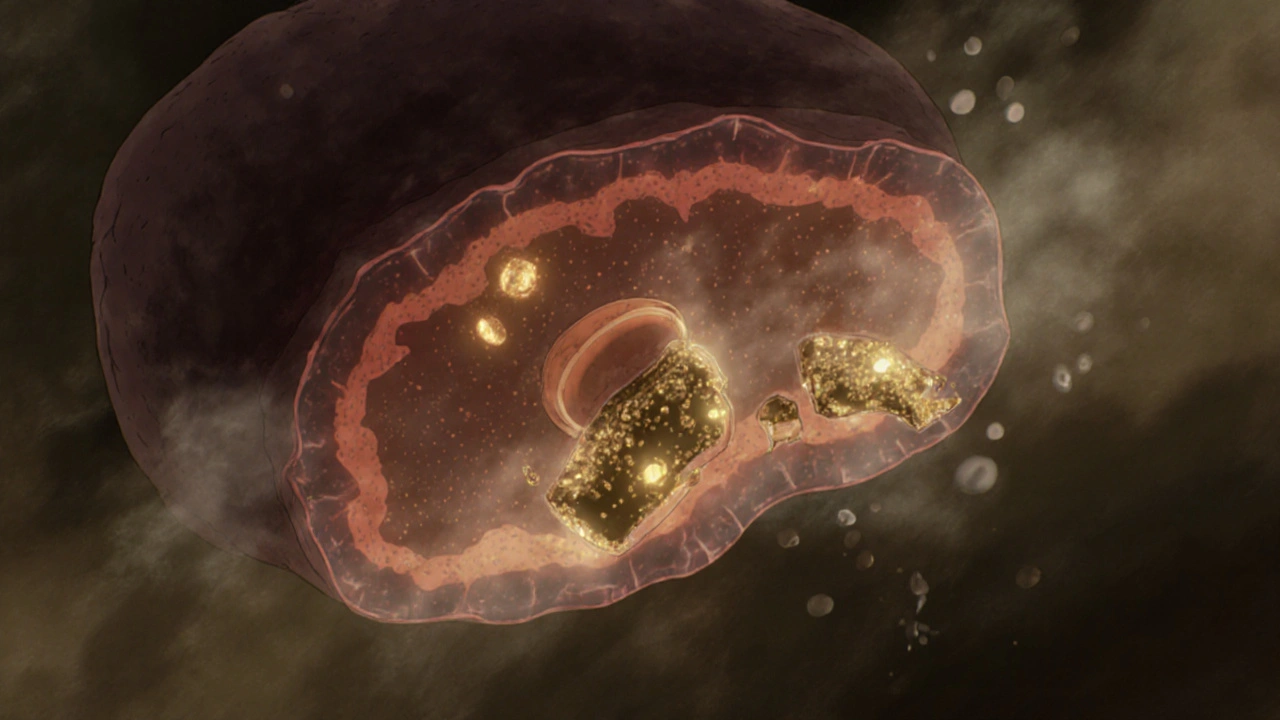
Wilson’s Disease: Understanding Copper Accumulation and Chelation Therapy
Wilson’s disease is a rare genetic disorder causing toxic copper buildup in the liver and brain. Early diagnosis and chelation therapy can prevent irreversible damage and allow a normal lifespan.